 833-377-8663

5 Alternatives to Standard Kitchen Cabinets: A 2026 Guide

Table of Contents
- Why Homeowners and Contractors Look Beyond Standard Kitchen Cabinets
- 1. Open Shelving and Floating Shelves
- 2. Freestanding Kitchen Units and Islands
- 3. Pegboard Kitchen Storage Systems
- 4. Repurposed Furniture and Antique Hutches
- 5. Modular Storage and Cabinet Refacing
- Comparing the 5 Alternatives to Standard Kitchen Cabinets
- Which Alternative Works Best for Your Kitchen?
5 Alternatives to Standard Kitchen Cabinets: A 2026 Guide
Last Updated: August 2, 2026
Why Homeowners and Contractors Look Beyond Standard Kitchen Cabinets
When planning a kitchen renovation, the instinct is often to replace old cabinets with new ones matching the existing footprint. But this assumption limits your options considerably. Many homeowners and contractors discover that five alternatives to standard kitchen cabinets deliver better storage, aesthetics, and flexibility than traditional built-in cabinetry alone.
At RTA Wholesalers, we've worked with hundreds of renovation projects where clients started assuming they needed full cabinet replacements. What they discovered instead was that mixing cabinet styles, combining custom inset cabinetry with open shelving, floating shelves, or freestanding units, created kitchens that felt more spacious, functional, and cost-effective.
Today's kitchens blend closed storage with display-worthy open shelving, incorporate mobile storage solutions that adapt to changing needs, and use wall space creatively. This approach works especially well for rental properties, smaller kitchens, or renovation projects where budget constraints make full cabinetry replacement unrealistic.
1. Open Shelving and Floating Shelves
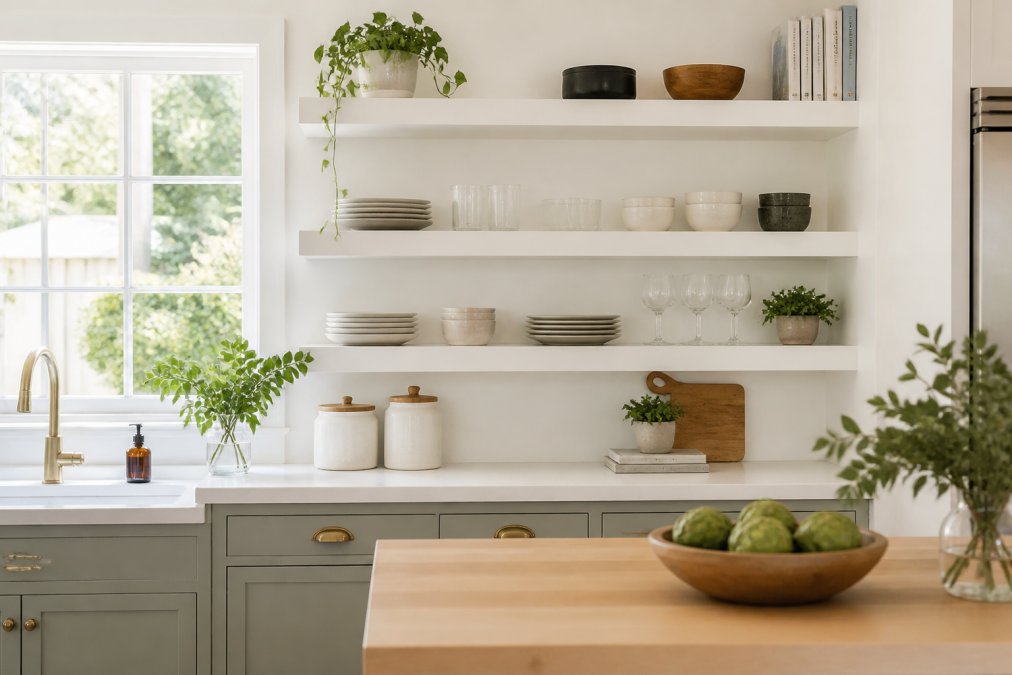
Open shelving and floating shelves display items directly, making everything visible and instantly accessible. For frequently used dishware, glassware, or cookbooks, this eliminates the friction of opening cabinet doors. Floating shelves, which mount directly to the wall without visible brackets, create a particularly clean aesthetic and work especially well in smaller kitchens where traditional cabinets would feel visually heavy.
Pros and Cons
The primary advantage is accessibility combined with visual lightness. Items are within arm's reach, and the kitchen feels airy rather than boxed in. The significant trade-off is maintenance: items accumulate dust and grease from cooking far more quickly than items inside cabinets, requiring weekly or bi-weekly wiping. Additionally, open shelving requires discipline, clutter becomes immediately visible, so every item must earn its place visually.
Best For
Open shelving works best in kitchens where you're willing to commit to regular cleaning and where stored items are items you actually want to look at. It's ideal for minimalist kitchen design, rental properties where permanent cabinet installation isn't feasible, and kitchens where budget constraints make shelving a more affordable starting point than full cabinetry. For renters especially, floating shelves are attractive because they mount securely but can be removed without permanent wall damage.
2. Freestanding Kitchen Units and Islands
A freestanding kitchen island or cart adds counter space and storage without requiring installation or taking up permanent wall real estate. Unlike built-in cabinets, freestanding units can be moved, replaced, or removed entirely if your needs change, a major advantage for renters and homeowners who like flexibility.
Flexibility and Mobility
The appeal of freestanding units lies in their adaptability. A kitchen cart with casters can be rolled out of the way when you need floor space for movement or entertaining. An island without wheels becomes a permanent gathering point but still doesn't require installation. For homeowners renting their property or planning to move within five years, this flexibility is invaluable. You can also start small and expand: begin with one cart, then add a second unit later if storage needs grow.
Practical Considerations
The trade-off is that freestanding units consume floor space. In kitchens under 100 square feet, adding an island can make the space feel cramped. Additionally, items stored on open shelves beneath a freestanding island are visible and need to be kept organized. Freestanding islands also offer less storage capacity than built-in cabinetry spanning an entire wall.
3. Pegboard Kitchen Storage Systems
Pegboard systems, metal or wood panels with evenly spaced holes, display your tools and equipment while keeping them organized and within reach. Metal pegboards with powder-coated finishes resist rust and wear far better than traditional wood pegboards, making them suitable for kitchens where moisture and heat are factors.
Customization and Organization
The core strength of pegboard systems is their flexibility. You can rearrange hooks and shelves anytime without tools or permanent modifications. Pegboards work particularly well for frequently used items: pots, pans, measuring cups, cooking utensils, and spice jars. Because everything is visible and accessible, you're more likely to actually use the items you've stored.
Installation and Maintenance
Pegboards require wall mounting, which means drilling holes and securing the panel to wall studs. This makes them less suitable for rental properties unless you're willing to patch the wall when you move. Maintenance is similar to open shelving: items accumulate dust and grease, requiring weekly wiping.
4. Repurposed Furniture and Antique Hutches
Using furniture pieces originally designed for other purposes, vintage hutches, antique dressers, or repurposed shelving units, adds character and sustainability to a kitchen while providing genuine storage. An old dining room hutch can become a beverage center or dish storage. A vintage dresser can hold linens, cookbooks, or small appliances.
Character and Sustainability
Repurposed furniture reduces waste by giving existing pieces new life. From an environmental perspective, using what already exists is more sustainable than manufacturing new cabinetry. Additionally, antique or vintage pieces often feature superior craftsmanship compared to mass-produced modern alternatives. A kitchen incorporating a 1950s hutch or reclaimed wood shelving feels curated and intentional rather than generic.
Durability and Functionality
The practical consideration is that repurposed furniture may not have been designed for kitchen humidity and heat. Wood that was never sealed for kitchen use may warp, and finishes may degrade faster. You may need to refinish or seal pieces to ensure they hold up to kitchen conditions. Additionally, repurposed furniture rarely offers the same storage density as custom cabinetry.
5. Modular Storage and Cabinet Refacing
Modular storage systems and cabinet refacing represent a middle ground between full replacement and alternative storage. Cabinet refacing involves replacing cabinet doors and hardware while keeping the existing frame and structure. Modular storage systems are composed of individual units that connect together, offering far more flexibility than traditional built-in cabinetry while providing more storage density than open shelving alone.
Adapting Existing Cabinetry
If your kitchen already has cabinets but they're outdated or damaged, refacing is a practical alternative to replacement. New doors, drawer fronts, and hardware transform the appearance while preserving the underlying cabinet structure. RTA Wholesalers offers custom color inset cabinetry available in custom sizes, allowing you to replace specific cabinet sections without replacing everything. This modular approach lets you upgrade gradually, spreading the project across your budget timeline.
Cost and Timeline Advantages
Refacing cabinets typically costs significantly less than full replacement and takes considerably less time. Since you're not removing and replacing the underlying structure, the project moves faster. Modular systems offer similar advantages: they can be installed in phases, adapted to fit unusual spaces, and expanded as your needs grow.
Comparing the 5 Alternatives to Standard Kitchen Cabinets
Understanding how these alternatives compare across key dimensions helps you choose the right combination for your specific kitchen.
Storage Capacity and Organization
| Alternative | Storage Density | Best Items | Visibility | Organization Level |
|---|---|---|---|---|
| Open Shelving | Low-Medium | Dishware, glasses, cookbooks | High | High (requires discipline) |
| Freestanding Units | Medium | Small appliances, supplies | Medium | Medium |
| Pegboard Systems | Medium | Tools, utensils, pots | High | High (customizable) |
| Repurposed Furniture | Low-Medium | Linens, cookbooks, dishes | Medium | Low (fixed layout) |
| Modular Storage | High | Any items | Low | Very High (adaptable) |
Open shelving and pegboards prioritize visibility and accessibility over total capacity. Freestanding units and repurposed furniture offer moderate storage in a visually interesting way. Modular storage systems deliver the highest capacity while maintaining flexibility.
Installation Difficulty and Timeline
Open shelving and floating shelves require wall mounting and basic carpentry skills. Pegboards also require wall installation. Freestanding units need no installation. Repurposed furniture may need refinishing or sealing before use. Modular storage systems typically assemble on-site, requiring 4-8 hours depending on complexity.
For renters, freestanding units and removable open shelving are most practical. For homeowners willing to make permanent changes, pegboards and modular systems offer more storage density.
Maintenance and Cleaning Reality
Open shelving, pegboards, and freestanding units with open storage expose items to dust and kitchen grease, requiring weekly or bi-weekly cleaning. Repurposed furniture may require periodic refinishing or sealing. Modular storage with closed doors offers the same low-maintenance profile as traditional cabinets.
Rental-Friendly and Non-Permanent Options
For renters, freestanding units with casters are ideal because they move easily and leave no permanent marks. Removable floating shelves come second. Pegboards and repurposed furniture require wall drilling and may damage walls when removed. Modular storage systems vary, some mount permanently while others are freestanding.
Which Alternative Works Best for Your Kitchen?
Your best choice depends on three factors: your kitchen's size and layout, your tolerance for maintenance, and whether you're renting or own your home.
For small kitchens (under 100 square feet): Open shelving and floating shelves create the illusion of more space. Avoid large freestanding islands that consume floor space.
For rental properties: Prioritize freestanding units and removable shelving. Avoid anything requiring wall drilling or permanent installation.
For kitchens with high traffic and frequent cooking: Combine modular storage or refaced cabinets with pegboards or open shelving. This layered approach provides both capacity and accessibility.
For minimalist or farmhouse aesthetics: Open shelving, pegboards, and repurposed furniture create the visual character you're seeking. Accept that maintenance will be higher.
For maximum flexibility: Freestanding units and modular systems allow you to reconfigure as your needs evolve.
The most successful kitchens often combine multiple alternatives rather than relying on a single solution. A kitchen might feature refaced base cabinets for bulk storage, open shelving for frequently used dishware, a freestanding island for additional counter space, and a pegboard for cooking tools.
If you're planning a kitchen renovation, the choice between alternatives to standard kitchen cabinets doesn't have to be either-or. RTA Wholesalers specializes in custom color inset cabinetry available in custom sizes at great wholesale pricing, allowing you to combine high-quality modular storage with other alternatives to create a kitchen that's both functional and uniquely yours. Our free kitchen design service helps you plan the right combination of storage solutions before you order, ensuring your project stays on timeline and within budget. Explore how custom inset cabinetry can anchor your alternative storage strategy and deliver the professional look you're seeking.
Frequently Asked Questions
What are the main disadvantages of open shelving as an alternative to kitchen cabinets?
Open shelving exposes items to dust, grease, and cooking splatters, requiring frequent cleaning. Items must stay organized and attractive since everything is visible, which limits your ability to hide clutter or less-attractive items. Open shelving also offers less total storage capacity than enclosed cabinets and works best in kitchens where you're committed to maintaining a minimalist aesthetic and regularly-used items only.
Are freestanding kitchen units good for rental apartments or temporary kitchens?
Yes, freestanding kitchen units are ideal for rentals since they require no permanent installation or wall modifications. Kitchen islands and carts with casters move easily and can be removed without damage. This makes them perfect for renters, temporary living situations, or homeowners who plan to relocate. They provide additional counter and storage space without the commitment of built-in cabinetry.
How does pegboard kitchen storage compare to traditional cabinet storage?
Pegboard systems offer highly customizable, visible storage for frequently used items like pots, pans, and utensils. Unlike cabinets, pegboard frees up counter and under-sink space and makes items immediately accessible. However, items on pegboard accumulate dust and grease faster than enclosed storage, and pegboard works best for displaying attractive cookware. It complements rather than replaces traditional cabinetry in most kitchens.
Can repurposed furniture like antique hutches actually work as a primary kitchen storage solution?
Repurposed furniture can serve as a primary or supplementary storage solution depending on your kitchen layout and needs. Antique hutches offer character and sustainability while providing enclosed storage for dishes and glassware. However, vintage pieces may lack modern features like deep drawers or adjustable shelves, and durability varies widely. They work best combined with other storage solutions rather than as the sole kitchen storage option.
What is cabinet refacing and how does it compare to replacing all kitchen cabinets?
Cabinet refacing replaces cabinet doors, hardware, and exterior surfaces while keeping the existing cabinet boxes and structure intact. This approach costs significantly less and takes less time than full cabinet replacement, making it ideal for budget-conscious renovations. Refacing works well if your existing cabinet boxes are structurally sound but visually outdated. It's a practical middle ground between living with your current cabinets and investing in a complete kitchen overhaul.


