 833-377-8663

6 Alternatives to White Shaker Kitchen Cabinets

Table of Contents
- Why Homeowners Move Beyond White Shaker Cabinets
- 1. Flat Panel Cabinets: Clean Lines and Minimalist Appeal
- 2. Raised-Panel Cabinets: Traditional Elegance with Modern Twists
- 3. Beveled and Recessed Panel Doors: Architectural Detail Without Clutter
- Inset vs Overlay Cabinet Doors: Which Style Fits Your Kitchen
- 4. Natural Wood Finishes and Custom Cabinet Color Ideas
- 5. Glass-Front and Open Shelving Combinations
- 6. Mixed Cabinet Styles for Visual Interest and Functionality
Last Updated: August 13, 2026
Why Homeowners Move Beyond White Shaker Cabinets
White shaker cabinets have dominated kitchen design for nearly two decades. The style is clean, versatile, and pairs with almost anything. But here's what most homeowners discover after living with them: the look feels dated faster than expected, and white shows every fingerprint, dust particle, and water spot. If you're considering alternatives to white shaker kitchen cabinets, you're not alone, designers and homeowners are increasingly exploring cabinet styles that offer more personality, durability, or a fresh aesthetic that still delivers on functionality.
The good news is that the range of alternatives has expanded dramatically. You're no longer limited to a single door profile or finish. From flat panel designs that embrace minimalism to raised-panel cabinets with architectural depth, from natural wood finishes that age beautifully to mixed styles that break up visual monotony, there are real solutions that work for different budgets, timelines, and design goals. This guide walks you through six solid alternatives to white shaker kitchen cabinets, including the specific pros and cons of each, so you can make a decision based on what actually matters for your space.
1. Flat Panel Cabinets: Clean Lines and Minimalist Appeal
Flat panel cabinets represent the opposite aesthetic from raised-panel styles. Instead of ornamental details, they offer pure simplicity: a single flat surface with no profile or recessing. For kitchens designed around contemporary aesthetics or minimalist principles, flat panel doors deliver exactly what you're looking for.
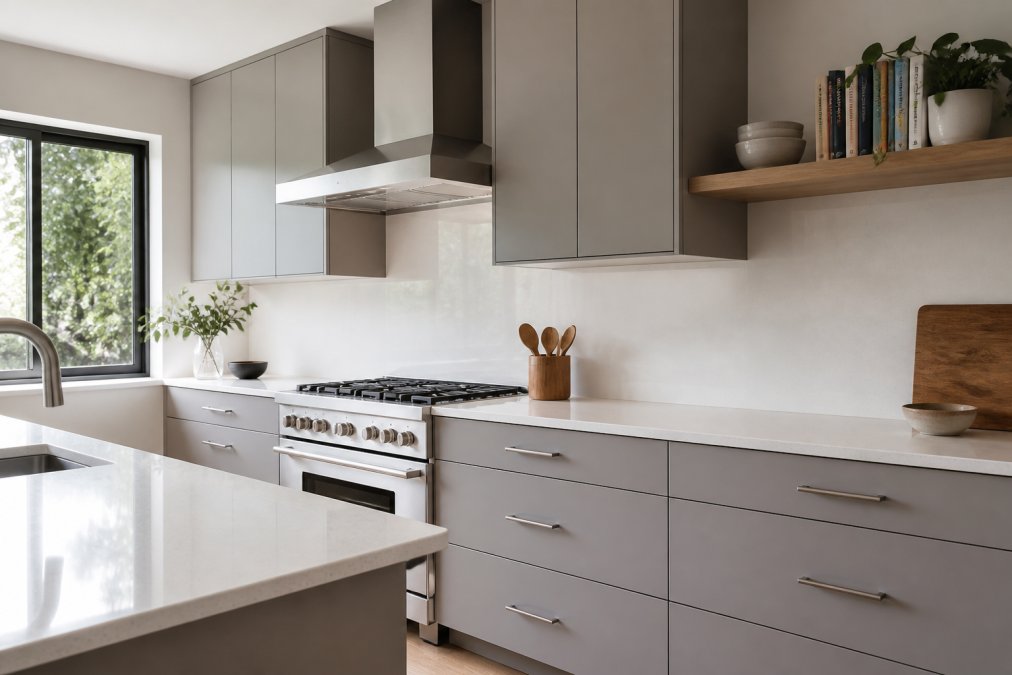
The appeal is immediate. Flat panel cabinets are easier to clean than raised-panel alternatives, no grooves or recesses to trap dust. They work in small kitchens because they don't visually compete with other design elements. And they pair seamlessly with nearly any countertop, backsplash, or hardware choice. If your kitchen includes stainless steel appliances, concrete counters, or industrial-style lighting, flat panel doors feel like the natural choice.
Flat Panel Cabinet Pros and Cons
Pros:
- Minimal visual clutter makes small kitchens feel larger
- Easier to clean and maintain than recessed or beveled styles
- Works with virtually any hardware choice or finish
- Cost-effective compared to ornamental panel styles
- Contemporary aesthetic that photographs well
Cons:
- Can feel cold or sterile in traditional or farmhouse-style kitchens
- Limited visual interest, some homeowners find them plain
- Fingerprints and smudges show more prominently on glossy finishes
- Requires careful hardware selection to avoid looking too basic
For many homeowners, flat panel cabinets solve a specific problem: they want a modern look without the maintenance burden of intricate door profiles. RTA Wholesalers offers flat panel options in both overlay and inset configurations, allowing you to choose the installation style that fits your project timeline and budget.
2. Raised-Panel Cabinets: Traditional Elegance with Modern Twists
Raised-panel cabinets have been a staple of traditional and transitional kitchens for decades. A raised-panel door features a center panel that protrudes slightly from the surrounding frame, creating visual depth and architectural interest. This profile catches light differently than flat surfaces, adding dimension that flat panels simply cannot achieve.
The traditional raised-panel style works beautifully in homes with classic architectural details, crown molding, coffered ceilings, or period-appropriate hardware. But here's where it gets interesting: raised-panel cabinets aren't locked into one aesthetic. Pair them with modern hardware (sleek stainless steel pulls instead of ornate brass knobs), contemporary countertops, and minimalist lighting, and you've created a modern twist on a classic profile. This hybrid approach appeals to homeowners who want traditional cabinet architecture without a dated kitchen.
Raised-panel cabinets do require more attention during cleaning. The recessed areas collect dust, and you'll need to wipe them down more frequently than you would with flat panels. But many homeowners consider that trade-off worthwhile for the visual richness the profile adds to the space.
3. Beveled and Recessed Panel Doors: Architectural Detail Without Clutter
Beveled and recessed panel doors occupy a middle ground between flat and raised profiles. Instead of a panel that protrudes, these doors feature panels that recess inward, sometimes with beveled (angled) edges around the perimeter. The effect is subtle but noticeable, you get architectural interest without the ornamental heaviness of traditional raised panels.
This style works particularly well in transitional kitchens, where you're blending traditional and contemporary elements. The recessed detail adds visual depth, but the overall aesthetic remains clean and unfussy. Beveled edges catch light in ways that create shadow lines, giving the cabinets dimension without busy ornamentation.
The maintenance profile sits between flat and raised panels. You'll need to dust recessed areas, but not as frequently as you would with deeper raised-panel grooves. Many designers choose this profile specifically because it offers the best balance of visual interest and practical maintenance.
Inset vs Overlay Cabinet Doors: Which Style Fits Your Kitchen
The difference between inset and overlay cabinet doors isn't about the panel profile itself, it's about how the door sits relative to the cabinet frame. Understanding this distinction matters because it affects both the visual appearance and the installation complexity of your kitchen.
Inset cabinet doors sit flush within the face frame, creating a recessed appearance where the frame is visible around the perimeter of each door. This creates clean sight lines and a built-in, custom appearance. Inset doors require more precise manufacturing and installation, which historically made them more expensive. However, they deliver a premium aesthetic that many homeowners consider worth the investment.
Overlay cabinet doors sit on top of the face frame, covering it completely. This is the standard installation method for most ready-to-assemble cabinets and is simpler to install. Overlay doors create a more seamless visual appearance when doors are closed, though you see the frame when doors are open.
For homeowners prioritizing the custom, built-in look, inset cabinets are the choice. RTA Wholesalers specializes in inset cabinetry available in custom sizes and custom colors at wholesale pricing, making it accessible for projects where you want that premium appearance without premium pricing. The difference in installation complexity is manageable for experienced DIYers or contractors, and the visual payoff, that clean, intentional aesthetic, makes the extra care worthwhile.
4. Natural Wood Finishes and Custom Cabinet Color Ideas
Moving away from white doesn't mean you're limited to painted cabinets. Natural wood finishes have experienced a genuine resurgence, particularly as homeowners seek warmth and authenticity in their kitchens. Unlike painted cabinets, which can show wear over time, natural wood finishes age with character, the patina actually improves the appearance rather than detracting from it.
Wood Species and Stain Choices
Different wood species deliver different aesthetics and durability profiles. Oak cabinets offer prominent grain patterns and warm undertones. Maple provides a finer, more uniform grain and works well with both light and dark stains. Cherry wood develops a deeper, richer color over time. Each species responds differently to stain colors, so the same stain applied to oak will look distinctly different when applied to maple.
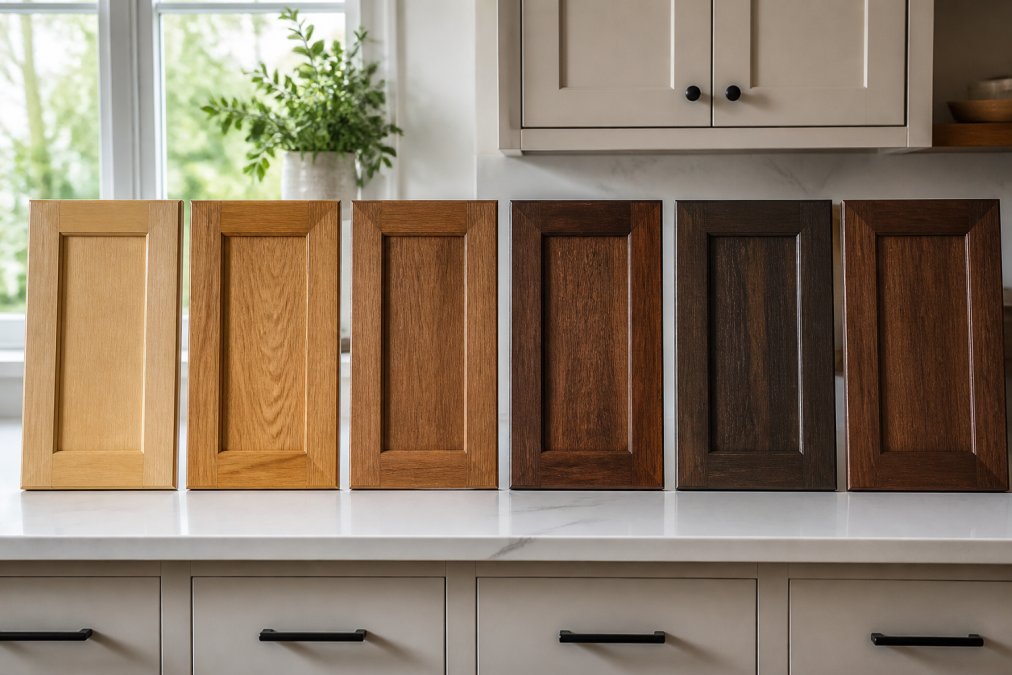
Light stains like natural or honey tones create a bright, airy aesthetic and work well in kitchens where you want to emphasize the wood grain. Medium stains like golden oak or medium cherry provide warmth without the darkness of deeper finishes. Dark stains like espresso or walnut create drama and work beautifully in larger kitchens with adequate lighting.
The practical consideration: natural wood finishes require more maintenance than painted cabinets. You'll need to dust regularly, wipe spills promptly, and periodically treat the wood with appropriate conditioners. But many homeowners view this as part of the appeal, the cabinets require active care, which reinforces their value and longevity.
Painted Cabinet Alternatives to White
If you want painted cabinets but are ready to move past white, consider these alternatives that have proven staying power: creamy neutrals (off-white or ivory with warm undertones), soft grays that bridge traditional and contemporary aesthetics, navy blue for dramatic impact in larger kitchens, and warm greens that feel both current and timeless.
The advantage of painted cabinets is consistency and ease of maintenance. A high-quality paint finish resists fingerprints better than natural wood and cleans up quickly with a damp cloth. You also have unlimited color options through custom paint selections like Sherwin Williams, which offers thousands of colors to match your exact vision.
5. Glass-Front and Open Shelving Combinations
Glass-front cabinet doors and open shelving represent a departure from fully enclosed storage. Instead of hiding everything behind solid doors, you're displaying your dishes, glassware, and cookbooks as part of the design. This approach works best when you have attractive items worth showing and a kitchen with good natural lighting.
Glass-front doors offer a middle ground, you get the display benefit without committing to completely open shelves. The glass protects items from dust while keeping them visible. Open shelving, by contrast, requires more intentional curation. Your everyday dishes need to be attractive enough to live on display, and you need to commit to keeping shelves organized.
The practical trade-off: glass-front and open shelving require more frequent cleaning than solid-door cabinets. Dust settles on open shelves, and glass shows fingerprints and water spots. But the visual payoff, a kitchen that feels more open and curated, appeals to many homeowners, particularly those with smaller kitchens where open shelving makes the space feel less cramped.
This style works particularly well when combined with other cabinet styles. You might have solid doors on base cabinets and glass-front or open shelving on upper cabinets, creating visual interest and breaking up the monotony of all solid doors.
6. Mixed Cabinet Styles for Visual Interest and Functionality
The most sophisticated alternative to white shaker cabinets? Combining multiple styles within the same kitchen. This approach, sometimes called transitional or eclectic design, allows you to balance visual interest with practical function.
A common approach pairs flat panel base cabinets with glass-front upper cabinets. The base cabinets provide clean, minimalist storage for pots, pans, and dry goods, while the upper cabinets display attractive dishware or glassware. Another effective combination uses raised-panel or beveled doors on perimeter cabinets and open shelving in a central island, creating a focal point that breaks up visual monotony.
Color mixing amplifies this effect. You might use a warm natural wood finish on base cabinets with painted upper cabinets in a complementary color, say, natural oak on the bottom and soft gray on top. This creates visual layering that feels intentional rather than random.
The key to making mixed styles work is establishing a coherent logic. Choose a unifying element, consistent hardware, aligned countertops, or a shared color palette, that ties the different cabinet styles together. Without that connective tissue, mixed styles can feel chaotic rather than curated.
| Cabinet Style | Best For | Visual Impact | Maintenance Level | Design Flexibility |
|---|---|---|---|---|
| Flat Panel | Modern, minimalist kitchens | Clean, contemporary | Low | High with hardware choices |
| Raised-Panel | Traditional, transitional kitchens | Architectural depth | Medium-High | Medium with finish options |
| Beveled/Recessed | Transitional, hybrid designs | Subtle dimension | Medium | Medium-High |
| Natural Wood | Warm, authentic aesthetics | Rich, aging character | High | Medium with stain colors |
| Glass-Front/Open | Display-focused, smaller spaces | Open, curated | High | High with styling |
| Mixed Styles | Eclectic, layered designs | Visual interest | Varies | Very High |
When you're ready to move beyond white shaker cabinets, the decision comes down to your kitchen's existing architecture, your maintenance tolerance, and the aesthetic you want to achieve. RTA Wholesalers provides ready-to-assemble cabinetry in multiple door styles and finishes, including custom color inset cabinets available in most any size at wholesale pricing. Our free kitchen design service helps you evaluate which cabinet style actually works for your space before you order, catching potential misalignments before they become costly mistakes. Get started with a consultation and discover which alternative to white shaker kitchen cabinets transforms your kitchen into the space you've been envisioning.
Frequently Asked Questions
What are the best alternatives to white shaker cabinets for a contemporary kitchen?
Flat panel cabinets offer the cleanest contemporary look with minimalist design. Raised-panel doors provide traditional elegance with modern appeal. For something different, beveled and recessed panels add architectural detail without ornamental excess. Custom cabinet color ideas, such as warm wood tones, creamy neutrals, or painted finishes beyond white, can transform your kitchen while maintaining durability and ease of installation.
Should I choose inset vs overlay cabinet doors for my renovation?
Inset doors sit flush within the cabinet frame, offering a custom cabinetry appearance and premium aesthetic that works well in both traditional and contemporary kitchens. Overlay doors sit on top of the frame and are easier to install and adjust. Inset doors provide superior visual integration with your kitchen layout and backsplash coordination, while overlay options offer faster installation and cost efficiency. Your choice depends on your design goals and timeline.
Are white shaker cabinets outdated in 2026?
White shaker cabinets remain popular but are no longer the default choice. Many homeowners now explore alternatives like flat panel styles, natural wood finishes, or mixed cabinet styles for visual interest. The shift reflects growing interest in personalized design rather than trends. If you want a fresh look without replacing cabinets entirely, consider pairing white shaker doors with updated hardware, new backsplash coordination, or mixing in glass-front alternatives for a contemporary twist.
What cabinet finishes offer the best durability and lowest maintenance?
Painted finishes with matte or gloss coatings provide excellent durability when applied to quality substrates. Natural wood finishes require periodic maintenance but develop character over time. Flat panel doors are easier to clean than raised-panel or beveled styles because they have fewer crevices. For commercial and residential projects, durable finishes depend more on substrate quality and installation than door style alone. Custom inset cabinets from quality manufacturers typically outlast standard options.
How do I choose cabinet styles that work with my existing kitchen architecture?
Start by assessing your kitchen layout and the visual weight of existing elements like countertops and backsplash coordination. If your space has ornamental details, raised-panel or beveled doors complement them well. Minimalist kitchens benefit from flat panel styles. Consider the wood grain or paint color that harmonizes with your overall interior design. A free kitchen design service can help identify which cabinet profile, door style, and finish will integrate seamlessly with your space without costly mistakes.


