 833-377-8663

Best White Shaker Cabinets for Remodel: A 2026 Guide

Table of Contents
- Best White Shaker Cabinets for Remodel: Key Options Compared
- Design Inspiration and Installation Flexibility
- RTA White Shaker Cabinets vs Pre-Assembled Options
- Solid Wood vs MDF Shaker Cabinets: Durability and Long-Term Value
- Material and Construction Quality Standards
- Cost of White Shaker Cabinets: Budget Planning for Your Remodel
- How to Clean White Shaker Cabinets and Maintain the Finish
- Resale Value Impact and Kitchen Remodeling ROI
Best White Shaker Cabinets for Remodel: A 2026 Guide
Last Updated: July 2, 2026
Best White Shaker Cabinets for Remodel: Key Options Compared
White shaker cabinets remain the most versatile choice for kitchen renovations because they work equally well in farmhouse, transitional, and contemporary kitchens. The timeless design of shaker-style doors, with their recessed center panels and clean lines, doesn't feel trendy or dated. Finding the best white shaker cabinets requires understanding construction quality, assembly options, and long-term durability, not just aesthetics.
The real challenge isn't finding white shaker cabinets. It's finding ones that balance quality construction, realistic pricing, and installation ease. This guide breaks down the key factors that separate cabinets worth your investment from those that will disappoint you within a few years.
What Makes White Shaker Cabinets Ideal for Remodels
Shaker cabinetry offers practical advantages beyond its clean aesthetic. The five-piece recessed panel door design is inherently durable because the flat center panel resists warping, unlike solid wood doors that can shift with humidity changes. White finishes brighten kitchen spaces and create visual continuity with countertops and appliances, serving as a neutral backdrop that lets your island, hardware, and backsplash become focal points.
The door style is forgiving. Shaker doors hide dust and fingerprints better than high-gloss finishes or glass-front uppers. For busy households, this practicality reduces maintenance burden. White shaker cabinets also offer flexibility in mixing and matching, you can pair them with open shelving, add glass-front uppers, or incorporate a contrasting kitchen island without feeling locked into a single design direction.
Design Inspiration and Installation Flexibility
White shaker cabinets pair naturally with transitional kitchens that blend traditional warmth with modern efficiency, and work equally well in farmhouse aesthetics or contemporary spaces. Installation flexibility matters more than many homeowners realize. RTA (ready-to-assemble) white shaker cabinets arrive flat-packed, allowing you to install them gradually or coordinate with contractors on your timeline. For smaller kitchens or tight layouts, RTA flexibility often wins. For larger remodels where professional installation is already budgeted, pre-assembled cabinets reduce on-site assembly time.
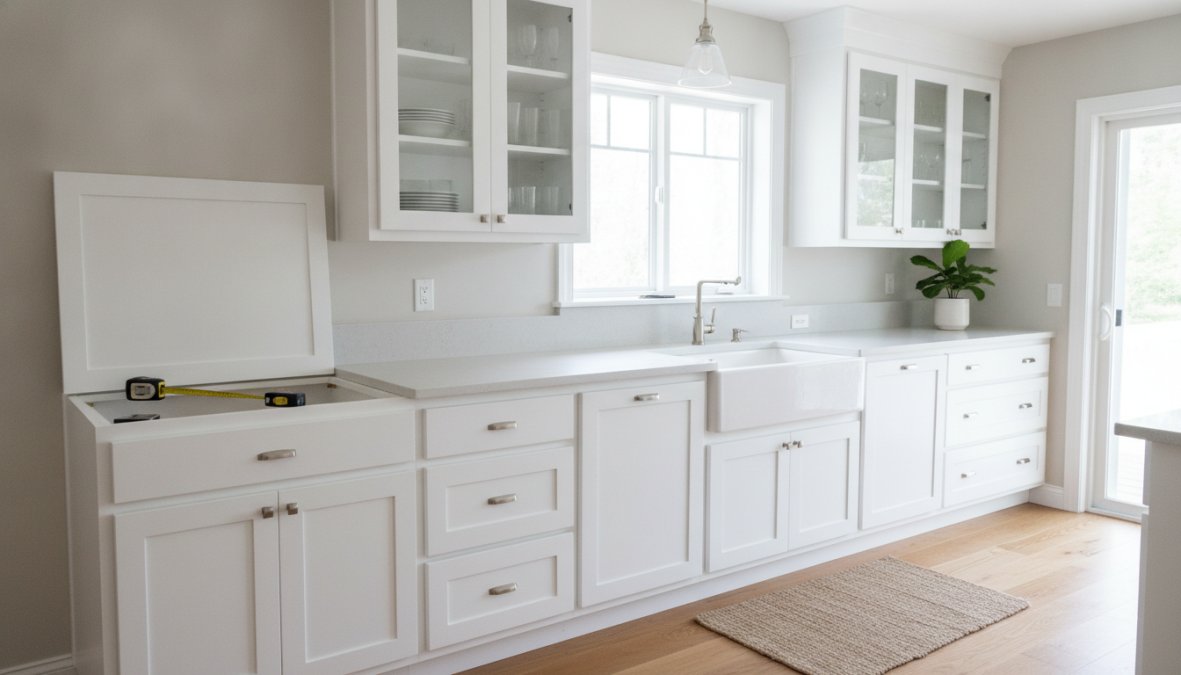
The choice between full overlay and inset cabinets affects both visual appearance and installation complexity. Full overlay doors cover the face frame, creating a seamless, modern look with minimal gaps. Inset cabinets sit flush within the face frame, offering a more traditional, furniture-like appearance that requires more precise measurements and installation skill but delivers a custom, high-end aesthetic. If you're drawn to the refined look of inset cabinetry, Custom Order Inset options allow you to specify exact dimensions and finishes, ensuring your cabinets fit perfectly and match your vision.
RTA White Shaker Cabinets vs Pre-Assembled Options
The RTA versus pre-assembled decision depends on your timeline, budget, and comfort with assembly. RTA cabinets ship flat, reducing shipping costs and damage risk, while allowing you to control installation pace and make adjustments as you work. Pre-assembled cabinets arrive ready to install, eliminating assembly labor and saving time during your remodel, though they cost more upfront and have less flexibility if measurements need adjustment.
Quality standards vary significantly between options. A well-made RTA cabinet with plywood box construction and solid hardwood face frame performs identically to a pre-assembled cabinet with the same materials. The assembly method doesn't determine durability; construction materials do. Budget RTA options using particle board may cost less initially but wear faster than quality RTA cabinets with superior construction.
Nationwide shipping for RTA cabinets typically takes 7-14 days. Pre-assembled cabinets often have longer lead times because manufacturers build to order. If your remodel timeline is tight, RTA options sometimes deliver faster.
Assembly Difficulty Ratings and Timeline
Assembling RTA cabinets is methodical but not complicated. Base cabinets typically take 45-90 minutes per unit, while wall cabinets assemble faster at 30-60 minutes. A typical kitchen with 15-20 cabinet units requires 30-50 hours of assembly time spread across multiple days.
The real time investment comes from installation, leveling cabinets, securing them to studs, and aligning doors requires precision. Professional installers typically charge $75-150 per hour for this work. If you've assembled quality furniture before, you can handle RTA cabinets, though the stakes are higher than a wobbly bookshelf.
| Assembly Method | Time per Base Cabinet | Time per Wall Cabinet | Total Kitchen Time | Skill Level Required |
|---|---|---|---|---|
| RTA Assembly | 45-90 minutes | 30-60 minutes | 30-50 hours | Intermediate |
| Professional Installation | N/A | N/A | 2-4 days | Professional |
| Pre-Assembled Install | 15-30 minutes | 10-20 minutes | 8-16 hours | Beginner |
Solid Wood vs MDF Shaker Cabinets: Durability and Long-Term Value
The construction method matters more than the raw material. A plywood box cabinet with an MDF door and solid hardwood face frame outperforms a solid wood cabinet with particle board construction. Plywood box construction resists sagging and warping far better than particle board, which deteriorates when exposed to moisture.
For white shaker cabinets specifically, MDF doors with quality paint finishes are ideal. The paint adheres uniformly to MDF, creating a crisp, durable white finish that resists chipping. Solid wood doors in white require more maintenance because paint can crack as the wood moves seasonally. Many high-end cabinet manufacturers use MDF for white finishes and solid wood for stain colors, choosing materials based on performance.
Environmental and VOC Safety Considerations
Cabinet finishes release volatile organic compounds (VOCs) during and after installation. High-VOC finishes off-gas for weeks or months, creating odors and potential respiratory irritation. Low-VOC and zero-VOC paints minimize this impact, making them essential for homes with children, elderly residents, or anyone with respiratory sensitivity.
Quality cabinet manufacturers now offer low-VOC and formaldehyde-free options as standard. Water-based paints emit significantly fewer VOCs than solvent-based finishes. The cost difference between standard and low-VOC finishes is minimal (often 5-10% premium), making this an easy upgrade during your remodel.
Material and Construction Quality Standards
Construction quality determines how your cabinets perform over 15+ years. The foundation is the cabinet box, the sides, bottom, back, and shelves. Plywood box construction uses multi-ply sheets that resist warping and sagging. Particle board is cheaper but deteriorates faster, especially if exposed to moisture.
The face frame, the wood structure around the cabinet opening, should be solid hardwood, typically maple or oak. This frame bears the stress of opening and closing doors thousands of times and prevents the cabinet box from racking.
Drawer construction separates quality cabinets from budget options. Dovetail or box-joint drawer joinery is superior to stapled or glued construction. Quality drawers use full-extension slides that support the entire drawer weight. Soft-close mechanisms prevent slamming and reduce wear on hardware, extending cabinet life significantly.
Door construction for white shaker cabinets should feature five-piece construction: a frame made from solid wood with a recessed MDF or plywood center panel. This design prevents warping because the panel floats slightly within the frame, accommodating wood movement.
Plywood Box Construction and Hardware Options
Cabinet boxes should use ¾-inch plywood for strength and durability. Thinner plywood saves costs but reduces structural integrity, especially for base cabinets that support countertops and appliances. The back should be ¼-inch plywood or hardboard, not paper-thin backing.
Soft-close hinges and slides are worth the investment. They reduce noise, prevent slamming, and extend hardware life by reducing impact stress. Blum and Grass are industry-standard soft-close manufacturers. Quality cabinets include adjustable shelf pins and multiple shelf positions, allowing you to customize internal organization as your kitchen needs change.
Cost of White Shaker Cabinets: Budget Planning for Your Remodel
Cabinet costs vary dramatically based on materials, assembly method, and customization. Budget RTA options start around $100-200 per linear foot for base cabinets, while quality RTA cabinets run $200-400 per linear foot. Pre-assembled semi-custom cabinets typically cost $400-800 per linear foot.
A typical 10-by-12-foot kitchen requires 30-40 linear feet of cabinets. This means a budget kitchen might cost $3,000-8,000 in cabinets alone, while a mid-range remodel could reach $12,000-16,000. Professional installation adds $2,000-5,000 depending on complexity and your region.
Customization dramatically affects pricing. Custom Color Inset options and other semi-custom choices at wholesale pricing offer better value than ordering fully custom cabinets from high-end manufacturers. Don't overlook hardware costs, quality handles and hinges add $500-1,500 to a full kitchen. Budget for hardware as a separate line item rather than an afterthought.
How to Clean White Shaker Cabinets and Maintain the Finish
White cabinets show dust and fingerprints more readily than darker finishes, but they're not difficult to maintain. Regular cleaning with a soft, damp cloth and mild dish soap keeps the finish looking fresh. For stubborn spots, use a mixture of equal parts white vinegar and water, then dry immediately with a soft cloth to prevent water spots.
Soft-close doors and drawers mean you're not slamming them shut, which is the primary cause of finish damage. Avoid placing hot cookware directly on cabinet surfaces and keep moisture away from cabinet interiors by ensuring your kitchen ventilation removes cooking steam. Keep a small container of your cabinet paint for touch-ups, minor scratches or chips are easy to repair if caught early.
Resale Value Impact and Kitchen Remodeling ROI
Kitchen remodels typically return 50-70% of their cost in home value. Cabinet selection significantly influences this return because cabinets are one of the most visible, permanent features of your kitchen.
White shaker cabinets enhance resale appeal because they appeal to the broadest range of buyers. Neutral colors and timeless styles don't require the new owner to immediately remodel again. Quality construction also matters for resale value, buyers notice soft-close doors, smooth drawer operation, and clean finishes. Well-maintained quality cabinets suggest the home has been cared for and is move-in ready.
For your personal satisfaction during the years you own the home, quality cabinets matter even more. You'll open and close cabinet doors thousands of times. Soft-close hinges, smooth drawer slides, and durable finishes make daily life more pleasant.
When your kitchen remodel reaches the cabinet selection stage, you're making a decision that affects your home's appearance, functionality, and value for 15+ years. The best white shaker cabinets for remodel projects balance construction quality, finish durability, and realistic pricing. Start your remodel with confidence by exploring quality options that prioritize both value and long-term performance.
Frequently Asked Questions
Are white shaker cabinets still in style for 2026?
Yes, white shaker cabinets remain a timeless design choice for kitchen remodels. Their crisp white finish and classic shaker style work seamlessly in transitional, farmhouse, and contemporary kitchens. The versatility of white shaker cabinetry, paired with various hardware styles, countertops, and backsplashes, ensures they adapt to evolving design trends while maintaining enduring appeal for homeowners planning long-term kitchen investments.
What should I look for when choosing RTA white shaker cabinets?
When selecting RTA white shaker cabinets, prioritize plywood box construction over particle board for durability, verify soft-close door hinges are included, and confirm the cabinet hardware quality. Check whether the cabinets offer full overlay or inset options to match your kitchen layout. Ensure the manufacturer provides clear assembly instructions and customer support. Look for options available in custom sizes and custom colors at wholesale pricing to maximize value for your remodel.
How do solid wood and MDF shaker cabinets compare for durability?
Solid wood shaker cabinets offer superior long-term durability, better resistance to moisture and temperature fluctuations, and typically last 20+ years with proper maintenance. MDF (medium-density fiberboard) is more budget-friendly and provides a stable surface for paint finishes but is more susceptible to water damage and has a shorter lifespan. For kitchen environments with high humidity, solid wood or plywood construction is generally the better investment for durability and resale value.
Do white shaker cabinets show dirt and stains easily?
White shaker cabinets do show fingerprints and dust more visibly than darker finishes, but they're easier to clean and maintain than many assume. Regular wiping with a soft, damp cloth and mild soap keeps them looking fresh. Using cabinet hardware with cup pulls or recessed handles reduces fingerprint marks. A high-quality durable finish helps resist staining. Many homeowners find the crisp, clean aesthetic worth the minimal maintenance effort, especially with modern soft-close doors that reduce slamming and dust accumulation.


