 833-377-8663

Custom Color Inset Cabinet Options: A Complete Guide

Table of Contents
- What Are Inset Cabinets and Custom Color Inset Cabinet Options?
- Inset Cabinet Door Styles and Design Aesthetics
- Painted Inset Cabinets Pros and Cons
- Cost of Custom Inset Cabinets and Budget Planning
- Designing with Inset Cabinetry: Custom Sizing and Materials
- Selecting Custom Colors and Finishes for Your Space
- Hinge Adjustment and Maintenance of Custom Inset Cabinets
- Conclusion: Making Your Custom Color Inset Cabinet Choice
Custom Color Inset Cabinet Options: A Complete Guide
Last Updated: July 19, 2026
When planning a kitchen renovation, cabinet choice sets the tone for everything that follows. Inset cabinetry offers craftsmanship and aesthetic control that overlay cabinets cannot match, particularly with the ability to customize colors, finishes, and sizing. This guide walks you through everything you need to know about inset cabinets, from how they differ fundamentally from full overlay options to custom sizing, paint durability, and color selection.
What Are Inset Cabinets and Custom Color Inset Cabinet Options?
Inset cabinets are cabinet doors and drawer fronts that sit flush within the face frame of the cabinet box, creating a recessed appearance. Unlike full overlay cabinets where the door covers the entire face frame, inset construction reveals the frame itself, typically a 1/2-inch reveal around the perimeter of each door and drawer. This design creates visual depth and a refined, built-in appearance.
Custom color inset cabinet options allow you to specify the exact finish, paint color, stain, or specialty finishes applied to both the door fronts and visible face frame. This level of customization means your cabinets can match your design vision precisely, whether that's a soft Sherwin Williams neutral, a bold two-toned aesthetic, or a natural wood stain.
The distinction matters because inset construction demands tighter tolerances, more precise hinge adjustment, and careful attention to wood movement across seasons. That precision creates the premium appearance but also means quality control and installation expertise become critical.
How Inset Cabinets Differ from Full Overlay Cabinets
Full overlay cabinets have doors that cover the entire face frame, leaving only a small gap (typically 1/8 inch) between adjacent doors. This design is simpler to manufacture and more forgiving during installation. Inset cabinets expose the frame completely, meaning any deviation in frame construction, finish quality, or hinge adjustment becomes immediately visible. The trade-off is aesthetic: inset cabinets look more refined and built-in, while full overlay cabinets look more contemporary.
Installation differences are significant. Full overlay cabinets can be hung with some flexibility; inset cabinets require precise installation. The cabinet boxes must be perfectly level and plumb, and hinges must be adjusted with precision to maintain even reveals.
| Feature | Inset Cabinets | Full Overlay Cabinets |
|---|---|---|
| Door position | Recessed into frame | Covers entire frame |
| Frame visibility | Fully visible | Mostly hidden |
| Visual style | Traditional, refined | Contemporary, seamless |
| Manufacturing tolerance | Tight (±1/16") | Loose (±1/8") |
| Installation precision required | High | Moderate |
| Cost | Higher | Lower |
Inset Cabinet Door Styles and Design Aesthetics
The visual impact of your kitchen depends as much on door style as on cabinet construction type. Inset cabinetry works beautifully with a range of door profiles, from classic to contemporary.
Shaker Style and Traditional Designs
Shaker-style doors are the most popular choice for inset cabinets. The simple frame with recessed panel complements the inset reveal perfectly. The clean lines create a timeless look that works in traditional, farmhouse, and transitional kitchens.
Traditional inset cabinets often feature more ornamental door profiles: raised panels, beaded edges, or mouldings. These designs add visual interest and work particularly well in formal kitchen spaces. When finished with custom colors, especially rich, saturated tones or natural wood stains, traditional inset cabinets create a high-end, custom-built appearance.
Contemporary and Two-Toned Kitchen Trends
Contemporary inset cabinets often feature slab doors or minimalist frame-and-panel designs with thin frames. The inset reveal adds visual interest without ornamental details, creating a clean, sophisticated look.
Two-toned kitchen designs, mixing two colors or finishes across upper and lower cabinets, have gained significant traction. Inset cabinetry is particularly well-suited to this approach because the visible face frame can be finished in one color while the doors are finished in another. For example, pairing white painted inset doors with a natural wood stain on the face frame creates visual separation and adds depth.
Painted Inset Cabinets Pros and Cons
Painted inset cabinets offer unlimited color options, a clean contemporary or farmhouse aesthetic, and the ability to refresh your kitchen's look without replacing cabinets. However, painted finishes come with trade-offs around durability and maintenance.
Paint Durability and Sherwin Williams Color Selection
The durability of painted inset cabinets depends entirely on the paint system used. High-quality cabinet finishes use conversion varnish (a two-part paint that chemically hardens) or polyurethane top coats, not standard interior house paint. These finishes are designed to withstand kitchen humidity, temperature fluctuations, and daily wear.
Sherwin Williams offers an extensive palette of colors suitable for kitchen cabinetry. Their cabinet-specific products, like ProClassic Waterborne Acrylic-Polyurethane or Emerald Urethane Trim Enamel, are formulated to resist moisture, scratching, and yellowing. Factory-applied finishes using spray application and controlled curing produce more uniform coverage and better adhesion than brush application.
Paint is susceptible to chipping, especially on door edges and around hardware. Stained or natural wood finishes, protected by conversion varnish or polyurethane, tend to hide minor wear better because scratches expose wood that matches the surrounding finish.
Cost of Custom Inset Cabinets and Budget Planning
Inset cabinetry costs more than full overlay cabinets because of manufacturing precision and additional installation labor. However, the cost difference is not as dramatic as many homeowners expect, particularly when comparing ready-to-assemble (RTA) inset options to site-built alternatives.
The primary cost drivers for custom color inset cabinet options are custom sizing, custom colors or finishes, wood species, hardware and accessories, and lead time.
Custom Sizing and Premium Quality Factors
Custom sizing is where inset cabinetry becomes truly valuable. If your kitchen has non-standard dimensions, sloped ceilings, or unusual wall configurations, custom-sized inset cabinets allow you to maximize storage without gaps or awkward filler panels.
Premium quality factors that affect cost include:
- Face frame material: Solid hardwood frames allow for custom stain colors; engineered frames limit finish options.
- Cabinet box construction: Plywood boxes are more stable than particleboard and resist warping.
- Hinge quality: Commercial-grade hinges with adjustment capability last significantly longer.
- Drawer construction: Dovetail or mortise-and-tenon joinery is stronger than stapled construction.
A well-built inset cabinet with quality hardware will function smoothly and look refined for 20+ years.
Designing with Inset Cabinetry: Custom Sizing and Materials
Designing inset cabinets requires thinking about three interconnected elements: overall layout and sizing, wood species or material, and how wood movement will affect door function over time.
Construction Quality, Wood Movement, and Installation Precision
Wood moves. It expands when humidity increases and contracts when humidity decreases. Quality inset cabinet construction uses several strategies to manage wood movement:
- Frame-and-panel door construction: The frame is solid wood that can move, while the panel floats inside a groove, allowing independent movement.
- Proper grain orientation: Frames are oriented so grain runs along the length, minimizing width changes.
- Adequate clearance: Hinges and door edges are spaced to allow for seasonal expansion and contraction.
- Humidity control: Kitchens with stable humidity (40-55% year-round) experience less wood movement.
Installation precision directly affects how well inset cabinets function. The cabinet boxes must be installed perfectly level and plumb. Professional installation is worth the cost for inset cabinetry because the tolerances are tight.
Selecting Custom Colors and Finishes for Your Space
The color and finish you choose for your inset cabinets will shape your kitchen's entire aesthetic. This decision requires balancing personal preference with practical considerations around durability, maintenance, and how the color will age.
Color Pairing Psychology and Timeless Aesthetics
Color psychology matters in kitchen design. Warm neutrals (creams, warm whites, soft taupes) create a welcoming, traditional feel. Cool neutrals (soft grays, cool whites) feel contemporary and clean. Saturated colors (navy, forest green, burgundy) create drama but can feel dated if the shade falls out of favor.
Timeless color choices tend to be:
- Soft whites and creams: Work across traditional, farmhouse, and transitional styles.
- Warm grays: Bridge traditional and contemporary aesthetics.
- Natural wood stains: Maple, oak, and cherry stains are virtually timeless.
- Two-toned combinations: Pairing a neutral upper cabinet with a slightly deeper lower cabinet creates visual interest without committing to a bold color.
Custom color inset cabinet options allow you to test color combinations before committing. Many manufacturers provide sample doors or paint chips so you can see how a color looks in your actual kitchen lighting.
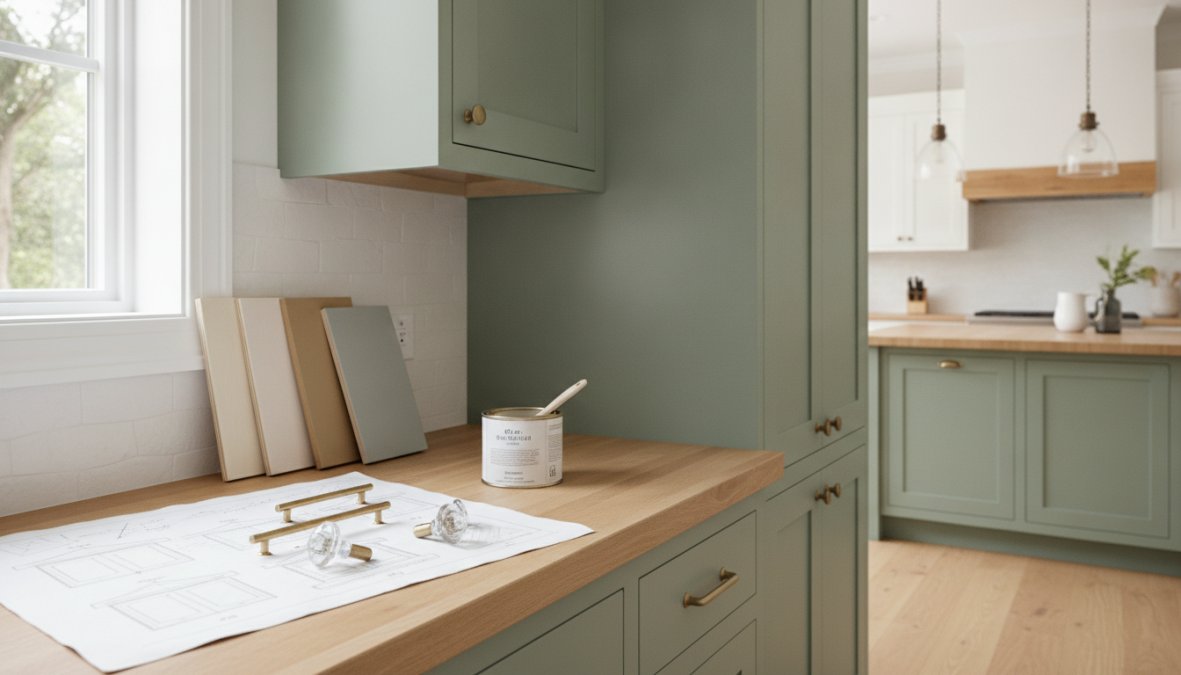
Avoid colors that are trendy but not timeless. If you love a bold color, consider using it on a kitchen island while keeping perimeter cabinets in a neutral tone.
Hinge Adjustment and Maintenance of Custom Inset Cabinets
Inset cabinets require more precise hinge adjustment than full overlay cabinets because uneven reveals are immediately noticeable. Modern cabinet hinges use three adjustment points: vertical (up/down), horizontal (in/out), and depth (forward/backward). A properly adjusted inset cabinet door should have a consistent 1/2-inch reveal on all sides.
Hinge adjustment is typically done during installation, but seasonal wood movement may require minor adjustments after the first year. Maintenance of painted inset cabinets involves regular cleaning with a soft, damp cloth and occasional touch-up of minor scratches. For stained cabinets, a furniture polish designed for wood can help maintain the finish's luster.
The most common maintenance issue is hinges loosening over time due to vibration from repeated opening and closing. A quick check every 12-18 months, tightening hinge screws if needed, prevents larger problems. Soft-close hinges reduce this issue because they close more gradually.
Conclusion: Making Your Custom Color Inset Cabinet Choice
Choosing between inset and full overlay cabinets is ultimately a decision about aesthetic priority versus budget constraints. If you want your kitchen to feel refined, built-in, and timeless, inset cabinetry delivers that appearance in a way full overlay cabinets cannot match.
Custom color inset cabinet options give you the flexibility to specify exact dimensions, wood species, and finishes, whether that's a Sherwin Williams paint color, a natural wood stain, or a two-toned combination. The ability to customize sizing means you can maximize storage in non-standard kitchens without gaps or filler panels.
The precision required for inset cabinetry, in manufacturing, installation, and hinge adjustment, is why these cabinets cost more and require more expertise. But that precision is also why they look and function better over time. If your kitchen is the heart of your home, inset cabinets are an investment worth making.
RESEARCH SOURCES:
According to the National Kitchen and Bath Association's 2026 design trends report, inset cabinetry represents 34% of high-end kitchen renovations, driven by homeowners' desire for timeless aesthetics and customization options.
Sherwin Williams' cabinet finish durability study demonstrates that conversion varnish and polyurethane topcoats on cabinet finishes maintain color stability and resist moisture damage for 15+ years when properly applied and maintained.
Research from the Woodworking Institute on wood movement in cabinet construction confirms that solid hardwood frames in inset cabinetry require seasonal humidity management between 40-55% to minimize reveal changes and hinge binding.
Frequently Asked Questions
What are the most popular custom colors for inset cabinets?
Custom color inset cabinet options range from classic whites and soft neutrals to bold contemporary shades. Many homeowners choose Sherwin Williams paint colors for unlimited customization, including two-toned designs that pair neutral base cabinets with accent island cabinetry. Timeless aesthetics favor soft grays, creams, and navy tones, though your choice depends on your kitchen's overall design style and natural lighting. A free kitchen design service can help you visualize color options before ordering.
How do I choose the right custom color for inset cabinets?
Start by considering your kitchen's lighting, countertop colors, and flooring. Color pairing psychology suggests that warm undertones work well with maple and oak woods, while cool undertones suit contemporary designs. Test paint samples on your wall and observe them at different times of day. Consider how the color will age, lighter shades show dust and fingerprints, while darker tones can feel heavy in small kitchens. Professional design guidance ensures your custom color selection complements your space's architecture and your home's resale value.
What's the difference between inset and full overlay cabinets?
Inset cabinets feature doors that sit flush within the face frame, creating a clean door reveal and a premium, custom appearance. Full overlay cabinets have doors that cover most of the face frame, offering a more modern frameless look and slightly easier installation. Inset cabinets require greater installation precision and tighter tolerances due to wood movement and hinge adjustment needs. Both styles work with custom colors, but inset cabinetry emphasizes the quality of construction and finish, making it ideal for those prioritizing a timeless, bespoke aesthetic.
Are custom color inset cabinets more expensive than standard options?
Custom color inset cabinets reflect premium quality cabinetry construction and the cost of custom sizing, conversion varnish finishes, and unlimited Sherwin Williams paint color choices. Pricing depends on quantity, wood species selection, custom sizing requirements, and delivery timelines. Rather than comparing by price alone, evaluate the value of factory finish durability, installation precision, and the longevity of your investment. Contact RTA Wholesalers for a detailed quote on your specific project requirements and to explore wholesale pricing options.


