 833-377-8663

How to Choose Kitchen Cabinet Door Styles for Farmhouse Kitchens

Table of Contents
- Start With the Farmhouse Look You Actually Want
- Shaker vs. Inset Cabinet Doors: What's the Difference
- Raised Panel vs. Flat Panel Farmhouse Cabinet Doors
- Best Cabinet Colors for Farmhouse Kitchens
- Modern Farmhouse Kitchen Cabinet Ideas That Age Well
- Cabinet Door Maintenance in High-Traffic Farmhouse Kitchens
- Hardware, Sourcing, and Installation: What Else Decides the Look
- Frequently Asked Questions
Last Updated: September 21, 2026
Start With the Farmhouse Look You Actually Want
Farmhouse kitchens split into two camps, and picking your camp first makes every later decision easier. Traditional farmhouse leans warm and lived-in; modern farmhouse strips that down to clean lines and high contrast. This guide from RTA Wholesalers walks through how to choose kitchen cabinet door styles for farmhouse kitchens, from door profile to hardware.
Shaker vs. Inset Cabinet Doors: What's the Difference
The difference comes down to how the door sits in the frame. A shaker door overlays the face frame, sitting proud of the cabinet box. An inset door sits flush inside the face frame, level with the cabinet front. That single geometric difference drives hinge type, reveal, install tolerance, and how the kitchen ages.
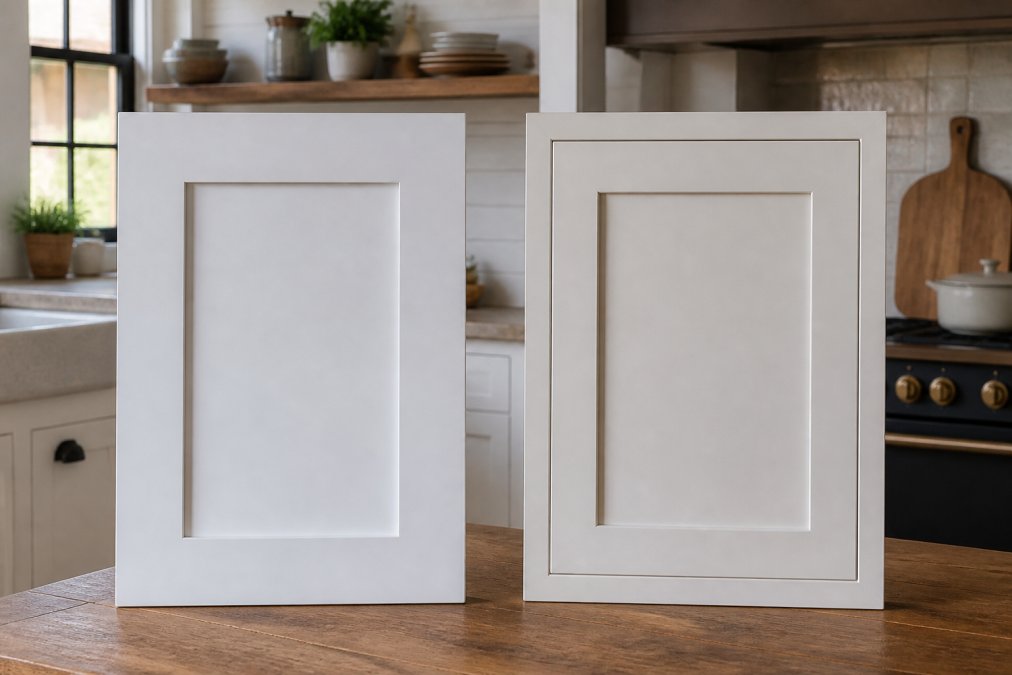
Overlay Styles: Full, Partial, and Inset Compared
| Style | How It Sits | Best For | Watch Out For |
|---|---|---|---|
| Full overlay | Door covers most of the frame | Modern farmhouse, clean lines | Tight gaps need precise install |
| Partial overlay | Door covers part of the frame | Traditional farmhouse, budget builds | Visible frame lines |
| Inset | Door sits flush in the frame | Custom, high-end looks | Needs accurate hinges and sizing |
Full overlay hides the face frame for a seamless look. Partial overlay leaves some frame showing, which suits older farmhouse homes. Inset is the most demanding to install but delivers the crispest result.
The Mechanisms That Separate These Profiles
What changes between these styles is the hinge and the reveal.
- Overlay doors use overlay hinges. The hinge cup mounts inside the door and the plate screws to the face frame. European-style concealed hinges are the norm, and most are six-way adjustable, so you can tune the door after installation.
- Inset doors use inset hinges. The geometry differs because the door swings out of a pocket rather than sitting on top of the frame. Many inset doors also need a small reveal, often around 1/8 inch, so the door does not bind as humidity changes.
- Reveal is the gap you see. On full overlay, it is the gap between adjacent doors; on inset, the gap between door edge and frame. Inset reveals are far less forgiving because any inconsistency shows against the frame line.
Sizing and Fit Constraints
Overlay cabinets forgive a slightly out-of-square wall or face frame because the door covers the frame. Inset cabinets do not. If the opening is not square, the door will not sit flush, and the fix is usually to shim the box or rework the frame.
A few practical sizing notes:
- Inset doors are sized to the opening minus the reveal on all four sides.
- Overlay doors are sized to cover the opening plus a specified overlay amount, often 1/2 inch per side for full overlay.
- Because inset doors are cut to the opening, custom sizing is common; overlay doors can often use standard sizes.
- Inset drawers usually need a different front depth than overlay drawers because the front sits inside the frame.
Which One Belongs in a Farmhouse Kitchen
Traditional farmhouse kitchens often lean toward inset because it matches the furniture-like, built-in look of older homes. Modern farmhouse kitchens usually lean toward full overlay shaker for its clean, uninterrupted surface. Partial overlay is the budget-friendly middle ground and works well when matching existing cabinets. Selecting the right door profile establishes a foundation that complements the broader aesthetic of modern farmhouse furniture throughout the rest of your home.
Raised Panel vs. Flat Panel Farmhouse Cabinet Doors
Raised panel doors have a center panel that rises above the frame; flat panel doors keep that center panel level. Raised panel suits traditional farmhouse, adding visual depth and shadow lines. Flat panel suits modern farmhouse, where a calm, even surface matters more than ornament.
A few things to weigh:
- Raised panel shows dust and grease in the grooves
- Flat panel wipes clean in seconds
- Raised panel costs more to build and finish
- Flat panel works better with full overlay
- Beadboard center panels split the difference
Best Cabinet Colors for Farmhouse Kitchens
White and off-white still lead farmhouse kitchens, but the palette has widened. Warm tones now share space with cooler neutrals, and two-tone kitchens are common.
Color choices that hold up:
- Snow white for a bright, modern farmhouse look
- Vintage white for a softer traditional feel
- Sage green and muted blue as accent islands
- Warm gray for a middle ground
- Natural wood tones left unpainted
Wood Species That Show Grain Well
If you want visible wood grain, the species decides how strong it reads. Hickory shows heavy, dramatic grain with lots of contrast. Maple stays subtle and even. Oak sits in the middle, with open grain that takes stain well. Painted cabinets hide grain almost completely; stained cabinets put it on display. Pick the species based on whether you want grain as a feature or a background.
Farm (Apron) Sink Base Elegant →
Modern Farmhouse Kitchen Cabinet Ideas That Age Well
Trend-proof modern farmhouse skips the gimmicks. Clean shaker doors in a neutral color will still look right in ten years. Heavy distressing and bold two-tone schemes may not.
Ideas with staying power:
- Full overlay shaker doors in snow white
- Matte finish instead of high gloss
- Simple bar pulls or cup pulls in matte black
- Glass-front uppers on one section only
- A wood island against painted perimeter cabinets
Cabinet Door Maintenance in High-Traffic Farmhouse Kitchens
A farmhouse kitchen gets used, and cabinet doors take the hit. Grease, steam, and constant handling wear down finishes faster than most homeowners expect, and farmhouse kitchens lean heavily on light painted finishes that show every fingerprint and scuff. The finish you chose decides how you should actually clean it.
Match the Cleaning Method to the Finish
- Painted finishes (snow white, vintage white, sage, warm gray): Use a damp cloth with mild dish soap and water. Avoid abrasive pads, bleach sprays, and citrus cleaners, which can dull or strip the paint film. Dry immediately, since standing water can leave a ring on matte surfaces.
- Stained and clear-coated wood: A damp cloth is usually enough. Avoid oil soaps on modern catalyzed finishes, which build up a film that traps dust. If the finish looks dry, use a furniture-grade polish made for catalyzed lacquer or conversion varnish.
- Matte and low-sheen finishes: These hide brush marks but show shiny spots where you scrub too hard. Use light pressure and let the soap do the work.
- Glazed or distressed finishes: Glaze sits in the grooves and profiles, and aggressive scrubbing removes it unevenly. Clean gently and accept that some patina is the point.
A Realistic Weekly and Seasonal Routine
- Wipe doors weekly with a damp cloth and mild soap, especially around handles and the bottom edge of upper doors, then dry immediately to avoid water spots on matte finishes.
- Clean grease from around handles and the range hood monthly, since airborne grease settles on door fronts before it reaches the floor.
- Tighten hinge screws twice a year. On overlay doors a loose hinge shows as a sagging door; on inset doors it shows as a door that rubs the frame.
- Touch up painted edges before they chip further; most manufacturers sell a touch-up pen or paint pot in the cabinet's exact color.
- Check the reveal on inset doors seasonally, since wood moves with humidity and a door that closed cleanly in winter may rub in summer.
Hardware and Hinges Do Half the Work
Soft-close hinges cut wear on door frames because the door does not slam, and six-way adjustable hinges let you realign a sagging door without replacing it. That adjustability matters most on inset doors, where a small shift is easy to see against the frame. If your doors are already sagging, check the hinge plate screws first: stripped screw holes in the face frame are a common cause, and a slightly larger screw or wood filler repair often solves it.
When to Refinish Instead of Replace
If the finish is worn but the doors are solid, refinishing is usually cheaper than replacing. Painted doors can be scuff-sanded and recoated; stained doors are harder to spot-repair because the color has to match, so a full door set refinish is often the only clean option. If the doors are still in good shape, keep the boxes and update the doors, which is where custom sizes and custom colors pay off.
Hardware, Sourcing, and Installation: What Else Decides the Look
Hardware sets the final tone and is the cheapest thing to change later. Matte black reads modern; brushed nickel and oil-rubbed bronze read traditional. Cup pulls and exposed hinges push a kitchen toward traditional farmhouse. Cabinet dimension drives spacing: drawers wider than 24 inches usually need two pulls, and a five-piece drawer front looks best with hardware centered on the frame.
Reclaimed and Sustainable Material Options
Reclaimed wood brings instant age to a farmhouse kitchen, along with hidden nails, uneven thickness, and invisible moisture content. Many builders use it on islands and open shelving instead of full door sets.
DIY vs. Professional Installation by Door Profile
Overlay doors forgive small mistakes; inset doors do not. That single fact should decide who installs your cabinets.
- Full and partial overlay: good DIY candidates with basic tools
- Inset: better left to a pro, or ordered with adjustable hinges
- Raised panel: heavier doors, so two people help
- Flat panel: lighter and easier to hang alone
Frequently Asked Questions
What is the most popular cabinet door style for farmhouse kitchens in 2026?
Shaker remains the most requested farmhouse cabinet door in 2026. Its flat center panel and simple square frame work with both traditional and modern farmhouse kitchens, and it hides everyday wear better than ornate profiles. Inset shaker is the fastest-growing option among remodelers because the door sits flush inside the face frame, giving a built-in furniture look. Both are available as ready-to-assemble cabinets, so you can compare profiles in person before ordering.
Are shaker cabinets the best choice for a farmhouse aesthetic?
Shaker doors fit farmhouse kitchens because their clean lines match beadboard, shiplap, and apron sinks without competing for attention. The five-piece door construction, with tongue and groove joinery and a recessed center panel, adds visual depth that flat slab doors lack. That said, raised panel doors suit a more traditional farmhouse, and inset shaker suits a modern one. Match the door profile to your overall design rather than assuming one style fits every farmhouse kitchen.
What color is most suitable for farmhouse kitchen cabinets?
White and off-white remain the safest farmhouse cabinet colors, followed by warm tones like mocha, sage, and natural oak. Neutral hues keep the room bright and let wood grain, hardware, and countertops carry the character. If you want something less common, a custom paint color lets you match a specific palette. Pair darker lower cabinets with lighter uppers when you want contrast without losing the airy farmhouse feel.
How do inset cabinets compare to overlay cabinets for farmhouse designs?
Inset doors sit flush inside the face frame, so you see the frame around every door and drawer front. Overlay doors cover the frame, either fully or partially, and usually cost less and install faster. Inset cabinetry reads as custom furniture, which suits high-end farmhouse kitchens, while full overlay suits budget remodels and rental or flip projects. Both are available as ready-to-assemble cabinets, and a free design review can confirm which profile fits your layout and door swing clearances.


