 833-377-8663

Inset Kitchen Cabinets: The Complete 2026 Guide

Table of Contents
- What Are Inset Kitchen Cabinets?
- Inset vs. Full Overlay Cabinets: Key Differences
- Pros and Cons of Inset Cabinets
- Design Aesthetics: Why Inset Cabinets Command Attention
- Customization Options for Inset Cabinetry
- Inset Cabinet Cost and Budget Considerations
- Installation, Maintenance, and Long-Term Durability
- Conclusion
Inset Kitchen Cabinets: The Complete 2026 Guide
Last Updated: July 15, 2026
What Are Inset Kitchen Cabinets?
Inset kitchen cabinets are a premium cabinetry style where cabinet doors and drawer fronts sit completely flush within the face frame, creating a seamless, integrated appearance. Unlike overlay cabinets where doors sit on top of the frame, inset cabinetry requires precision manufacturing and installation, delivering a furniture-style look that commands attention in any kitchen.
The defining characteristic is how doors align perfectly with cabinet box edges, eliminating visible gaps and creating clean sightlines. This flush-fit design demands tighter tolerances than overlay cabinets, the cabinet box must be square, the face frame perfectly aligned, and hinges precisely adjusted. Many homeowners find the investment worthwhile because inset cabinetry ages gracefully and never feels dated.
Inset vs. Full Overlay Cabinets: Key Differences
Inset cabinetry differs fundamentally from full overlay cabinets in how doors sit relative to the cabinet box frame. With full overlay cabinets, doors cover most of the face frame. With inset cabinetry, doors sit recessed inside the frame opening, exposing the frame's edges around the door perimeter. This distinction affects durability, maintenance, cost, and installation complexity.
Full overlay cabinets are more forgiving during installation because minor misalignments are hidden beneath the door. Inset cabinets expose every millimeter of imprecision, which is why they command higher prices and require more skilled installation.
Visual Appearance and Aesthetic Impact
Inset cabinetry creates shadow lines around each door that catch light and create depth overlay cabinets cannot achieve. The face frame becomes a design element rather than something to hide, delivering a furniture-style look that appeals to homeowners seeking carefully curated spaces.
Full overlay cabinets offer a sleeker, more contemporary appearance with unbroken door lines. However, overlay cabinets can feel less refined in traditional or transitional kitchens where inset cabinetry's classic proportions feel more natural.
Hardware compatibility also differs. Inset cabinets typically use butt hinges or concealed hinges mounted to inside door edges, while overlay cabinets often feature visible cup hinges. The hinge reveal becomes part of inset cabinetry's charm when designed correctly.
Cabinet Construction and Precision Requirements
Inset cabinet construction demands significantly tighter tolerances than overlay. The cabinet box must be square within 1/8 inch across all dimensions, and the face frame must be perfectly flat and aligned. Doors must be built to exact specifications so they fit frame openings without binding or rattling.
This precision requirement increases manufacturing costs. Inset doors typically have a gap of 1/16 to 1/8 inch between the door edge and face frame, enough space for the door to swing freely but tight enough to look intentional. Full overlay cabinets tolerate more variation because the door covers the frame, making them faster to produce and easier to install.
Pros and Cons of Inset Cabinets
Advantages of the Inset Design
Inset cabinetry delivers genuine advantages justifying the investment. The furniture-style aesthetic elevates the entire kitchen's perceived value and sophistication. The face frame provides structural support that helps the cabinet box maintain its shape over decades, while the inset design protects door edges from impact damage.
The design ages well, inset cabinetry looks as refined in 20 years as on installation day. The proportions feel timeless because the style has been refined over centuries of furniture-making tradition. Overlay cabinets often feel dated within 10-15 years as design trends shift.
Customization options are extensive with inset cabinetry. Wood species, stain colors, and paint finishes all become visible design elements. At RTA Wholesalers, custom color inset cabinetry is available in most any size, along with special order oak inset kitchen cabinets and snow-white custom-order options.
Limitations and Challenges
Installation mistakes are visible and difficult to correct. If a cabinet box is slightly out of square or a face frame isn't perfectly flat, doors will bind or gaps will be uneven. This is why inset cabinet installation should only be handled by experienced carpenters who understand the tolerances involved.
Maintenance demands are higher than overlay cabinets. The visible face frame collects dust in shadow lines, and cleaning around the door perimeter takes more time. Climate expansion and contraction presents a real challenge, wood naturally expands and contracts with humidity changes, potentially causing doors to bind during humid months or creating larger gaps during dry seasons. Proper finishing and installation minimize this issue but cannot eliminate it entirely.
The cost difference is substantial. Inset cabinetry typically costs 20-40% more than comparable overlay options due to manufacturing precision, material quality, and installation complexity.
Design Aesthetics: Why Inset Cabinets Command Attention
Furniture-Style Look and High-End Appeal
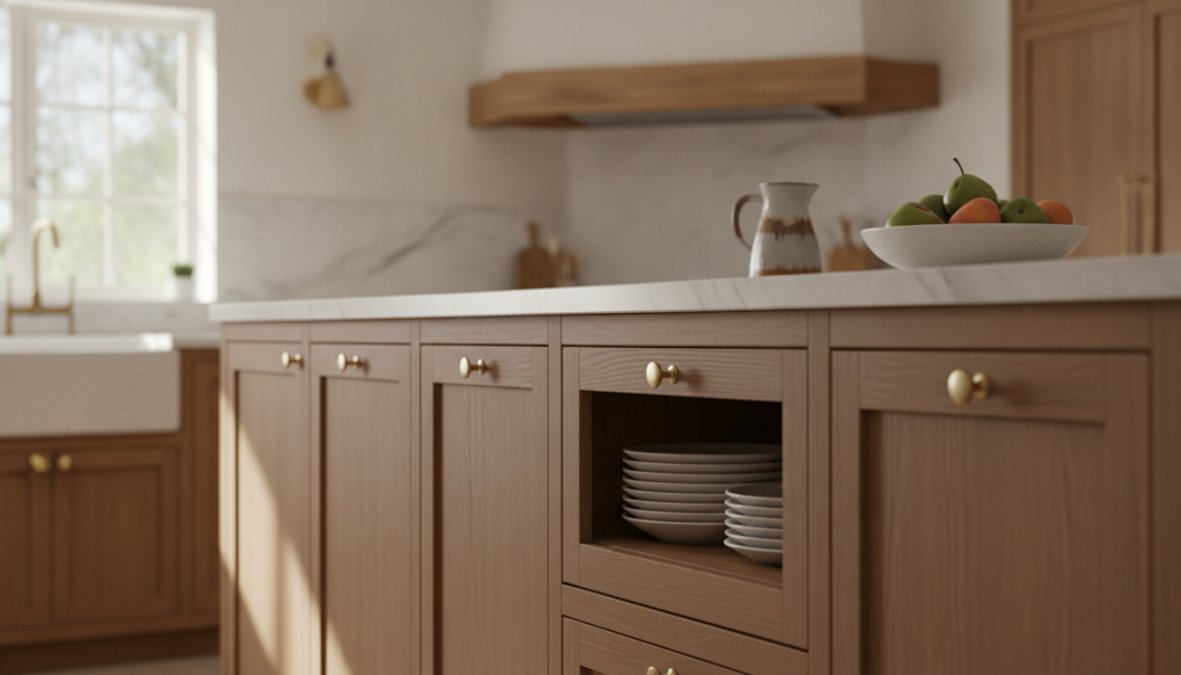
The furniture-style look of inset cabinetry comes from the visible face frame and how doors sit within it, a design principle borrowed from fine furniture-making traditions. The proportions feel intentional and refined rather than industrial or mass-produced.
This furniture aesthetic works across design styles. In traditional kitchens, inset cabinetry with beaded details and ornate hardware feels authentic. In transitional kitchens, clean-lined inset cabinets with simple hardware create understated elegance. Even contemporary spaces work with inset cabinetry when paired with minimalist hardware and neutral finishes.
The high-end appeal comes from visible craftsmanship. You can see the quality of the wood, precision of joinery, and care taken in finishing. When a potential buyer walks into a kitchen with inset cabinetry, they immediately perceive it as a premium space.
Hardware Compatibility and Hinge Reveal
Hardware selection becomes more important with inset cabinetry because hinges and pulls are more visible. The hinge reveal, the small gap where the hinge attaches to the door, becomes part of the design. Butt hinges mounted on the inside edge of inset doors create a clean look with minimal visible hardware. Concealed hinges offer similar aesthetics but provide more adjustment capability if doors need fine-tuning after installation.
Cabinet hardware pulls and knobs also take on greater importance. With inset cabinetry, hardware becomes a design accent. A simple cup pull on a shaker-style inset cabinet creates a completely different look than a modern bar pull.
Customization Options for Inset Cabinetry
Wood Species, Stain Colors, and Paint Finishes
Inset cabinetry offers extensive customization because the face frame and all visible surfaces showcase your chosen finish. Wood species selection dramatically affects the final look. Oak inset kitchen cabinets create a traditional aesthetic with prominent grain patterns. Maple offers a more contemporary appearance with subtle grain. Cherry provides warmth and richness that deepens over time.
Stain color options are virtually unlimited, from light honey tones to deep espresso finishes. Paint finishes offer even greater flexibility with unlimited Sherwin Williams paint color choices. White paint creates a clean, classic look. Soft grays offer contemporary sophistication. Bold colors like navy or sage green create personality and visual interest. Paint also hides wood grain variations and provides a durable, wipeable finish.
Custom Sizes and Bespoke Configurations
One of the greatest advantages of inset cabinetry is the ability to build custom sizes and bespoke configurations. Unlike stock overlay cabinets that come in standard widths and heights, inset cabinets can be built to fit your exact space and accommodate specific needs.
Custom sizes eliminate awkward gaps or unused space. Drawer configurations can be customized to hold specific items, deep drawers for pots and pans, shallow drawers for utensils, divided drawers for organizing. Cabinet heights can accommodate unusual ceiling heights or architectural details.
At RTA Wholesalers, custom color inset cabinetry is available in most any size, giving you complete control over your kitchen's final appearance and functionality. Our free kitchen design service helps you plan configurations that work perfectly for your space and lifestyle.
Inset Cabinet Cost and Budget Considerations
RTA vs. Custom Inset: Cost-Benefit Analysis
Ready-to-assemble (RTA) inset cabinets come pre-built and ready to assemble, reducing manufacturing costs significantly compared to fully custom cabinetry. If your kitchen has standard dimensions and you're comfortable with available wood species and stain color options, RTA inset cabinets deliver excellent value.
Fully custom inset cabinetry costs more because every component is built specifically for your space. This custom approach is necessary if your kitchen has unusual dimensions, architectural features, or specific design requirements that stock options cannot accommodate.
For many homeowners, a hybrid approach works best. RTA inset cabinets handle the bulk of the kitchen, while a few custom pieces address specific needs or unusual spaces.
| Cabinet Type | Production Timeline | Customization Level | Best For |
|---|---|---|---|
| RTA Inset | 5 weeks | Standard sizes, wood species, stains | Standard kitchens, budget-conscious projects |
| Custom Inset | 8-12 weeks | Complete customization | Unique spaces, specific design requirements |
| Hybrid Approach | 5-8 weeks | Mixed | Most residential kitchens |
Factors That Influence Final Investment
Installation complexity affects labor costs. If your kitchen requires significant preparation, plumbing relocation, or electrical work, these costs add up quickly. The extent of customization directly impacts price, more custom sizes, special finishes, and unique configurations increase manufacturing costs.
Hardware selection contributes to the final cost. Premium hardware is visible on inset cabinets so the investment is noticeable. Installation quality matters enormously. Hiring experienced carpenters who understand inset cabinet tolerances costs more than hiring general handymen, but the difference in final results is substantial.
Installation, Maintenance, and Long-Term Durability
Climate Expansion and Face Frame Care
Wood naturally absorbs and releases moisture in response to humidity changes. In humid environments, wood expands slightly. In dry environments, it contracts. Inset cabinets are more sensitive to this movement because doors must fit precisely within the frame opening. Seasonal humidity swings can cause doors to bind slightly during humid months or create slightly larger gaps during dry seasons.
Proper finishing minimizes expansion and contraction. High-quality polyurethane or conversion varnish finishes seal wood more effectively than penetrating oils or stains alone. In kitchens with proper ventilation, climate control, and quality finishes, seasonal binding is usually imperceptible.
The face frame requires periodic care. Dust collects in the shadow lines created by the inset design. Regular dusting with a soft cloth keeps the frame looking fresh. Occasional cleaning with a damp cloth removes grime, but avoid excessive moisture that could swell the wood.
Cleaning and Preserving Cabinet Finish
Paint finishes are durable and easy to clean, a damp cloth with mild soap handles most spills and daily grime. Avoid abrasive scrubbers that can scratch paint.
Stained finishes require more care. Dust regularly with a soft, dry cloth. For cleaning, use a cloth barely dampened with water; excessive moisture can darken wood or cause swelling. If stain becomes dull over time, a wood polish or conditioner restores luster without requiring refinishing.
Polyurethane finishes are the most durable and easiest to maintain. They resist moisture, heat, and staining better than other finishes. Clean with a slightly damp cloth and mild soap.
Hardware requires occasional attention. Wipe metal hardware with a dry cloth to prevent tarnishing. If hinges become stiff, a tiny amount of silicone lubricant on the hinge pin helps them operate smoothly.
Conclusion
The choice between inset and overlay cabinetry comes down to your priorities. If you value furniture-style aesthetics, long-term durability, and visible craftsmanship, inset cabinets deliver on all counts. The precision manufacturing and installation requirements demand more expertise, but the result is a kitchen that feels intentional and refined.
At RTA Wholesalers, we understand that every kitchen project is unique. Our inset cabinets are available in custom sizes and custom colors at wholesale pricing, with assembled options ready in just 5 weeks. Whether you choose special order oak inset kitchen cabinets or custom color options with unlimited Sherwin Williams paint colors, our free kitchen design service helps ensure your project succeeds.
According to the National Association of Home Builders 2026 Remodeling Report, kitchen cabinetry represents one of the highest-value investments homeowners can make. Research from Kitchen Cabinet Manufacturers Association demonstrates that properly finished and maintained cabinetry can last 30+ years while maintaining aesthetic appeal. For homeowners seeking guidance on cabinet selection and installation, the American Society of Interior Designers provides resources on evaluating cabinetry quality and design integration.
Frequently Asked Questions
What are inset kitchen cabinets and how do they work?
Inset kitchen cabinets feature doors and drawer fronts that sit flush within the face frame, creating a seamless, integrated appearance. The cabinet box remains visible around the perimeter, giving them a distinctive furniture-style look. This design requires precise measurements and higher-quality cabinet construction compared to overlay options, making them a premium choice for high-end kitchen renovations.
Are inset cabinets more expensive than full overlay cabinets?
Inset cabinets typically require greater precision in manufacturing and installation, which can affect overall project investment. However, the final cost depends on wood species selected, custom sizing, paint or stain colors, and your specific project scope. Contact RTA Wholesalers for a detailed quote on custom inset options that fit your budget and timeline.
What are the main pros and cons of inset cabinets?
Pros include superior aesthetics, a high-end furniture appearance, excellent durability, and full customization in wood species and colors. Cons include higher precision requirements during installation, potential wood movement in humid climates, and more meticulous maintenance of the visible face frame. The visible hinges and cabinet gaps also require compatible hardware selection for a polished look.
How do inset cabinets handle humidity and climate changes?
Wood naturally expands and contracts with humidity and temperature fluctuations. Inset cabinets are more susceptible to visible gaps and alignment issues during these changes because the doors sit within the frame. Proper installation, adequate ventilation in your kitchen, and regular monitoring of cabinet doors help minimize climate-related issues. Quality construction and appropriate wood species selection reduce expansion risks significantly.


