 833-377-8663

Shaker Kitchen Cabinets: Design, Durability & Style Guide

Table of Contents
- What Are Shaker Kitchen Cabinets?
- Why Choose Shaker Style Cabinets?
- Materials and Finishes for Shaker Cabinets
- Shaker Cabinet Pros and Cons
- Modern Shaker Kitchen Ideas and Design Applications
- Cost of Shaker Cabinets and Wholesale Options
- How to Clean and Maintain Shaker Cabinets
- Conclusion
Last Updated: June 29, 2026
What Are Shaker Kitchen Cabinets?
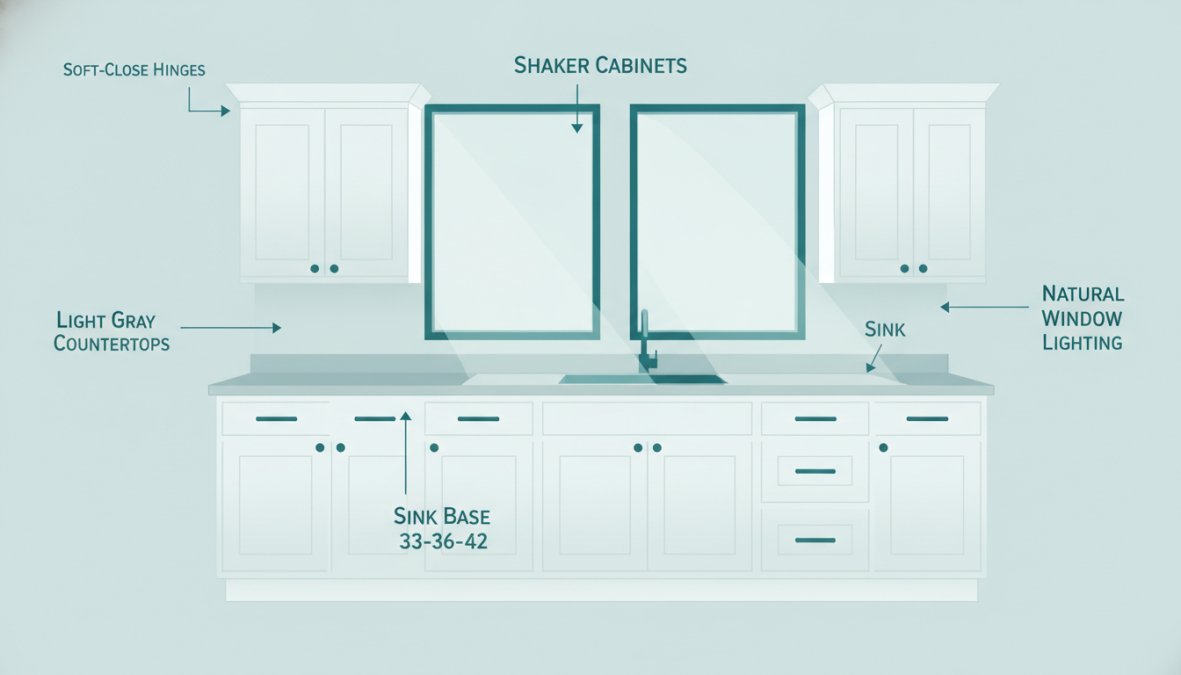
Shaker kitchen cabinets represent one of the most enduring cabinet styles in residential design. These cabinets feature a distinctive five-piece door construction with a recessed center panel, creating clean lines that work equally well in farmhouse renovations or modern minimalist kitchens. The hallmark of shaker design is simplicity: rather than relying on decorative molding, shaker cabinets achieve their appeal through proportion, quality craftsmanship, and honest construction. The five-piece door consists of a frame made from vertical stiles and horizontal rails, with a flat or slightly recessed center panel. This construction method is both visually appealing and structurally sound, built to last decades with proper care.
What makes shaker cabinets particularly versatile is their ability to adapt to different kitchen environments. Whether in a small galley kitchen or sprawling open concept space, the clean geometry of shaker doors provides visual continuity without overwhelming the room.
Design Characteristics and Five-Piece Door Construction
The five-piece door construction defines shaker cabinets. This method uses a solid wood frame, typically made from maple, oak, or other hardwoods, with vertical stiles on the sides and horizontal rails on top and bottom. The center panel sits slightly recessed within this frame, creating a subtle three-dimensional effect that catches light beautifully.
This design offers practical advantages beyond aesthetics. The recessed panel allows for wood movement in response to humidity changes, essential for long-term durability. Unlike flat-panel doors that can warp or crack as wood naturally expands and contracts, five-piece construction accommodates these changes gracefully. The frame remains stable while the center panel moves independently within it. Quality manufacturers understand that proportions matter significantly, a poorly proportioned shaker door looks awkward and cheap, while a well-executed one feels intentional and refined.
Why Choose Shaker Style Cabinets?
Shaker cabinets dominate the market because they solve a fundamental problem: how do you create cabinetry that looks beautiful, lasts for decades, and works with multiple design directions simultaneously? The answer lies in the style's restraint. By refusing to commit to a specific era or trend, shaker cabinets become a blank canvas for your kitchen's personality.
Timeless Aesthetic and Versatility
The timeless appeal of shaker kitchen cabinets stems from their refusal to chase trends. This style emerged from Shaker furniture traditions in the 1800s, emphasizing function and honest construction over decoration. That philosophy has proven remarkably durable, shaker cabinets look equally at home in a 1970s kitchen renovation and a brand-new build in 2026.
Versatility extends across color options and finish treatments. White shaker cabinets create a bright, airy feel that works beautifully in farmhouse and contemporary kitchens. Natural wood stains, particularly maple and oak, bring warmth and traditional character. Painted finishes in custom colors allow you to match any design direction, from soft greige for transitional spaces to bold navy for statement-making modern kitchens. The real advantage is that your cabinet investment doesn't lock you into a specific design direction, if you change your kitchen's aesthetic in five or ten years, your shaker cabinets adapt.
Durability and Construction Quality
Durability in shaker cabinets comes down to three factors: wood species selection, construction method, and finishing quality. The five-piece door construction is inherently more durable than simpler door styles because the frame distributes stress evenly. Maple is the gold standard for shaker cabinets, it's dense, stable, and takes stain beautifully. Plywood box construction, rather than solid wood boxes, offers superior resistance to moisture and humidity fluctuations. Quality manufacturers use dovetail drawer construction, which creates joints that strengthen rather than weaken over time.
The finishing process determines whether your shaker cabinets will look fresh and protected in year ten or show signs of wear. Multi-coat finishes, whether stain or paint, provide superior protection against moisture, kitchen heat, and daily handling. Soft-close hinges and drawer glides dramatically extend cabinet lifespan by reducing stress on hardware and wood.
Materials and Finishes for Shaker Cabinets
The material choices available for shaker kitchen cabinets range from budget-conscious to premium, each offering different performance characteristics and aesthetic results.
Solid Wood, Plywood, and MDF Options
Solid wood represents the traditional choice for shaker cabinet construction. Maple offers the finest grain structure and takes stain evenly, making it ideal for natural wood finishes. Oak provides similar durability with more prominent grain patterns.
Plywood box construction, where cabinet sides, shelves, and backs are made from plywood rather than solid wood, offers practical advantages for residential kitchens. Plywood is more stable than solid wood in response to humidity changes, reducing the risk of warping or splitting. It's also more affordable while maintaining structural integrity. MDF (medium-density fiberboard) is increasingly common for painted finishes, providing an exceptionally smooth surface that takes paint beautifully and resists moisture better than solid wood when properly sealed.
The best approach for residential kitchens combines solid wood where it matters, doors, drawer fronts, and visible frame components, with plywood or MDF for structural elements. This balances durability, cost, and aesthetics effectively.
Color Options: Stains and Paint Finishes
Natural wood stains showcase the grain character of your chosen species. Light stains emphasize maple's subtle grain, while medium and dark stains bring out depth and warmth. Paint finishes offer unlimited color possibilities. White shaker cabinets remain the most popular choice, working across nearly every design aesthetic. Grays, from soft greige to bold charcoal, create contemporary sophistication. Custom color options through Sherwin Williams paint selections allow you to match your kitchen's exact color direction.
The finish quality matters as much as the color choice. Professional-grade finishes with multiple coats provide better protection and durability than single-coat applications. Lacquer finishes offer superior hardness and moisture resistance compared to water-based alternatives, though water-based options have improved significantly and are more environmentally friendly.
Shaker Cabinet Pros and Cons
Understanding the strengths and limitations of shaker cabinets helps you make informed decisions about whether this style matches your kitchen needs and preferences.
| Aspect | Pros | Cons |
|---|---|---|
| Design Versatility | Works with multiple design styles; adapts to changing preferences | Simplicity means less visual drama than statement-making styles |
| Durability | Five-piece construction is structurally sound; proven longevity | Requires quality materials and finishing to achieve full lifespan |
| Cost | Wide range of price points available; good value at most levels | Premium options can be expensive; cheap versions show quality gaps quickly |
| Maintenance | Relatively simple to clean; finishes hold up well to daily use | Painted finishes can show fingerprints; stained finishes require periodic refinishing |
| Customization | Widely available in custom sizes and colors | Lead times vary; true custom work takes longer than stock options |
The primary advantage of shaker cabinets is their proven track record. Thousands of kitchens built with shaker cabinets in the 1990s still look beautiful and function perfectly in 2026. The main limitation is that simplicity means you're relying on quality execution to create visual impact. A poorly made shaker cabinet looks cheap and generic; a well-made one looks refined and intentional.
Modern Shaker Kitchen Ideas and Design Applications
Shaker cabinets have evolved beyond their traditional roots to become central players in contemporary kitchen design. The style's flexibility allows it to anchor kitchens ranging from farmhouse to minimalist modern.
Contemporary and Transitional Styles
Contemporary shaker kitchens typically feature clean white or soft gray painted cabinets paired with minimalist hardware, flat-front appliances, and simple countertops. The beauty of this approach is that the cabinets recede visually, allowing countertops, backsplash, and lighting to become design focal points.
Transitional kitchens blend traditional and contemporary elements, and shaker cabinets are perfect for this purpose. Pair natural wood shaker cabinets with transitional hardware and you create a kitchen that feels both timeless and current. The key to successful modern shaker design is understanding that the cabinets are the foundation, not the focal point. Your design energy should go into selecting beautiful hardware, creating interesting backsplash designs, and choosing countertops that tell your kitchen's story.
Hardware Pairing and Soft-Close Features
Hardware selection dramatically affects how modern your shaker kitchen feels. Minimalist hardware, thin bar pulls or simple cup pulls in brushed nickel or matte black, creates contemporary visual lightness. The same shaker cabinet can look completely different depending on hardware choice.
Soft-close hinges and drawer glides represent the single best investment you can make in cabinet quality. Beyond the obvious convenience of quiet, controlled closing, soft-close mechanisms reduce stress on wood and hardware over time. Cabinets with soft-close features hold their value better and require less maintenance than traditional hinges.
Cost of Shaker Cabinets and Wholesale Options
Shaker cabinet pricing varies dramatically based on materials, construction quality, and customization level. Stock shaker cabinets from big-box retailers represent the most affordable option but often use lower-quality materials and construction methods. Semi-custom options offer the middle ground that makes sense for most residential kitchens, providing quality construction with solid wood doors and plywood boxes, combined with flexibility in sizing and color selection.
RTA vs. Pre-Assembled Cabinets
Ready-to-assemble (RTA) cabinets ship in flat-pack form, requiring assembly on-site. This approach offers significant advantages: lower shipping costs, easier handling during installation, and the ability to customize sizing right up to delivery. Pre-assembled cabinets arrive ready to install, which saves labor time, but they're heavier to transport and any customization requires special ordering.
The real advantage of wholesale pricing is that you're purchasing directly from the manufacturer rather than through retail markups. This allows you to invest more in quality materials and finishes rather than paying for multiple distribution layers. Custom order inset cabinets at wholesale pricing represent exceptional value, particularly when you need specific sizing or color matching for your kitchen layout.
How to Clean and Maintain Shaker Cabinets
Proper maintenance ensures your shaker kitchen cabinets remain beautiful and functional for decades. Daily cleaning involves wiping cabinet faces with a soft, damp cloth. For painted finishes, use a mild soap solution and dry immediately to prevent water spots. For stained finishes, use a wood-specific cleaner that won't strip protective finishes.
Hardware deserves attention during cleaning. Soft-close hinges and drawer glides accumulate dust and debris that can affect smooth operation. Use a soft brush to clean around hinges monthly, and occasionally wipe down glides with a dry cloth.
Long-Term Care and Refinishing Guide
Over five to ten years, painted cabinet finishes may show wear in high-traffic areas. Rather than replacing cabinets, consider refreshing the finish. A professional cabinet refinishing company can lightly sand the existing finish, apply new coats of paint or stain, and restore your cabinets to like-new condition at a fraction of replacement cost.
Moisture is the primary enemy of cabinet longevity. Ensure your kitchen ventilation removes cooking steam effectively. Wipe up spills immediately, particularly around sink areas where water exposure is highest. Hardware maintenance extends cabinet lifespan significantly, soft-close hinges occasionally need adjustment if doors begin to sag, and drawer glides should be checked annually for smooth operation.
Conclusion
Shaker kitchen cabinets remain the most versatile and durable cabinet style available because they solve the fundamental challenge of creating kitchens that look beautiful, function flawlessly, and adapt to changing preferences over time. The five-piece door construction provides structural integrity that lasts decades. The clean aesthetic works across design styles from farmhouse to contemporary. The material options allow you to balance quality and budget effectively.
The challenge most homeowners face is distinguishing between quality shaker cabinets and budget alternatives that look similar but perform very differently over time. RTA Wholesalers offers inset cabinets in custom sizes and custom colors at wholesale pricing, combining quality construction with the flexibility you need for your specific kitchen. With assembled cabinets available in just 5 weeks in a multitude of wood species and stain colors or an unlimited choice of Sherwin Williams paint colors, you get personalization without extended lead times. Start with RTA Wholesalers and build the kitchen you'll love for decades.
Frequently Asked Questions
What makes a kitchen cabinet a Shaker style?
Shaker kitchen cabinets are defined by their recessed center panel and five-piece door construction. Each door features a solid frame with a recessed panel in the center, creating clean lines and a minimalist design. This distinctive five-piece configuration, four frame pieces surrounding one panel, is what distinguishes shaker cabinets from overlay or inset styles. The simplicity of this design is rooted in traditional Shaker furniture craftsmanship, emphasizing function and understated elegance.
Are Shaker cabinets still in style for 2026?
Yes, shaker kitchen cabinets remain a timeless aesthetic choice in 2026. Their versatility allows them to work in traditional, transitional, and contemporary kitchen designs. Shaker cabinets serve as a neutral foundation that pairs well with various countertops, backsplashes, and hardware styles. Whether finished in classic white, natural wood stains, or unlimited Sherwin-Williams paint colors, shaker cabinets adapt to evolving design trends while maintaining their enduring appeal.
What are the main pros and cons of Shaker cabinets?
Shaker cabinets offer significant advantages: they're durable, affordable, customizable, and work across multiple design styles. Their simple construction using solid wood or plywood box construction ensures longevity. Key drawbacks include limited storage compared to some modern designs and the potential for visible dust on recessed panels. They also require regular cleaning to maintain their appearance. However, their timeless aesthetic and ease of maintenance make them a practical choice for most kitchen remodels.
How much do Shaker kitchen cabinets cost on average?
Shaker cabinet pricing varies based on materials, finish quality, and customization. Ready-to-assemble (RTA) options offer affordable entry points, while pre-assembled cabinets provide convenience at a higher cost. Custom inset cabinets with specialized finishes command premium pricing. Wholesale pricing options are available for those seeking value without compromising quality. For exact pricing and options tailored to your project, consulting with a kitchen design service can help identify the best solution for your budget and specifications.


