 833-377-8663

Soft Close vs Self Close Cabinet Hinges: Which Is Best?

Table of Contents
- What Are Self-Close Hinges?
- What Are Soft-Close Hinges?
- Key Differences Between Soft Close and Self Close Hinges
- Benefits of Soft Close Hinges for Your Kitchen
- Are Soft Close Hinges Worth the Extra Cost?
- Replacing Cabinet Hinges DIY: What You Need to Know
- Making Your Choice: Which Hinge Type Fits Your Project
Last Updated: August 29, 2026
What Are Self-Close Hinges?
Self-close hinges use a spring-loaded mechanism to automatically pull cabinet doors shut. When you push a door closed, the hinge's internal spring engages and snaps the door into the frame. These hinges have been the standard choice in cabinetry for decades because they're straightforward, reliable, and require minimal maintenance.
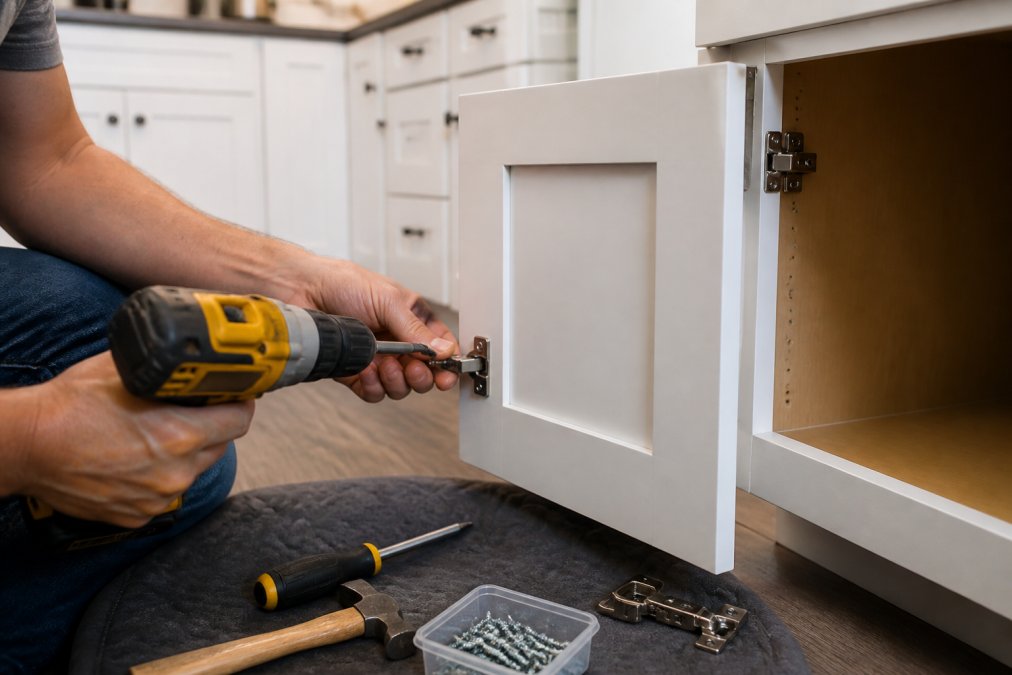
The spring mechanism stores energy as the door opens, then releases it to drive the door closed quickly and directly. Self-close hinges come in different strengths, some require just a gentle push to activate, while others need a firmer hand. One limitation is that they work best when doors are properly aligned. If a cabinet has settled or doors have shifted over time, a self-close hinge may not close as smoothly. Spring tension can also wear out after years of heavy use, especially in high-traffic kitchens.
Self-close hinges are available in multiple mounting styles: full overlay, partial overlay, and inset configurations. For DIY projects, they're straightforward to install because the mechanism is simple with no fluid components or special adjustments needed beyond basic alignment.
What Are Soft-Close Hinges?
Soft-close hinges use a hydraulic damper to slow the door's closing speed gradually (peer-reviewed research). Instead of snapping shut, the door eases closed over the final few inches, coming to rest gently against the frame. This controlled deceleration happens automatically, just push the door, and the hinge takes care of the rest.
The hydraulic damper contains a specially formulated fluid that resists movement (peer-reviewed research). As the door closes, a piston moves through this fluid, creating resistance that slows the door progressively. The result is a smooth, quiet closing motion that eliminates slamming and reduces noise significantly compared to traditional spring-loaded hinges.
Soft-close hinges are more complex mechanically than self-close hinges. The damper requires precision engineering to maintain seal integrity over time. However, modern soft-close hinges are built to last many years with proper installation, and quality models come with warranties reflecting their durability. One key advantage is that they reduce stress on cabinet doors and frames, the gentle closing motion means less impact, less vibration, and less wear on mounting hardware over time, potentially extending your cabinetry's lifespan (peer-reviewed research).
Key Differences Between Soft Close and Self Close Hinges
The most obvious difference is closing speed. Self-close hinges shut quickly and decisively, while soft-close hinges close gradually with most deceleration in the final inches. This fundamental difference affects user experience, noise level, and long-term wear.
| Factor | Self-Close Hinges | Soft-Close Hinges |
|---|---|---|
| Closing Speed | Fast and immediate | Gradual and controlled |
| Noise Level | Audible closing sound | Nearly silent |
| Damping Technology | Spring-loaded mechanism | Hydraulic fluid damper |
| Maintenance | Minimal; spring may weaken over time | Seal integrity critical; fluid may leak |
| Installation Complexity | Straightforward | Requires careful alignment |
| Door Alignment Sensitivity | Moderate | Higher; alignment affects damper performance |
| Cost Category | Lower upfront | Higher upfront |
| Best For | High-volume use, budget-conscious projects | Noise-sensitive spaces, premium finishes |
Soft-close hinges are engineered to support specific door weights, and exceeding capacity can compromise the damper seal. Self-close hinges, being purely mechanical, are generally more forgiving with weight variations. Retrofitting compatibility is another practical consideration, self-close hinges usually swap in easily with standard mounting plates, while soft-close hinges sometimes require slightly different hardware or cabinet modifications for adequate damper clearance.
Benefits of Soft Close Hinges for Your Kitchen
The most immediate benefit is elimination of slamming. Cabinet doors close smoothly and silently, creating a more refined feel, especially valuable in open-concept kitchens where cabinet noise travels into living areas. Soft-close hinges also protect cabinetry from cumulative damage. Every slam creates impact stress on the frame, hinges, and door. Over years of use, this adds up. Soft-close hinges distribute closing force gradually, reducing stress on all components and extending overall cabinet stability.
For premium cabinet finishes, soft-close hinges signal attention to detail and craftsmanship. The gentle closing motion feels appropriate to the quality level. Soft-close hinges also reduce the risk of pinched fingers, when doors close gradually instead of snapping shut, there's less danger of catching hands in the closing motion, a real safety benefit for households with young children or elderly family members.
Are Soft Close Hinges Worth the Extra Cost?
Whether soft-close hinges justify their higher upfront cost depends on your priorities and timeline. If you're renovating a kitchen you'll live in for 10+ years, the benefits compound, years of quiet operation, reduced stress on cabinetry, and fewer maintenance concerns. The initial investment spreads across a long timeline, lowering per-year cost significantly.
For property flippers or rental investments, the equation differs. If you're updating a kitchen to sell or rent quickly, the upfront cost may not pay back through resale value or rental rates. In that scenario, self-close hinges deliver solid functionality at lower cost, protecting your profit margin.
Consider your kitchen's usage patterns. In a busy household where cabinets open and close dozens of times daily, soft-close hinges reduce cumulative wear significantly. In a light-use kitchen, the wear difference is minimal. The noise factor also matters more in some homes, if your kitchen is adjacent to living spaces where quiet matters, soft-close hinges deliver real quality-of-life improvement.
Think about overall cabinet quality too. If you're installing high-end custom cabinetry with premium finishes, soft-close hinges feel appropriate and enhance perceived quality. One practical consideration: soft-close hinges require more precise installation. If hiring a professional installer, labor cost is similar for both types. If doing DIY installation, soft-close hinges demand more attention to alignment and adjustment.
Replacing Cabinet Hinges DIY: What You Need to Know
Replacing cabinet hinges is a manageable DIY project if you approach it systematically. Start by examining your existing hinges and noting whether your doors are full overlay, partial overlay, or inset. This determines which hinge type will fit your cabinet.
Before removing hinges, take photos of your cabinet doors in their current position as a reference for alignment. Mark which hinges go on which doors, as many cabinets have multiple door sizes with varying hinge positions. durable cabinet materials.
To remove old hinges, use a drill or screwdriver to back out the mounting screws. Remove all fasteners and gently lift the door away from the cabinet, setting it on a padded surface to prevent finish damage.
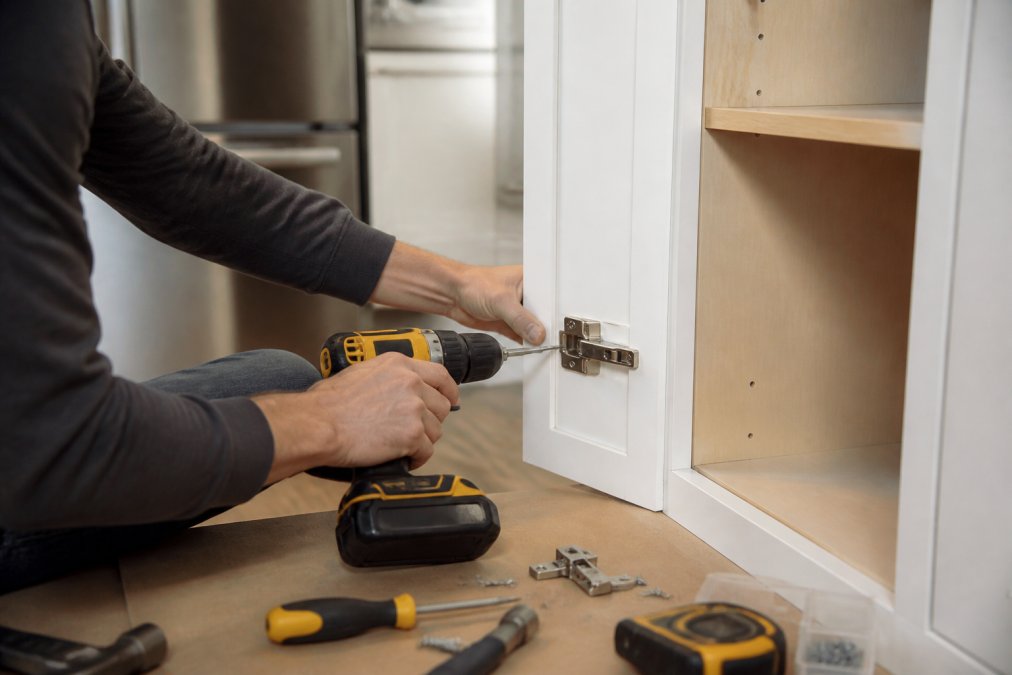
Examine the hinge cup, the recessed hole in the door where the hinge sits. If replacing self-close with soft-close hinges of the same brand, the cup depth should match. If switching brands or types, verify that new hinge cup diameter and depth are compatible.
Install new hinges by aligning the cup and inserting the hinge body. Secure with provided screws, but don't tighten fully yet. Hang the door on the cabinet frame and check alignment, it should sit evenly with consistent gaps on all sides. Adjust hinge position slightly if needed. Once alignment looks correct, tighten all screws fully. For soft-close hinges, test the closing action to ensure smooth operation.
A common mistake is installing hinges too tightly before checking alignment. Install snugly enough to hold position, but leave room for fine-tuning before final tightening. If replacing hinges in older cabinets, screw holes may be enlarged or damaged, use slightly larger screws or wooden shims to restore a tight fit.
The entire process typically takes 30-60 minutes per door. Work methodically to avoid misalignment and frustration.
Making Your Choice: Which Hinge Type Fits Your Project
Choose self-close hinges if you're working within a tight budget, prioritizing cost efficiency, or replacing hinges in a rental property or short-term project. Self-close hinges are proven, reliable, and require minimal maintenance. They work well in high-volume kitchens where noise isn't a primary concern.
Choose soft-close hinges if noise reduction matters, you're investing in a long-term home renovation, or you want to elevate perceived cabinetry quality. Soft-close hinges make sense for kitchens adjacent to living spaces or bedrooms where quiet operation is valued. They're ideal for custom color inset cabinets or premium finishes where the refined closing motion matches overall quality level.
Consider your installation comfort level too. If confident in DIY installation and precise alignment, either hinge type works. If alignment concerns you, self-close hinges are more forgiving. Think about your kitchen's future, if you plan to stay 10+ years, soft-close hinges deliver better long-term value through reduced wear and refined operation.
At RTA Wholesalers, we work with both hinge types across our cabinet offerings. Our Inset cabinets are top quality and available in Custom sizes and Custom colors at great Wholesale pricing. Our assembled cabinets are available in just 5 weeks in a multitude of wood species and stain colors or an unlimited choice of Sherwin Williams paint colors. Our inset cabinets and overlay options are compatible with quality soft-close and self-close hinges, giving you flexibility to choose what matches your project scope and budget. Our free kitchen design service can help you evaluate hinge options as part of your overall cabinet selection. Whether you're upgrading hinges or planning a complete cabinet refresh, the right choice depends on balancing upfront cost, long-term performance, and how your kitchen will feel and sound for years to come.
Choosing the right hinges is just one piece of a successful kitchen renovation. The cabinet quality, finish options, and installation approach matter equally. If you're planning a kitchen or bathroom remodel and want guidance on selecting cabinetry that works with your hinge choice and your budget, RTA Wholesalers offers custom color inset cabinetry in sizes and finishes tailored to your project specifications. Our team can walk you through overlay types, wood species options, and hardware choices to ensure your renovation delivers the look and functionality you want. Get started with a free design consultation to see how the right cabinet and hinge combination transforms your space.
Frequently Asked Questions
Are self-closing hinges the same as soft-closing hinges?
No. Self-close hinges use a spring-loaded mechanism to automatically close the door when it reaches a certain angle, but they don't slow the closing speed. Soft-close hinges use a hydraulic damper to control the closing speed, preventing slamming and providing a smooth, controlled closure. Both close automatically, but soft-close hinges offer superior dampening technology and a more refined closing experience.
What are the common problems with soft-close cabinet hinges?
The primary concern is fluid leakage from the hydraulic damper over time, which can reduce dampening performance. Spring fatigue may also occur with heavy use. Installation must be precise, improper mounting plate alignment or hinge cup positioning can cause mechanical failure. Additionally, soft-close hinges are more sensitive to weight capacity issues than standard hinges, so overloading cabinet doors can accelerate wear. Quality matters significantly; premium hardware from reputable manufacturers performs more reliably.
Are soft-close hinges worth the extra cost?
That depends on your priorities. Soft-close hinges reduce noise, improve safety by preventing finger pinching, and enhance the perceived quality of your cabinetry. For kitchens with frequent use or households with children, the investment often pays dividends in durability and user experience. However, if your budget is tight and you're willing to accept standard closing behavior, self-close hinges deliver acceptable functionality at lower upfront cost. Consider long-term value: soft-close hinges typically outlast standard hinges when properly installed.
Can you replace self-closing hinges with soft-closing hinges on existing cabinets?
Yes, retrofitting is possible in most cases, but success depends on your cabinet design and hinge cup depth. Soft-close hinges require more interior clearance for the damper mechanism. Check the door overlay type, full overlay, partial overlay, and inset doors have different space constraints. If your existing hinges are mounted on the cabinet frame, you may need to relocate them. Measure your available space carefully before purchasing, and consider consulting a professional if you're uncertain about compatibility.


