 833-377-8663

Custom Color Cabinetry: What's the Cost?

Table of Contents
- Custom vs. Stock Cabinetry: Understanding the Difference
- Kitchen Cabinet Color Trends and Long-Term Appeal
- Factory Finish vs. Site Painted Cabinets: Durability and Quality
- Custom Kitchen Cabinets Cost: Breaking Down the Investment
- Return on Investment and Resale Value Impact
- When Custom Color Cabinetry Makes Financial Sense
- Conclusion
Last Updated: August 19, 2026
Custom vs. Stock Cabinetry: Understanding the Difference
Stock cabinets are manufactured in standard sizes and colors, then warehoused for quick shipment. Custom color cabinetry is built to your exact specifications, including unique dimensions, colors, and hardware, and typically requires a longer lead time.
Stock cabinets fit most kitchens but require compromises: preset colors, fixed dimensions, and often gaps around architectural constraints. Custom color and sized cabinetry solves these problems by building exactly what your kitchen needs.
At RTA Wholesalers, we offer inset cabinets in custom sizes and custom colors at wholesale pricing. Our approach gives contractors, designers, and homeowners the flexibility to match their vision without paying retail premiums.
The real question is whether the investment justifies the cost for your specific kitchen. You will find the cost is very similar for the special order cabinets as is for the in stock cabinets. The main difference will be the added time requirement for the special order custom cabinets. It depends on your timeline, kitchen layout, ceiling height, and how long you plan to stay in the home.
Kitchen Cabinet Color Trends and Long-Term Appeal
Kitchen cabinet colors move in cycles. Neutral tones, white, soft gray, and natural wood remain the safest long-term choices because they appeal to the broadest buyer pool and pair with nearly any countertop or backsplash. You can now shop for cabinets on our website and see the cabinets in the Sherwin-Williams color that you select.
Deeper colors like navy, forest green, and charcoal have gained traction and show staying power. These work well in kitchens with strong architectural bones and good natural lighting, though they can feel dated faster than neutrals if the overall design doesn't age well.
Two-tone cabinetry, mixing colors on upper and lower cabinets or pairing cabinet colors with a contrasting island, has become increasingly popular. This approach offers design flexibility but requires careful planning to feel intentional rather than confused.
The durability of your cabinet finish matters more than the color itself. A high-quality factory finish in any color will hold up better over time than an on-site painted finish, regardless of whether you choose trendy or timeless. Factory paint will sustain their finish for many years longer than locally painted or home painted finish.
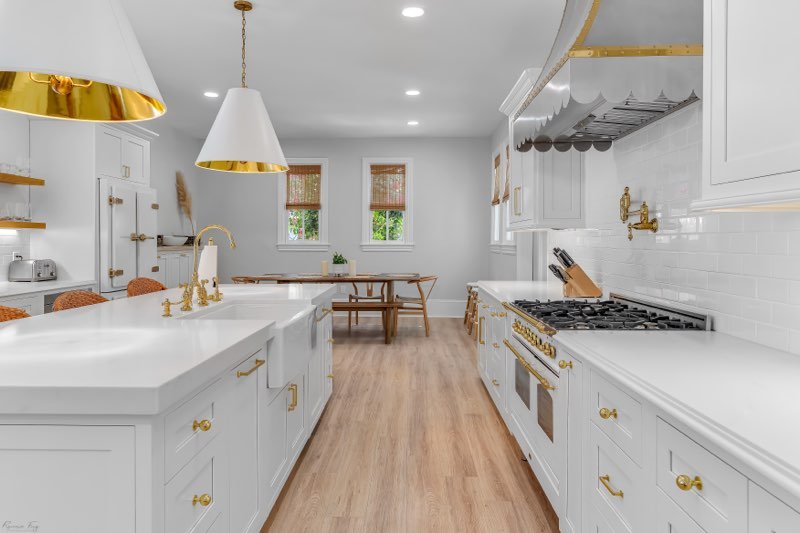
Modern kitchen featuring custom-colored cabinetry in a contemporary soft white, with shiny gold hardware, white marble countertops, and warm natural light streaming through windows
Factory Finish vs. Site Painted Cabinets: Durability and Quality
Factory finishes are applied in controlled environments using industrial-grade equipment and multiple coats of paint or stain and will have UV cured finish. The cabinet box is finished before doors and hardware are installed, ensuring complete, even coverage on all surfaces.
Site-painted cabinets are finished after installation in your kitchen or locally in a paint shop. This offers flexibility but introduces variables: ambient temperature, humidity, dust, and lighting all affect finish quality. A skilled painter can produce excellent results, but the finish typically won't match the durability of a factory-applied finish and surely not the longevity of a UV cured finish.
The durability difference becomes apparent over time. Factory finishes resist chipping, scratching, and moisture better because of their thickness and hardness. Site-painted finishes are more vulnerable to wear in high-traffic areas. Repainting site-finished cabinets is often necessary after 5-10 years or between tenant occupancy; factory finishes typically last 15-20 years before showing significant wear.
Quality control also matters. Factory finishes are applied by automated systems or trained specialists following strict protocols. Site painting depends entirely on the painter's skill, quality of the paint, equipment, and working conditions. Even excellent painters face challenges that factory environments don't: dust settling on wet paint, temperature fluctuations, and lighting that makes it hard to spot missed spots. Most US available paints are not sufficient to ensure longevity of the painted finish.
Custom Kitchen Cabinets Cost: Breaking Down the Investment
Several factors influence custom cabinetry pricing. Understanding which ones matter most helps you prioritize your budget.
Cabinet box construction is a primary cost driver. Plywood box construction costs more than particle board but is significantly more durable and resistant to moisture and warping. The quality of dovetail joints, soft-close drawer slides, and hardware also affects price. Few cabinets are made of particle board and would not be used for a quality kitchen instalaltion.
Custom sizing can add expense because cabinets must be built to your exact specifications rather than manufactured in standard dimensions. Kitchens with unusual architectural constraints, sloped ceilings, angled walls, or non-standard openings require more complex custom work. Shop our custom cabinets and see the surprising affordability of custom cabinets.
Wood species and stain colors affect pricing unless offered in a custom cabinet program with predetermined stains. Exotic wood species and specialty stains cost more than standard options. Premium paint formulations designed for cabinets offer better durability and finish quality than standard interior paint.
Lead time impacts cost indirectly. Faster turnaround times often cost more because they require priority manufacturing. Standard lead times allow manufacturers to batch orders and optimize production, reducing per-unit costs.
Installation complexity also factors into total project cost. Kitchens requiring extensive demolition or structural work cost more than straightforward installations.
Cost Factor |
Impact on Price |
Notes |
|---|---|---|
Cabinet box material |
High |
Plywood costs more than particle board but lasts longer |
Custom sizing |
High |
Non-standard dimensions increase manufacturing complexity |
Wood species/stain |
Medium |
Exotic woods and specialty finishes add cost |
Paint type |
Medium |
Premium cabinet paint costs more than standard interior paint |
Hardware quality |
Medium |
Soft-close hinges and premium handles increase price |
Lead time |
Medium |
Faster turnaround typically costs more |
Installation |
Variable |
Depends on kitchen layout and complexity |
RTA Wholesalers offers custom color inset cabinetry and overlay USA made cabinets at wholesale pricing, which means you're paying for quality and customization without the retail markup. This approach works especially well for contractors buying in volume or managing multiple projects, designers looking for specific colors and sizes, and homeowners tired of seeing such a small selection of color and size options.
Return on Investment and Resale Value Impact
The ROI of custom color cabinetry depends on whether you're planning to sell the home soon or stay long-term. For homeowners staying 10+ years, the investment often pays for itself through improved functionality and durability. For those selling within 5 years, the ROI is certain to return a majority of remodeling investment.
Kitchen renovations typically return 50-70% of their cost at resale, depending on the local market and how well the renovation aligns with buyer expectations. When the kitchen looks just perfect it often is the number one feature causing a buyer to make a solid purchase offer. Custom color cabinetry can enhance the resale value depending on your color choices and efficiency of layout.
Neutral colors and timeless finishes appeal to the broadest buyer pool, protecting your investment at resale. A beautifully executed kitchen with white, light colors, or natural wood cabinets sells faster and commands higher prices than one with bold or trendy colors.
Bold custom colors work against resale value if they're not paired with equally high-quality finishes and overall kitchen design. Buyers may see them as personal preferences they'll need to change, which reduces perceived value. Select classic color pallets for longevity of your kitchen’s style.
Custom sizing that solves your kitchen's specific problems benefits resale because it improves functionality. Buyers recognize that custom work was necessary and valuable, not just decorative. This type of investment tends to hold value better than purely aesthetic customization. Select custom cabinetry at wholesale pricing and build the perfect kitchen for your most used room in the house.
The durability premium of custom color cabinetry also affects resale value. Kitchens with factory-finished cabinets that show minimal wear after 10 years command higher resale prices than those with site-painted cabinets that need refinishing.
When Custom Color Cabinetry Makes Financial Sense
Custom color cabinetry becomes a worthwhile investment when specific conditions align. Availability of custom color cabinets at wholesale pricing bears the cost of planning. Select custom color and custom sizing when you have time to order the perfect combination for kitchen cabinets.
Architectural constraints require custom sizing. If your kitchen has sloped ceilings, angled walls, or non-standard openings, custom cabinetry solves problems that stock cabinets can't. Stock cabinets would leave gaps or waste valuable storage space. Custom cabinetry maximizes your kitchen's functionality. Most any kitchen cab benefit from the improved look of custom cabinets.
You're staying in the home long-term. Homeowners planning to stay 10+ years benefit from the durability and functionality of custom cabinetry. The higher upfront cost amortizes over decades of use, and you'll enjoy improved storage, hardware quality, and finish durability. To avoid upfront increased cost you should check our custom cabinet availability on RTAWholesalers.com
You need specific functionality. Custom cabinetry allows you to design storage solutions tailored to how you actually use your kitchen. Deep drawers for pots and pans, pull-out shelves, custom spice racks, or specialized storage for appliances improve daily life. Stock cabinets offer limited configuration options.
You're designing a high-end kitchen. If your kitchen renovation budget is substantial and you're already investing in premium countertops, appliances, and flooring, custom color cabinetry fits naturally into the project while reducing cost. Quality and design coordination justify themselves when ordered in advance when all elements are premium.
You're a contractor or designer managing multiple projects. Wholesale pricing on custom cabinetry makes economic sense when you're buying for multiple clients. RTA Wholesalers' wholesale pricing structure means per-unit costs drop significantly with volume and greatly improve client satisfaction and increased referrals for more projects.
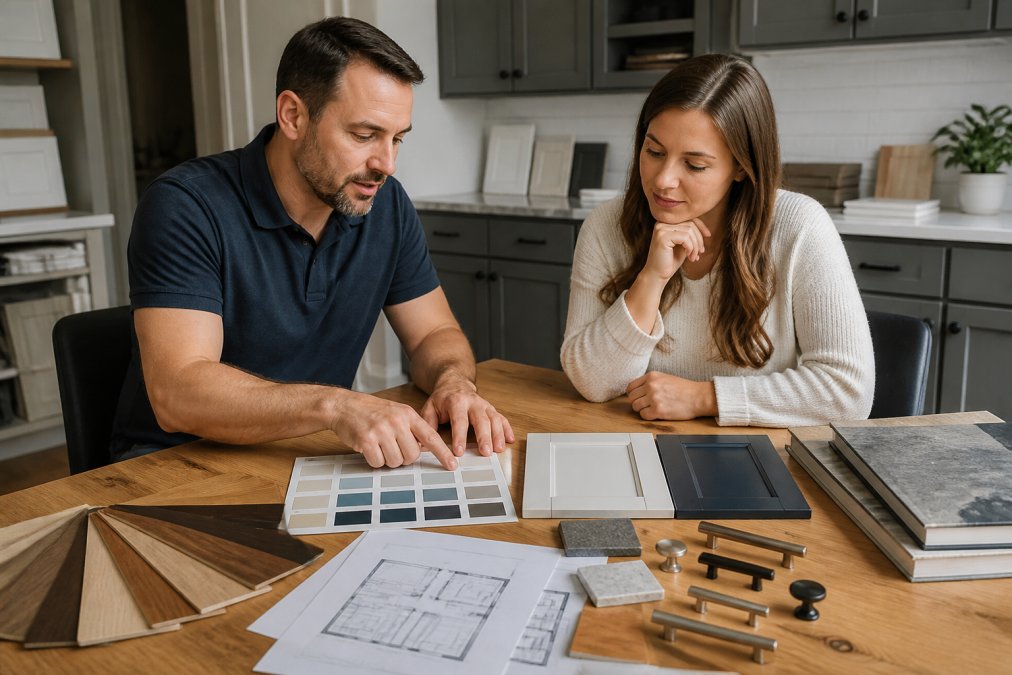
Custom color cabinetry makes less financial sense in these scenarios:
You are buying cabinets from a local craftsman. Custom cabinet makers charge a premium and the high cost can be more difficult to recoup.
Your kitchen layout is standard. If your kitchen has conventional dimensions and layout, stock cabinetry in standard sizes fits perfectly and you can keep the budget down by using cabinets that will work.
Your budget is limited. Inset cabinetry costs more than stock standard options. If your renovation budget is tight, allocating funds to inset or custom cabinetry means less money for countertops, appliances, or other elements.
You're uncertain about color choices. If you're not confident about a custom color, stick with proven neutrals. Repainting custom cabinetry is possible but costly and disruptive.
The decision ultimately hinges on whether the benefits of custom color cabinetry align with your priorities: functionality, design vision, budget, timeline, and long-term plans for the home.
Custom color cabinetry is worth the extra production time when your kitchen requires custom sizing, you're staying long-term, or you're building a high-end renovation where quality and design coordination matter. For standard kitchens, quick resales, or tight budgets, stock cabinetry delivers better value and you can go with stock inset cabinets.
RTA Wholesalers makes custom color cabinetry more accessible through wholesale pricing. Our inset cabinets are available in custom sizes and custom colors at great wholesale pricing. Get a custom quote and design consultation to determine whether custom color cabinetry is the right choice for your project or visit the website to see the published low pricing.
Frequently Asked Questions
Are custom cabinets worth the money for resale value?
Custom color cabinetry can increase perceived value and appeal to buyers, but resale ROI depends on color choice and overall kitchen design. Timeless, neutral custom colors typically hold value better than trendy options. The investment pays off most when combined with quality construction, proper installation, and cohesive kitchen design. Unique or bold custom colors may limit buyer appeal in some markets.
What kitchen cabinet colors are considered timeless?
Neutral tones like soft whites, warm grays, and natural wood finishes remain consistently popular across kitchen cabinet color trends. These colors complement various design styles and are less likely to feel dated. Custom colors in these families offer personalization without sacrificing longevity. Avoid overly saturated or trendy hues if resale value is a concern, as they may narrow buyer appeal.
What's the difference between factory finish and on-site painted cabinets?
Factory finish custom color cabinetry offers superior durability, consistency, and longevity compared to site-painted options. Factory finishes are applied in controlled environments with professional equipment, creating harder, more uniform coatings. Site-painted cabinets may show brush marks, uneven coverage, and are more susceptible to chipping. For custom kitchen cabinets cost considerations, factory-finished options typically provide better long-term value despite higher upfront investment.
How does custom color cabinetry affect kitchen renovation timelines?
Custom color options may extend lead times compared to standard stock colors, typically adding 2-5 weeks depending on the cabinet maker and finish complexity. Planning ahead and ordering early prevents project delays. Some manufacturers offer faster turnaround on popular custom colors. Discuss timeline expectations before committing to ensure the custom color choice aligns with your project schedule.


