 833-377-8663

How to Clean and Maintain Wood Kitchen Cabinets

Table of Contents
- Daily Maintenance and Dusting for Wood Kitchen Cabinets
- How to Remove Grease from Wood Cabinets
- Best Wood Cabinet Cleaner Solutions and Application
- Step-by-Step Cleaning Process for Wood Cabinet Fronts
- Preventing Water Damage on Wood Cabinets
- Wood Cabinet Maintenance Schedule for Year-Round Care
- Dos and Don'ts of Wood Cabinet Care
- Repairing Minor Scratches and Maintaining Wood Finish
- Frequently Asked Questions
Last Updated: September 18, 2026
Learning how to clean and maintain wood kitchen cabinets protects your investment and preserves the natural beauty of the grain. At RTA Wholesalers, we understand that how to clean and maintain wood kitchen cabinets is one of the most common questions homeowners ask. Below, we'll walk you through daily routines, deep-cleaning techniques, and long-term care strategies that work for any wood cabinet.
Daily Maintenance and Dusting for Wood Kitchen Cabinets
Daily dusting prevents grime from accumulating on your cabinet fronts and keeps the wood grain visible and vibrant.
Use a soft, dry microfiber cloth to wipe down cabinet doors and frames each day or every other day. Microfiber traps dust without scratching the protective finish. Avoid paper towels and rough cloths, which can leave lint or microscopic scratches over time.
Pay special attention to areas around cabinet hardware and door handles, where fingerprints and oils collect fastest. A quick pass with a microfiber cloth takes seconds and makes a visible difference.
Dust settles into wood grain and can trap moisture, which leads to discoloration and warping. Five minutes of daily dusting prevents the need for hours of scrubbing later.
How to Remove Grease from Wood Cabinets
Grease builds up around stovetops and range hoods, creating a sticky film that dulls the finish and attracts more dust.
Address grease promptly before it hardens. Fresh grease wipes away easily; baked-on grease requires more aggressive cleaning and can damage the protective coating.
Grease concentrates on cabinet fronts above the stove, on cabinet sides near the range, and on cabinet tops.
Light grease responds to a damp cloth with warm water. Moderate buildup requires a mild cleaning solution; heavy, baked-on grease needs an oil-cutting detergent.
Best Wood Cabinet Cleaner Solutions and Application
Choose the right cleaning solution based on the amount of grease and grime you're dealing with.
Gentle Dish Soap Solution
For light cleaning, mix a few drops of mild dish soap in warm water. Wring out a soft cloth so it's damp but not dripping, then wipe down cabinet fronts and frames.
Keep the cloth damp, not wet, excess water causes swelling, warping, and finish damage.
Follow up with a dry microfiber cloth to remove any remaining moisture. This prevents water spots and ensures the finish dries evenly. Dish soap cuts light grease without stripping the protective coating on your wood.
Oil-Cutting Detergent for Heavy Buildup
For stubborn, baked-on grease, use an oil-cutting detergent formulated to break down buildup while remaining safe for wood finishes.
Mix according to product instructions and test on a hidden area first to ensure it doesn't discolor the finish.
Apply with a damp cloth in small sections. Let sit for 30 seconds to a minute on heavy spots, then wipe clean and immediately dry.
Eco-Friendly and Non-Toxic Alternatives
Natural alternatives like vinegar and baking soda work, though they require care on wood.
Equal parts white vinegar and warm water cuts grease, but vinegar is acidic and can dull finishes. Use sparingly, apply with a barely-damp cloth, dry immediately, and test first.
Baking soda mixed with water creates a gentle paste for stubborn spots. Apply lightly, rub gently, and wipe away completely with a damp cloth followed by a dry one.
Plain warm water with a drop of castile soap works for light cleaning and breaks down grease without chemical residue.
Step-by-Step Cleaning Process for Wood Cabinet Fronts
A systematic approach ensures you clean thoroughly without missing spots or applying too much moisture to any one area.
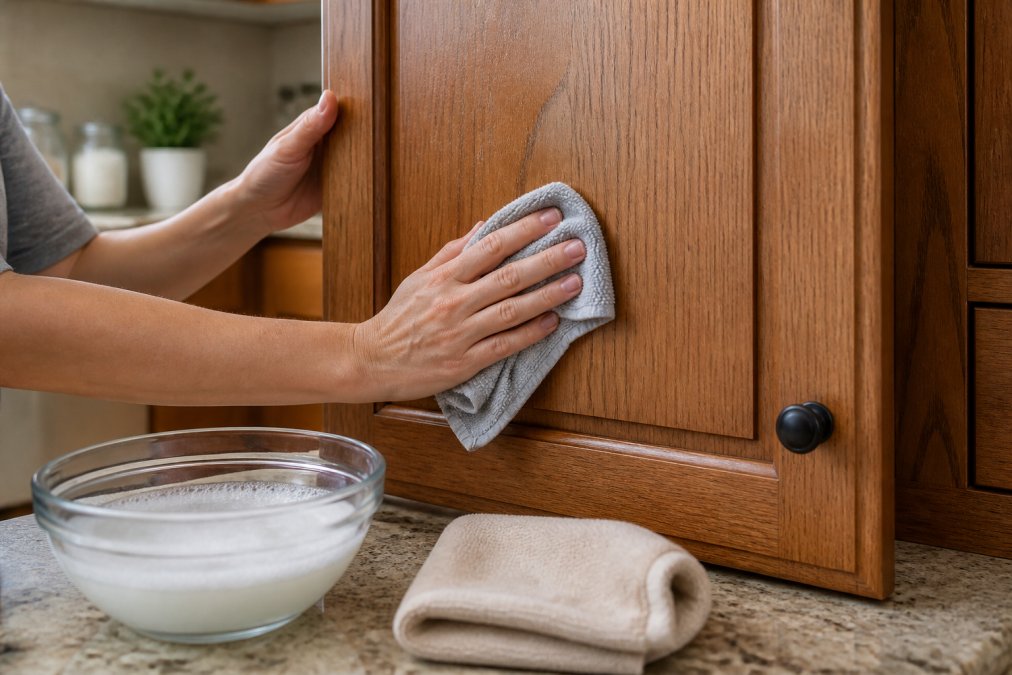
Preparing Your Cleaning Station
Gather a bowl of warm water with cleaning solution, two microfiber cloths (one damp, one dry), and a soft-bristled brush for hardware.
Clear the countertop and remove items from cabinet tops so you have space to work.
Cleaning Cabinet Doors and Frames
Start with cabinet doors from top to bottom so drips fall onto uncleaned areas.
Toe Kick Skin Molding Elegant Craftsman →
Wring out your damp cloth and wipe each door with gentle pressure, paying attention to corners where grime collects.
Follow with a dry microfiber cloth to remove all moisture and prevent water spots.
For cabinet frames and trim, use the same damp-then-dry approach, paying attention to edges where dust and grease collect.
Cleaning Interior Shelves and Hardware
Wipe interior shelves with a damp cloth, paying attention to front edges where dust settles, then dry immediately.
For hardware, use a slightly damp cloth or soft brush dipped in cleaning solution if needed. Wipe clean and dry thoroughly.
If your cabinets have glass doors, use the damp cloth on the wood frame and a separate cloth or glass cleaner for the glass itself. Avoid getting glass cleaner on the wood finish.
Preventing Water Damage on Wood Cabinets
Water is wood's primary enemy. It causes swelling, warping, discoloration, and finish failure. Prevention is far easier than repair.
Never spray water or cleaning solution directly onto cabinets. Always apply solution to a cloth first. This single habit prevents most water damage in kitchens.
Wipe spills immediately. If water splashes onto a cabinet during dishwashing or cooking, dry it right away with a clean cloth. The longer water sits, the deeper it penetrates into wood grain and joints.
Ensure your kitchen has adequate ventilation. A range hood or exhaust fan removes moisture from cooking before it settles on cabinets. Run the hood during and for 15 minutes after cooking.
Check cabinet interiors occasionally for signs of moisture. If you notice soft spots, discoloration, or a musty smell inside a cabinet, you have a moisture problem. Improve ventilation and dry the interior with a cloth. If damage is extensive, the cabinet may need refinishing.
For cabinets near a sink, be especially vigilant. Splashing water during washing and dishwasher steam can accumulate on cabinet sides. Wipe these areas dry regularly and ensure your sink area has a backsplash or protective barrier to shield cabinets from direct water contact.
Wood Cabinet Maintenance Schedule for Year-Round Care
Consistent, scheduled maintenance prevents problems from developing. A simple routine keeps your cabinets looking new for years.
Weekly Tasks
Every week, dust cabinet fronts with a dry microfiber cloth. Wipe down high-traffic areas, cabinet handles, doors near the stove, and cabinet tops, with a barely-damp cloth, then dry immediately. This prevents grease and dust from accumulating.
Monthly Deep Cleaning
Once a month, perform a thorough cleaning of all cabinet fronts, frames, and hardware. Use your chosen cleaning solution (mild dish soap or oil-cutting detergent, depending on buildup) applied to a damp cloth. Work systematically through your kitchen, wiping all visible surfaces, then drying completely.
During monthly cleaning, inspect cabinets for damage. Look for water spots, discoloration, scratches, or sticky residue. Address any issues immediately before they worsen.
Seasonal and Annual Care
Every season, clean cabinet interiors. Remove items, wipe down shelves and the interior walls with a damp cloth, and dry thoroughly. This prevents dust and moisture from accumulating inside.
Once a year, consider applying a wood conditioner or protective coating designed for kitchen cabinets.
Dos and Don'ts of Wood Cabinet Care
Do wipe up spills immediately, especially water and grease. Don't let liquids sit on wood surfaces.
Repairing Minor Scratches and Maintaining Wood Finish
Minor scratches are inevitable in a working kitchen. Most can be addressed with simple touch-ups that restore the appearance without refinishing the entire cabinet.
| Maintenance Task | Frequency | Time Required | Primary Goal |
|---|---|---|---|
| Dust with microfiber cloth | Daily or every other day | 5 minutes | Prevent dust and grime buildup |
| Wipe high-traffic areas | Weekly | 10 minutes | Remove grease and fingerprints |
| Deep clean all cabinets | Monthly | 30-45 minutes | Remove stubborn buildup and inspect for damage |
| Clean interiors and hardware | Quarterly | 30 minutes | Prevent interior dust and corrosion |
| Apply wood conditioner | Annually | 1-2 hours | Refresh finish and nourish wood |
Frequently Asked Questions
What is the best thing to clean wooden kitchen cabinets with?
A mild dish soap solution works best for most wood cabinetry. Mix warm water with a few drops of mild dish soap, dampen a microfiber cloth, and wipe cabinet surfaces. For stubborn grease buildup, an oil-cutting detergent diluted in warm water is more effective. Always wring out excess moisture, damp, not wet cloths prevent water damage and warping. Avoid abrasive cleaners and vinegar on finished wood, as they can strip protective coatings.
How often should you deep clean wood kitchen cabinets?
Deep clean wood cabinets monthly to remove grease buildup and residue from daily cooking. Weekly dusting with a dry microfiber cloth keeps surface grime minimal. Between deep cleans, spot clean any spills immediately to prevent moisture damage and discoloration. A seasonal maintenance schedule, checking for water damage, reapplying wood conditioner, and inspecting hardware, keeps cabinets looking new and protected year-round.
Can you use vinegar to clean wood cabinets?
Vinegar is not recommended for wood cabinets. While it cuts grease, vinegar can damage wood finish, dull the protective coating, and cause discoloration over time. The acidity strips the stain protection and leaves streaks on wood grain. Instead, use a gentle oil-cutting detergent or mild dish soap with warm water. If you prefer eco-friendly solutions, baking soda paste or castile soap are safer alternatives that protect your wood finish.
What should you not use to clean wood cabinets?
Avoid abrasive cleaners, scouring pads, and harsh chemicals that scratch wood finish and strip protective coatings. Don't use vinegar, bleach, or ammonia-based products, they damage stain and cause discoloration. Never soak cabinets with water; excess moisture causes warping and moisture damage. Skip wax-based polishes on modern finishes, and never use steel wool or rough cloths. Stick to soft microfiber cloths, mild dish soap, and wood-safe solutions to preserve your cabinet's appearance and structural integrity.


