 833-377-8663

Organize Kitchen Cabinets for Small Spaces

Table of Contents
- How to Organize Kitchen Cabinets for Small Spaces: A Strategic Framework
- Assess Your Current Layout and Cabinet Type
- Maximizing Vertical Space in Kitchen Cabinets
- Small Kitchen Storage Solutions That Work
- Organize Specific Cabinet Zones
- Declutter and Maintain Your System
- Accessibility and Ergonomics for Long-Term Use
- Conclusion
Last Updated: August 21, 2026
How to Organize Kitchen Cabinets for Small Spaces: A Strategic Framework
Small kitchens demand strategy, not just storage. The difference between a kitchen that feels cramped and one that functions beautifully often comes down to how you organize kitchen cabinets for small spaces. At RTA Wholesalers, we've helped countless homeowners and contractors maximize every inch by rethinking cabinet layout, choosing the right cabinet types, and implementing storage solutions that actually work within tight footprints.
Most people approach small kitchen organization by buying more containers or adding floating shelves. That helps, but it misses the real opportunity: your existing cabinets already hold far more than you think. The key is understanding your cabinet type, then layering in strategic storage solutions that multiply usable space without renovation costs.
This guide covers the framework we use to organize kitchen cabinets for small spaces, from assessing your current layout to maintaining a system that lasts. You'll learn which storage solutions deliver the most impact, how to handle awkward corner cabinets, and why cabinet type matters more than you'd expect.
Assess Your Current Layout and Cabinet Type
Before buying a single organizer, understand what you're working with. Small space organization fails when you ignore the fundamentals: cabinet depth, door swing, and whether your cabinets are inset or overlay.
Start by measuring. Write down the width, depth, and height of each cabinet. Note which doors open left or right, and whether anything blocks the swing (walls, islands, appliances). Measure the space between shelves. This sounds tedious, but these numbers determine which storage solutions will actually fit and function.
Next, identify your cabinet type. This matters more than most guides acknowledge because it changes what's possible inside.
Understanding Inset vs. Overlay Cabinets for Small Spaces
Inset cabinets have doors that sit flush with the frame, creating a clean, built-in appearance. Overlay cabinets have doors that sit on top of the frame, with a visible gap around the edges. The difference affects interior usable space.
Inset cabinets typically offer slightly less interior width per cabinet because the frame takes up more space. Overlay cabinets give you a bit more interior room. For small kitchens, this difference compounds across multiple cabinets.
The real advantage of inset cabinets in small spaces is visual: they look intentional and finished, which makes a tight kitchen feel less chaotic. If you're planning a kitchen renovation or upgrade, Custom Order Inset and Custom Color Inset options allow you to fill awkward dimensions without gaps or custom carpentry costs, giving you the polished look that makes small spaces feel intentional.
Overlay cabinets are faster to install and often more forgiving if your walls aren't perfectly square. Both work in small spaces, the choice depends on your aesthetic and timeline.
Once you know your cabinet type and measurements, you're ready to layer in storage solutions.
Maximizing Vertical Space in Kitchen Cabinets
Vertical storage is where small kitchens win. Most people use only the shelf space they're given, leaving air between items and wasting height. Vertical storage means stacking smarter, not higher.
The goal is threefold: add usable shelf levels, keep items accessible, and avoid top-heavy arrangements that feel precarious. This is where shelf risers, stackable containers, and hanging storage change the game.
Shelf Risers and Stackable Containers
Shelf risers are simple: they're platforms that create a second shelf level above an existing shelf. A 6-inch riser doubles the storage in that zone. Combined with stackable containers, they turn a single shelf into three usable levels.
The math is straightforward. A standard 30-inch-tall cabinet with three shelves gives you three zones. Add risers to two of those shelves, and you've created five usable levels in the same footprint. That's a 67% increase in capacity without removing or replacing anything (peer-reviewed research).
When choosing risers, prioritize stability. Adjustable metal risers are more durable than plastic ones, especially in cabinets that get opened and closed multiple times daily. Set them back slightly from the cabinet edge so items don't overhang, this prevents items from catching when you close the door.
Stackable containers maximize this vertical space. Clear containers let you see contents without opening each one. Match container heights to your riser heights to avoid wasted space. Group similar items: baking supplies in one zone, canned goods in another, snacks in a third.
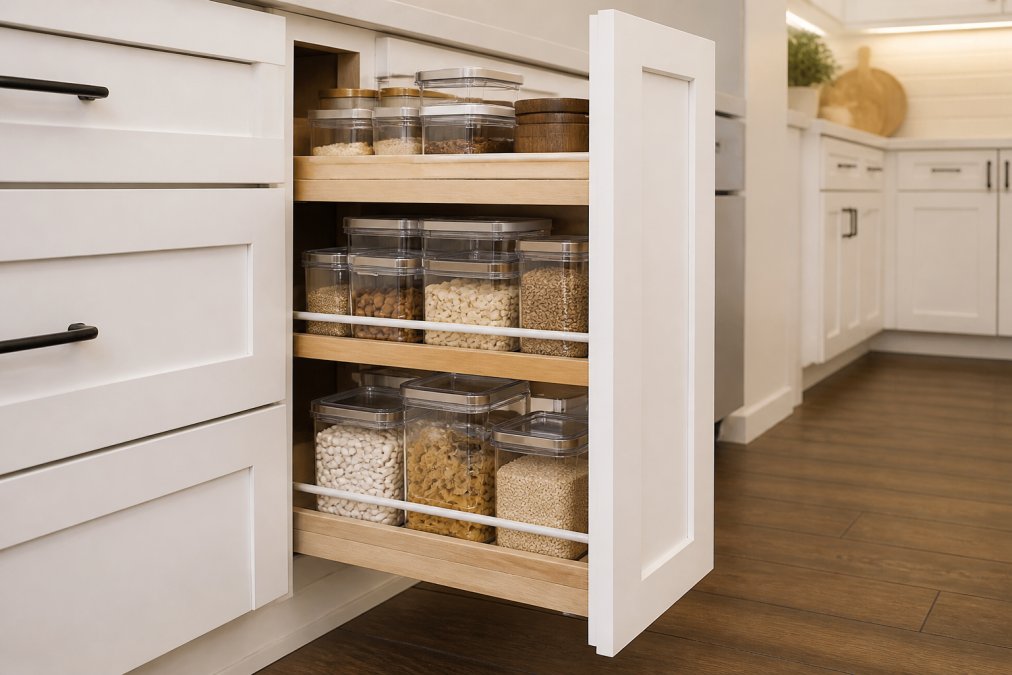
A common mistake is overstuffing containers to maximize space. Items packed too tightly become hard to retrieve, and you'll stop using the system within weeks. Leave 10-15% headroom in each container so you can actually grab what you need (the CDC).
Wall-Mounted Racks and Hanging Storage
Vertical wall space inside cabinets is often ignored. The inside of cabinet doors, the walls between shelves, and the sides of cabinets can hold significant weight when used strategically.
Magnetic strips mounted on cabinet sides hold metal utensils and small tools, freeing up drawer space. Tension rods installed horizontally inside cabinets create hanging space for pot lids, measuring cups, or small pans. Over-the-shelf racks double shelf capacity by creating a second level above existing items.
The key is weight distribution. Heavy items (cast iron, full containers) belong on lower shelves or the cabinet bottom. Lighter items (plastic wrap, foil, small tools) go on upper shelves or hanging storage. This keeps cabinets stable and prevents door stress.
For small kitchens, wall-mounted storage isn't just about cabinets, it extends to the walls themselves. Magnetic strips on the side of a refrigerator, pegboards on a kitchen wall, or a tension rod above a sink create storage without consuming cabinet space. This approach works especially well when cabinet space is genuinely limited.
Small Kitchen Storage Solutions That Work
Certain storage solutions deliver disproportionate impact in small spaces. These aren't fancy, they're practical tools that multiply usable storage.
Pull-out organizers and lazy susans solve the most common small kitchen problem: items disappearing into the back of cabinets, forgotten and wasted. Corner cabinets and blind corners are particularly problematic. Dead space accumulates there by default.
Pull-Out Organizers and Drawer Dividers
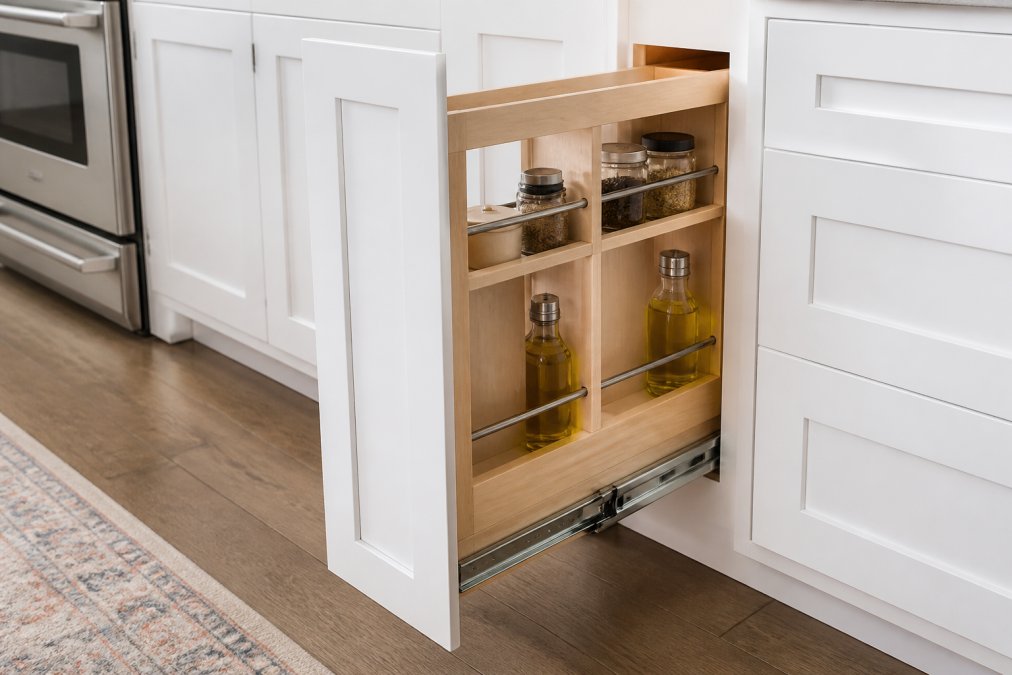
Pull-out organizers are sliding trays that extend from inside a cabinet, bringing back-of-cabinet items forward. For base cabinets under the sink, pull-outs prevent the usual tangle of cleaning supplies and pipes where nothing is accessible.
Drawer dividers compartmentalize utensils, tools, and small items so they don't shift around and get lost. In small kitchens, drawers fill up fast. Dividers force you to be intentional about what stays, preventing junk accumulation.
Installation matters. Pull-outs need smooth-closing slides and proper weight distribution. Quality hardware ensures the system works reliably for years.
Corner Cabinets and Lazy Susans
Corner cabinets are notorious for wasted space. A standard corner cabinet has an awkward geometry: items in the back corner are unreachable without removing everything in front. Most people avoid corner cabinets entirely, leaving them partially empty.
Lazy susans (turntables) solve this. They rotate to bring back items forward. A 33-inch or 36-inch lazy susan base cabinet makes corner space actually usable. Oils, spices, canned goods, anything you use regularly, becomes accessible without excavation.
Blind corner cabinets (which open from the side) offer another solution, using the full depth without rotation.
The choice depends on your layout and workflow. Lazy susans work best for frequently accessed items. Blind corners work better for bulk storage or items you access less often.
Organize Specific Cabinet Zones
Different cabinet zones serve different purposes. Under-the-sink storage, pot and pan zones, and utensil areas each have unique constraints and solutions.
Under-the-Sink Organization
Under-the-sink cabinets are chaos by default. Pipes, drains, and curves make the space awkward. Moisture from leaks or humidity damages items. Most people stuff cleaning supplies in there and forget about it.
Start by assessing what actually needs to go under the sink. Cleaning supplies, yes. But trash bags, recycling, compost containers? These often end up here by habit, not necessity. Move items to better locations first, then organize what stays.
Use pull-out trays to create shelf levels around pipes. Tension rods hold spray bottles upright. Small bins corral sponges, scrubbers, and cloths so they don't scatter. Keep moisture-sensitive items (paper towels, cleaning cloths) in sealed containers.
Line the cabinet bottom with a removable mat. It protects the cabinet from moisture and makes cleanup easier if a leak occurs. Check under the sink monthly, water damage compounds fast.
Storing Pots, Pans, and Lids Efficiently
Pots, pans, and lids are bulky and heavy. They consume disproportionate cabinet space, especially in small kitchens. Most people stack pans awkwardly, making it impossible to retrieve the one you need without moving five others.
Vertical storage is essential here. A pot lid rack mounted on the cabinet door or inside a vertical shelf uses wall space instead of shelf depth. Pans stack better vertically than horizontally, a vertical divider lets you slide pans in and out like files instead of stacking them.
For cabinets with limited height, consider storing pans on a wall-mounted rack outside the cabinet. This frees interior space for items that truly need cabinet protection.
Lids are the real problem. They're oddly shaped, hard to stack, and easy to lose. A dedicated lid organizer (a vertical rack with slots) keeps them contained and visible. Alternatively, store lids upright in a deep drawer with dividers.
Utensil and Small Item Storage
Utensils, gadgets, and small tools fill drawers quickly. In small kitchens with limited drawer space, these items often end up in cabinets, creating clutter.
Drawer dividers are your first tool. They compartmentalize utensils by type and prevent the typical jumbled mess. A utensil organizer tray uses drawer space efficiently without sacrificing accessibility.
For items that don't fit in drawers, wall-mounted magnetic strips or pegboards keep tools visible and accessible. A tension rod inside a cabinet holds measuring cups or small pans by their handles. Over-the-door organizers (on cabinet doors) hold small jars, spice containers, or frequently used tools.
The principle: keep frequently used items at eye level and within arm's reach. Store occasional-use items higher or deeper. This workflow prevents the frustration of digging through cabinets to find what you need.
Declutter and Maintain Your System
Organization fails without maintenance. A system you don't maintain becomes clutter within weeks.
Start with a ruthless declutter. Remove everything from your cabinets. Discard duplicates, broken items, and anything you haven't used in six months. Be honest: that fancy gadget you got as a gift and never used? It's taking space from something you actually need.
After decluttering, you'll likely recover 20-30% of your cabinet space without buying anything (peer-reviewed research). This gives you room to actually implement organization solutions.
Create zones and rules. Baking supplies go in one cabinet. Canned goods in another. Oils and vinegars in a third. This consistency makes cooking faster and prevents items from getting lost. When someone else uses your kitchen, they can find things because the system is logical.
Set a monthly maintenance routine. Spend 15 minutes checking that items haven't migrated to wrong zones, containers aren't overstuffed, and nothing has expired or broken. This small habit prevents the slow slide back into chaos.
Label everything. Especially in small kitchens where space is tight and items are densely packed, labels prevent confusion. Clear labels on containers mean you know exactly what's inside without opening them.
Accessibility and Ergonomics for Long-Term Use
Small kitchen organization often sacrifices accessibility for density. Items end up so tightly packed that reaching them becomes frustrating. This is especially problematic as you age or if you have mobility constraints.
The best organization system is one you'll actually use. If items are hard to reach or retrieve, you'll stop using the system and revert to chaos.
Store frequently used items at eye level and within arm's reach. Items you use daily shouldn't require bending, stretching, or moving other items. Heavy items belong lower. Light, occasional-use items can go higher.
Adjustable shelving lets you customize heights to your body and workflow. If you're short, adjust shelves higher so you don't bend as far. If you have limited shoulder mobility, keep commonly used items in the lower two-thirds of your cabinets.
Pull-out organizers and lazy susans reduce reaching into deep cabinets. Instead of stretching to the back corner, items come to you. This matters more in small kitchens where cabinets are often deeper relative to their width.
Consider your future. If you plan to age in place, organize now with accessibility in mind. Lowering shelves or adding pull-outs is easier during initial organization than retrofitting later.
=== FAQ ANSWERS (audit these too, same rules) ===
[1] Q: What's the best way to decide where to put things in kitchen cabinets? A: Organize by frequency of use and ergonomics. Keep everyday items at eye level and within arm's reach. Store heavier pots and pans in lower cabinets, lighter dishes above. Group similar items together, all baking supplies in one area, all canned goods in another. In small spaces, this workflow-based approach prevents wasted motion and makes finding items instinctive.
[2] Q: What are common mistakes to avoid when organizing a small kitchen? A: Avoid overstuffing cabinets until items are hard to access; this defeats the purpose of organization. Don't ignore vertical space, use shelf risers and stackable containers. Skip mismatched container sizes that waste room. Don't store rarely used items in prime real estate; reserve those spots for daily essentials. Finally, avoid organizing without a plan; assess your layout and cabinet type first to match solutions to your actual space.
[3] Q: How can I organize deep cabinets in a small kitchen? A: Use pull-out organizers, turntables, and lazy susans to bring items forward without removing everything behind them. Drawer dividers keep small items from getting lost in the back. Consider tiered shelf risers to maximize depth without losing visibility. For corner cabinets, a diagonal corner cabinet or lazy susan base makes deep spaces accessible. Stackable containers help you use the full depth efficiently while keeping contents visible.
[4] Q: What's the difference between inset and overlay cabinets for small spaces? A: Inset cabinets have doors that sit flush within the frame, creating a streamlined, custom look. Overlay cabinets have doors that overlap the frame, offering a simpler installation and slightly more exterior presence. For small kitchens, inset cabinets often feel more refined, though both styles work well with proper organization strategies.
Frequently Asked Questions
What's the best way to decide where to put things in kitchen cabinets?
Organize by frequency of use and ergonomics. Keep everyday items at eye level and within arm's reach. Store heavier pots and pans in lower cabinets, lighter dishes above. Group similar items together, all baking supplies in one area, all canned goods in another. In small spaces, this workflow-based approach prevents wasted motion and makes finding items instinctive.
What are common mistakes to avoid when organizing a small kitchen?
Avoid overstuffing cabinets until items are hard to access; this defeats the purpose of organization. Don't ignore vertical space, use shelf risers and stackable containers. Skip mismatched container sizes that waste room. Don't store rarely used items in prime real estate; reserve those spots for daily essentials. Finally, avoid organizing without a plan; assess your layout and cabinet type first to match solutions to your actual space.
How can I organize deep cabinets in a small kitchen?
Use pull-out organizers, turntables, and lazy susans to bring items forward without removing everything behind them. Drawer dividers keep small items from getting lost in the back. Consider tiered shelf risers to maximize depth without losing visibility. For corner cabinets, a diagonal corner cabinet or lazy susan base makes deep spaces accessible. Stackable containers help you use the full depth efficiently while keeping contents visible.
What's the difference between inset and overlay cabinets for small spaces?
Inset cabinets have doors that sit flush within the frame, creating a streamlined, custom look. Overlay cabinets have doors that overlap the frame, offering a simpler installation and slightly more exterior presence. For small kitchens, inset cabinets often feel more refined, though both styles work well with proper organization strategies.
Small kitchen organization isn't about magic solutions, it's about strategy. Assess your space, choose the right cabinet type and storage solutions, and maintain the system consistently. RTA Wholesalers offers custom inset and overlay cabinets in sizes that fit your exact layout, plus a free design service to help you plan before ordering. With the right cabinets and organization framework, even tight kitchens become functional, accessible spaces.


