 833-377-8663

White Shaker Cabinets with Wood Island Ideas

Table of Contents
- Why White Shaker Cabinets Pair Perfectly with a Wood Island
- Best Wood Species for Kitchen Islands
- How to Mix Wood Tones in a Kitchen
- Kitchen Island Countertop Materials That Work with White Shaker
- Mixing Metals and Hardware with White Shaker Cabinets
- Island Functionality and Storage Solutions
- Modern Farmhouse Design Tips for White and Wood Islands
- Maintenance and Durability of Wood Islands
Last Updated: August 14, 2026
Why White Shaker Cabinets Pair Perfectly with a Wood Island
White shaker cabinets with wood island ideas have become a cornerstone of modern kitchen design. The combination creates visual balance that feels both timeless and contemporary. White cabinetry provides a clean, neutral backdrop that allows a natural wood island to become the focal point of your kitchen.
The contrast between crisp white and warm wood tones creates depth and visual interest without overwhelming the space. This pairing works across multiple design styles, from farmhouse aesthetics to contemporary minimalism. The white shaker style, with its simple frame-and-panel construction, complements wood islands by letting the island's natural grain and color take center stage.
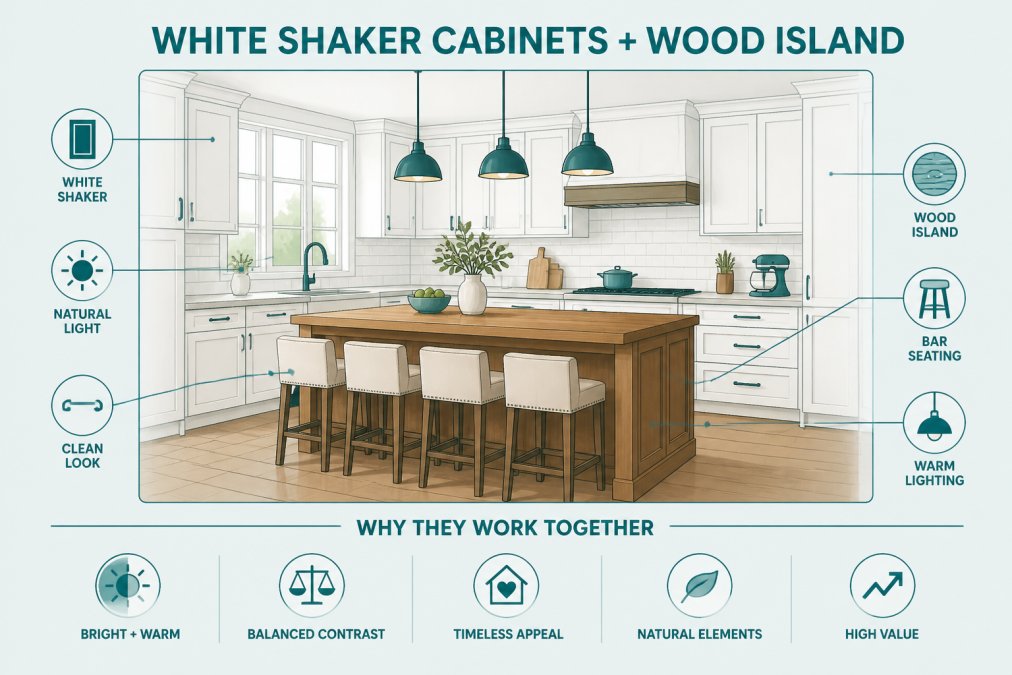
What makes this combination particularly effective is how it solves a common design challenge: creating visual weight distribution in the kitchen. White cabinetry feels light and airy, while a substantial wood island grounds the space and prevents it from feeling sterile. The wood island adds warmth, texture, and character.
At RTA Wholesalers, we've worked with countless homeowners and contractors who've chosen white shaker cabinets specifically because they pair so well with wood islands. The flexibility of white allows you to experiment with different wood species, stains, and finishes on your island without worrying about clashing with your perimeter cabinetry. This freedom is one reason white shaker cabinets remain such a popular choice for kitchen remodels. Our Custom Order Inset cabinets are available in a multitude of wood species and stain colors, or an unlimited choice of Sherwin Williams paint colors, giving you complete control over your design vision.
Best Wood Species for Kitchen Islands
Selecting the right wood species for your island is crucial because the island is typically the most visible and functional piece in your kitchen. Different woods offer distinct aesthetic qualities and practical considerations.
Oak and Maple for Traditional Warmth
Oak brings a pronounced grain pattern and warm honey tones that feel inviting and traditional. The grain is bold enough to create visual interest while remaining neutral enough to work with white shaker cabinetry. Oak islands work particularly well in farmhouse and transitional kitchens where you want the wood to be a statement piece.
Maple offers a more subtle grain with lighter, cooler undertones compared to oak. Hard rock maple is exceptionally durable and resists denting and scratching better than softer wood species. If your island will see heavy use, chopping vegetables, rolling dough, or serving as a homework station, maple is a practical choice that will age gracefully. Both woods take stain well, giving you flexibility to adjust warmth or depth. For those seeking premium options, Special Order Oak Inset Kitchen Cabinets provide exceptional quality and authentic wood character.
Walnut and Cherry for Rich Contrast
Walnut delivers sophisticated, deep brown tones that create striking contrast against white shaker cabinets. The wood has a naturally smooth grain that feels luxurious and modern, working beautifully in contemporary and transitional kitchens.
Cherry wood develops a deeper, richer color over time as it's exposed to light, a quality called patina. This means your cherry island will evolve and deepen over the years, adding character to your kitchen. Cherry has a fine, consistent grain that feels refined and pairs elegantly with white cabinetry.
The trade-off with darker woods like walnut and cherry is that they can make a smaller kitchen feel more enclosed. In open-concept layouts or larger kitchens, this depth adds sophistication. In compact spaces, consider using these woods on a smaller island or pairing them with plenty of white perimeter cabinetry to maintain visual balance.
How to Mix Wood Tones in a Kitchen
One of the biggest concerns homeowners express when planning white shaker cabinets with wood island ideas is whether mixing wood tones will look chaotic. Thoughtfully mixed wood tones actually create visual interest and prevent your kitchen from feeling one-dimensional.
The key principle is limiting your palette to two or three distinct wood tones rather than introducing five or six different species. Your white shaker cabinetry serves as the anchor, so you can afford to be bolder with the island. If your flooring is a medium oak, your island could be a darker walnut. If your flooring is lighter maple, your island could be cherry or a stained oak.
Consider the undertones of each wood. Some woods lean warm (honey, amber, golden), while others lean cool (gray, silver, chocolate). Mixing warm and cool undertones creates visual contrast that feels intentional rather than accidental.
The lighting in your kitchen affects how wood tones appear. Natural light reveals the true color of wood, while warm incandescent lighting makes woods appear more golden, and cool LED lighting can make them appear more gray. Test your wood samples in your actual kitchen under your actual lighting before making final decisions.
Hardware and metal finishes also influence how wood tones read in your space. Brass and warm gold hardware emphasize warm wood undertones, while brushed nickel and chrome create a more contemporary feel that works well with cooler wood tones.
Kitchen Island Countertop Materials That Work with White Shaker
The countertop you choose for your island is both a practical and aesthetic decision. It needs to withstand the wear and tear of a kitchen workspace while complementing both your white cabinetry and wood island base.
Butcher Block for Warmth and Functionality
Butcher block countertops extend the warmth of your wood island and create a unified, natural aesthetic. They're ideal for islands because they provide an excellent work surface for food preparation, and the slightly softer surface is gentler on knives than stone.
Butcher block requires regular maintenance to prevent drying and cracking. You'll need to oil the surface periodically (typically monthly or quarterly depending on use) with food-safe mineral oil or specialized butcher block conditioner.
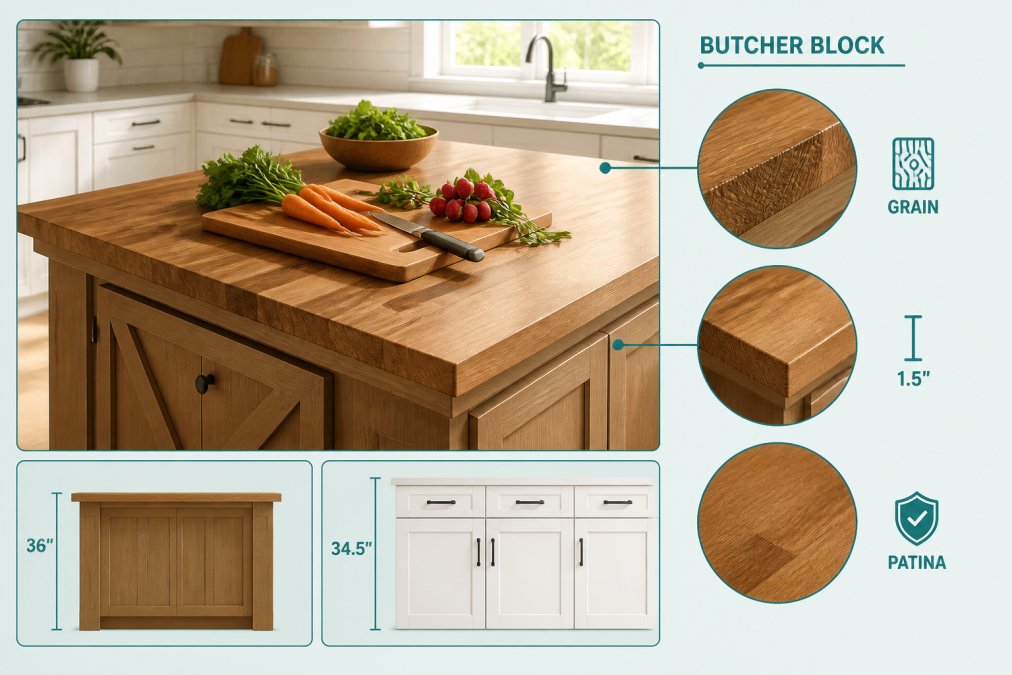
The color of butcher block varies depending on the wood species. Hard rock maple butcher block is lighter and more neutral, while walnut or cherry butcher block is richer and darker. A lighter butcher block complements the white cabinetry and allows the island base wood to be the focal point. A darker butcher block creates a more dramatic, cohesive look with darker island bases.
Quartz and Granite for Durability
Quartz and granite offer superior durability compared to butcher block and require minimal maintenance. Granite is a natural stone with unique veining and color variation, while quartz is engineered from crushed stone and resin, offering more consistent appearance and wider color options.
Granite and quartz countertops work well with white shaker cabinetry because they don't compete for visual attention. A light gray or white quartz pairs seamlessly with white cabinetry and allows the wood island to remain the design focal point. A granite with warm undertones echoes the warmth of your wood island without duplicating it.
The practical advantage of stone countertops is their resistance to scratching, staining, and heat damage. Granite requires periodic sealing to prevent staining, while quartz is non-porous and doesn't require sealing.
Mixing Metals and Hardware with White Shaker Cabinets
Hardware and lighting fixtures are the jewelry of your kitchen design. With white shaker cabinets and a wood island, you have the opportunity to introduce metallic finishes that tie the entire space together.
Warm metals like brass, copper, and warm gold hardware emphasize the warmth of your wood island and create a cohesive, traditional aesthetic. These finishes work particularly well if your island features warm-toned wood like oak or cherry.
Cool metals like brushed nickel, chrome, and stainless steel create a more contemporary feel and work well with cooler-toned woods like walnut or gray-stained maple. These finishes also pair beautifully with white shaker cabinetry, creating a clean, modern aesthetic.
The strategy of "mixing metals" means being intentional about which metals appear where. You might use brass hardware on your white shaker cabinets and brushed nickel pendant lights above your island, creating visual interest without chaos. The key is ensuring the metals share a temperature (warm or cool) so they feel like part of the same design language.
Pendant lighting above your island is an opportunity to introduce metallic finishes and create visual hierarchy. A brass pendant with a warm-toned wood island and warm-toned hardware creates harmony. A sleek chrome or matte black pendant creates contrast and contemporary edge.
Island Functionality and Storage Solutions
A wood island with white shaker cabinetry is more than just beautiful, it needs to function as a practical workspace and storage solution.
Consider what tasks your island will handle. If it's primarily a food preparation surface, prioritize counter space and ensure the height is comfortable for chopping and mixing (standard height is 36 inches). If your island will serve multiple purposes, prep work, dining, homework station, wine storage, you'll need to think about zoning different areas.
Storage in your island can include base cabinets that match your white shaker perimeter cabinetry, open shelving for cookbooks or decorative items, wine racks, or specialized storage for specific items. Open shelving on one side and closed cabinetry on the other creates visual balance and allows you to display attractive items while keeping less-attractive items hidden.
Bar seating on one or two sides of your island extends its utility and creates a casual dining or gathering space. Ensure there's at least 15 inches of counter space per seat and approximately 10-12 inches of knee clearance beneath the counter.
Electrical outlets and USB charging ports are often overlooked but incredibly practical. Many modern islands include these features to support phone charging, small appliance use, and other contemporary kitchen needs.
Modern Farmhouse Design Tips for White and Wood Islands
Modern farmhouse design has become synonymous with white shaker cabinets and wood islands, but achieving this aesthetic requires intentional choices beyond just the cabinetry and island.
Texture is essential in modern farmhouse design. Pair your smooth, clean white shaker cabinets with textured elements like open shelving, exposed wood beams, or shiplap accents. These textural elements prevent the space from feeling too sterile and add farmhouse warmth to modern clean lines.
Color accents should be minimal and natural. Soft greens, warm grays, and muted earth tones complement white and wood beautifully. Avoid bright or saturated colors that compete with the simplicity of white cabinetry and the natural beauty of wood.
Backsplash choices matter significantly. Subway tile in white or cream creates a classic farmhouse look, while shiplap or open shelving allows the wall color to show through. Some homeowners skip the backsplash entirely above their island, letting the wood island be the focal point.
Lighting should feel warm and inviting rather than clinical. Pendant lights with vintage or industrial-inspired designs work well over islands. Aim for warm white or soft white bulbs rather than cool daylight tones.
Open concept layouts enhance modern farmhouse aesthetics because they allow your white cabinetry and wood island to be seen as part of the larger living space. If your kitchen is closed off, consider removing a wall or adding a large opening to create that airy, connected feeling that modern farmhouse design celebrates.
Maintenance and Durability of Wood Islands
A wood island is a long-term investment, and understanding how to care for it ensures it remains beautiful and functional for years to come.
Wood is a living material that responds to changes in humidity and temperature. In dry climates or during winter heating season, wood can shrink slightly. In humid climates or summer months, wood can expand. This natural movement is normal and typically not a problem if the island is well-constructed.
The finish on your wood island, whether stain, paint, or natural oil, requires periodic maintenance. Stained finishes may need refreshing every few years, particularly on high-traffic surfaces. Painted finishes require touch-ups and occasional repainting. Oil finishes need regular reapplication to maintain protection and appearance.
Water is wood's primary enemy. Promptly wipe up spills, don't place wet items directly on the wood surface, and use trivets or coasters under glasses and hot pots. If your island has a butcher block countertop, this is especially important, water can cause swelling and warping if not managed carefully.
Scratches and dings are part of wood's character, particularly in a functional kitchen island. Minor surface scratches can often be sanded out and the finish reapplied. Many homeowners embrace these marks as evidence of a well-loved, well-used kitchen.
Regular cleaning with a soft cloth and mild soap and water is sufficient for most wood surfaces. Avoid harsh chemicals or abrasive scrubbers that can damage the finish. For butcher block specifically, use food-safe mineral oil rather than furniture polish.
Creating a kitchen with white shaker cabinets and a wood island requires thoughtful decisions about wood species, countertop materials, hardware finishes, and design style. White cabinetry serves as a neutral canvas that allows your wood island to shine. Whether you're working with a contractor or tackling a DIY remodel, RTA Wholesalers offers top-quality Inset cabinets available in custom sizes and Custom Color Inset options at wholesale pricing. The flexibility to choose your exact specifications means you can create a kitchen that's both beautiful and perfectly suited to how your household actually cooks and gathers.
Frequently Asked Questions
What wood tones pair best with white shaker cabinets?
Warm wood tones like honey oak, natural cherry, and medium walnut create inviting contrast with white shaker cabinets. Cooler gray-toned woods work for contemporary designs. The key is choosing an undertone that complements your white's warmth level. If your white has warm undertones, pair it with warm wood; cool whites work with gray or ashy wood tones. Avoid mixing too many competing wood species, which can make the kitchen feel choppy.
Are white shaker cabinets still in style in 2026?
Yes. White shaker cabinets remain a timeless choice because their clean lines and neutral color adapt to any design direction. They work equally well in modern farmhouse, contemporary, traditional, and transitional kitchens. The real design trend is pairing them with natural wood islands and mixed metals, which adds personality without dating the overall look. White shaker cabinets are a long-term investment that won't feel outdated.
How do you prevent a white kitchen from looking too sterile?
Add warmth through a natural wood island, warm-toned countertops like butcher block, and mixed metal hardware in brass or bronze. Layer in texture with open shelving, wood beams, or a patterned backsplash. Incorporate lighting that feels warm rather than clinical. The wood island is the single most effective way to soften white cabinets and prevent a cold, hospital-like feel. Accessories like bar stools, plants, and wood accents reinforce that warmth.
What hardware finishes work best with white shaker cabinets and wood islands?
Mixed metals are the modern approach: combine brushed brass or champagne bronze pulls on white cabinets with matte black or oil-rubbed bronze hardware on the island base. This creates visual interest and prevents the kitchen from feeling one-note. Alternatively, use consistent brushed brass throughout for a cohesive warm aesthetic. Avoid shiny chrome, which can feel dated. The hardware should echo the undertones in your wood island's finish for a connected look.


