 833-377-8663

High-Quality Materials for Custom Furniture Retail

Table of Contents
- What Defines High-Quality Materials in Custom Furniture
- Best Wood Species for Custom Cabinets
- Durable Finishes for Kitchen Cabinetry
- Benefits of Inset vs Overlay Cabinets
- Cost-to-Longevity Ratio: What Actually Matters
- Identifying Premium Finishes and Certifications
- Customization and Material Selection for Your Project
- Frequently Asked Questions
Last Updated: September 1, 2026
What Defines High-Quality Materials in Custom Furniture
When selecting materials for custom cabinetry, you're making decisions that affect your kitchen or bathroom for decades. The difference between furniture lasting 10 years versus 30 comes down to material sourcing, construction, and finishing.
High-quality custom furniture combines three essentials: raw material quality, construction standards that respect that material, and finishing agents that enhance durability. Solid wood kiln-dried to remove moisture, joinery techniques that hold without fasteners alone, and finishes that protect without yellowing or chipping create cabinets that look better over time, not worse.
Structural Integrity and Construction Standards
Kiln-dried wood is essential. Freshly milled timber contains significant moisture that causes unpredictable warping, twisting, and shrinking once installed. Kiln-drying stabilizes the wood so it won't move after assembly.
Eight-way hand-tied construction, where rails and stiles are joined with mortise-and-tenon joints reinforced with dowels, creates cabinet frames that flex without breaking. Cheaper alternatives using staples, nails, or pocket-hole screws fail under the constant stress of thousands of door openings.
In inset cabinets, the door sits flush inside a solid wood face frame, requiring precision joinery and a frame strong enough to support the door's weight without sagging.
Material Sourcing and Supply Chain Transparency
Responsibly sourced hardwood from forests managed for long-term health performs better and supports sustainable forestry. Timber from managed forests typically comes from older, slower-growing trees with denser grain and greater structural integrity than fast-growth plantation wood.
Supply chain transparency means knowing the wood's journey from forest to cabinet. Manufacturers working with trusted mills understand drying processes, grading standards, and species characteristics, ensuring consistency across multiple cabinets for one project.
Reclaimed timber offers character that new wood cannot match but costs more and requires careful inspection for hidden nails or structural damage. For most residential projects, sustainably sourced new wood offers better value and predictability.
Best Wood Species for Custom Cabinets
Solid Wood vs. Engineered Wood
Solid wood performs better in high-moisture kitchen and bathroom environments. It can be sanded and refinished if damaged and ages gracefully. The downside is cost and expansion/contraction with humidity changes, which can loosen joints if cabinetry isn't built to accommodate movement.
Engineered wood (plywood or MDF with solid wood veneer) is more stable and resists warping and swelling. However, it cannot be refinished once the veneer is damaged, and edge banding can peel if not applied correctly.
The best approach for custom cabinetry is hybrid: solid wood face frames and doors with engineered wood cabinet boxes. This provides stability where it matters most while delivering the beauty and repairability of solid wood where you see it.
Reclaimed Timber and Sustainable Options
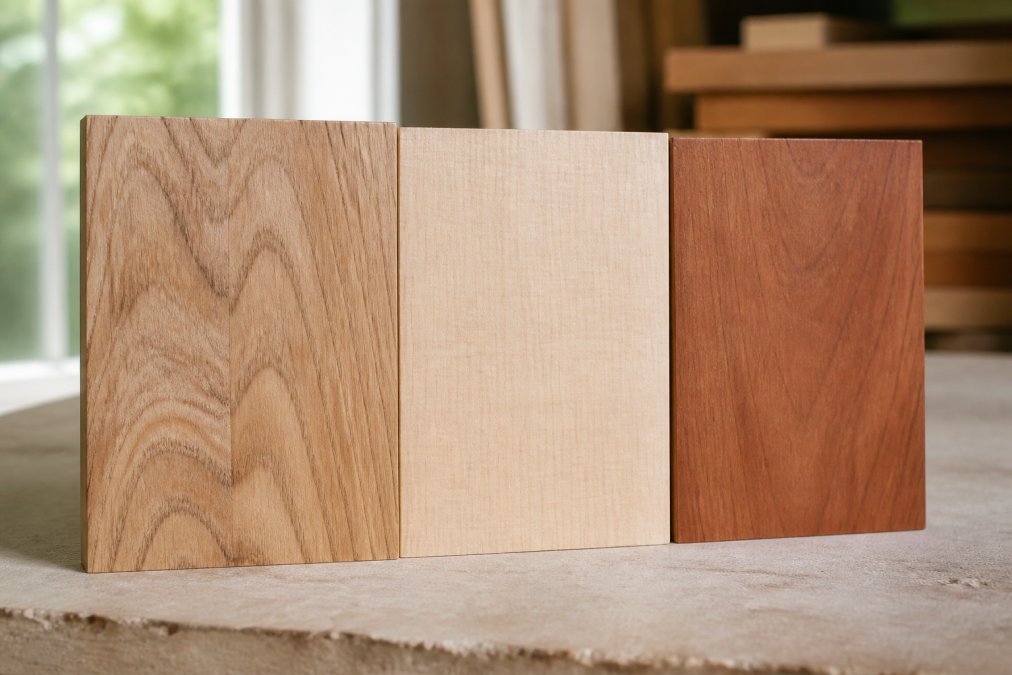
Reclaimed timber brings authenticity that new wood cannot replicate. Wood from 150-year-old barns has stabilized completely and won't move after installation, but requires careful inspection for structural damage, old hardware, and insects.
Sustainably sourced new wood is the practical choice for most custom projects. Forest Stewardship Council (FSC) certification verifies timber comes from responsibly managed forests, ensuring the forest will be there for future generations while delivering needed performance characteristics.
Durable Finishes for Kitchen Cabinetry
The finish is the barrier between your wood and moisture, heat, and daily kitchen spills. A poor finish fails in months; a quality finish protects for decades.
Eco-Friendly Finish Options
Water-based polyurethane finishes cure to hardness rivaling traditional oil-based finishes while drying faster and releasing fewer volatile organic compounds (VOCs) (the EPA). Conversion varnish, a two-part finish that chemically hardens, is extremely durable but requires professional application and releases more VOCs during curing.
Lacquer finishes dry quickly and can be applied in multiple thin coats. Quality lacquer provides good protection; ask about thickness measured in mils, with 3-4 mils acceptable and 5+ mils excellent.
The most important consideration is that the finish actually protects the wood. Quality finishes feel smooth and substantial when you run your hand over them; cheap finishes feel thin and slightly tacky. choosing furniture wood.
For custom inset cabinetry, Custom Color Inset options allow you to specify exact finishes formulated for durability in high-moisture kitchen environments, with an unlimited choice of Sherwin Williams paint colors.
Testing for Abrasion Resistance and Longevity
Abrasion resistance measures how well a finish withstands scratching and wear. Higher numbers indicate better durability and longer-lasting appearance. When comparing finishes, ask manufacturers for abrasion resistance data; if they don't have it, that's a red flag.
Longevity depends on maintenance. Regular cleaning with appropriate products and occasional touch-ups extend finish life significantly.
Benefits of Inset vs Overlay Cabinets
Inset Cabinet Design and Joinery
Inset cabinets have doors and drawers sitting flush with the face frame, creating a seamless, tailored appearance used in fine furniture for centuries. This design requires precision craftsmanship and tighter tolerances than overlay cabinets.
The face frame is typically built with mortise-and-tenon joints or doweled joints, not pocket holes. These joints are stronger and more durable, allowing the frame to flex slightly without breaking.
Custom Order Inset cabinetry features handcrafted joinery, with custom sizes available to fit your space exactly.
Overlay Cabinet Advantages and Applications
Overlay cabinets have doors overlapping the face frame, a simpler design requiring less precision. If the frame is slightly out of square, the overlapping door still closes properly. This design costs less to produce and is more forgiving for DIY installation.
The aesthetic is more contemporary and less formal than inset cabinets. For modern kitchens, this is often preferred; for traditional or transitional designs, inset construction reads as higher quality.
For projects where budget is primary, overlay cabinets make sense. For projects expecting 25+ year longevity, inset construction is worth the additional cost.
Cost-to-Longevity Ratio: What Actually Matters
Material Lifecycle Analysis for Furniture
A lifecycle analysis examines total cost of ownership over the cabinet's life, including initial cost, maintenance, repairs, and replacement costs if cabinets fail early.
Budget cabinets costing 40% less initially may fail in 10 years, making the total cost per year of use higher than cabinets costing more upfront but lasting 25 years. Quality cabinetry made from solid wood with quality joinery and finishes lasts 25-30 years with normal maintenance (kcma.org). Budget cabinetry might last 8-12 years before hinges fail, finishes chip, and doors sag.
Custom inset cabinetry with solid wood construction and quality finishes is designed to last 25+ years, balancing quality and value.
Long-Term Maintenance and Performance
Regular cleaning with appropriate products, occasional finish touch-ups, and prompt repair of minor damage keep cabinets looking good for decades. Dust regularly, wipe spills immediately, and avoid harsh chemicals damaging the finish.
Hardware should be checked periodically. Hinges can loosen over time; adjusting them prevents door sagging. Quality hinges last the cabinet's life; cheap hinges need replacement within 5-10 years. Drawer slides with quality construction operate smoothly for decades; cheap slides stick or bind within years.
Identifying Premium Finishes and Certifications
Third-Party Certifications and Standards
The Kitchen Cabinet Manufacturers Association (KCMA) sets standards for cabinet construction and finish durability. KCMA certification means the cabinet has been tested for structural integrity, finish durability, and hardware performance.
The American Society for Testing and Materials (ASTM) standards define test methods for finish durability, abrasion resistance, and moisture resistance. Manufacturers referencing ASTM standards demonstrate objective product testing.
FSC certification for wood indicates timber comes from responsibly managed forests. Sherwin Williams paint products carry durability certifications for kitchen and bathroom environments specifically.
Handcrafted vs. Machine-Made Construction
Handcrafted cabinetry involves human skill at multiple stages, with each cabinet slightly unique and reflecting maker attention to detail. Machine-made cabinetry uses automated processes for consistency but with less individual attention.
The best approach combines machine precision for cutting and milling with skilled craftspeople handling assembly, finishing, and quality control. This hybrid approach uses efficient manufacturing processes while ensuring quality through experienced craftspeople at every stage, with assembled cabinets available in a multitude of wood species and stain colors or an unlimited choice of Sherwin Williams paint colors.
Customization and Material Selection for Your Project
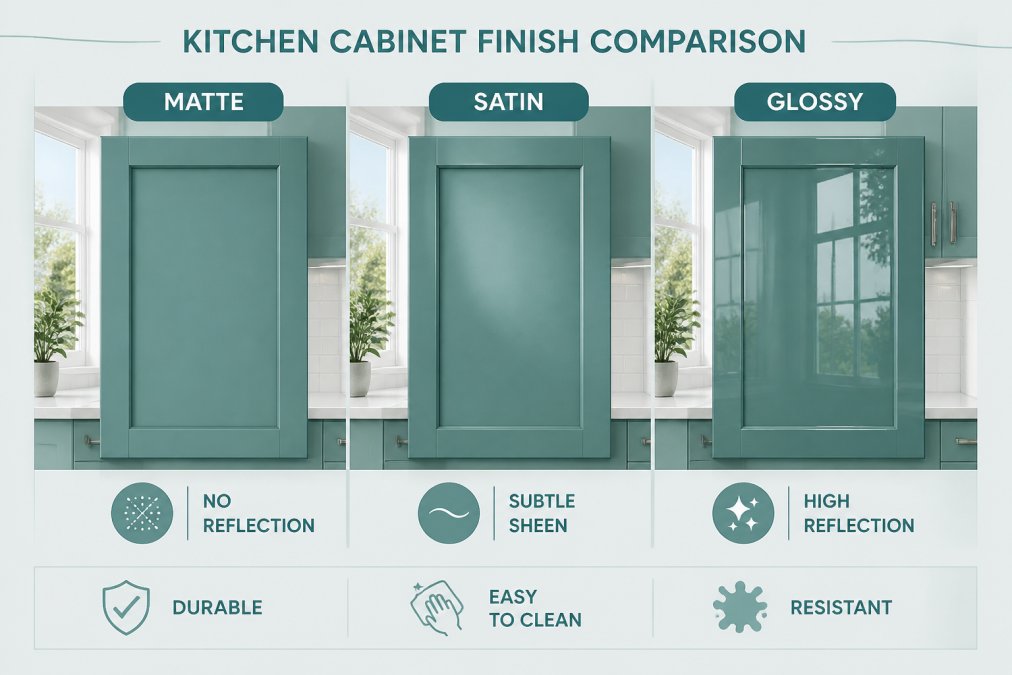
Customization options should include custom sizes fitting your space exactly, custom colors matching your design vision, custom finishes (matte, satin, semi-gloss), custom hardware coordinating with overall design, and inset or overlay choices based on aesthetic preference.
Special Order Oak Inset Kitchen Cabinets and other custom options are available at wholesale pricing. A free kitchen design service helps evaluate options and ensure everything fits before ordering, catching mistakes before they become expensive problems.
When evaluating custom furniture retailers, ask specifically about customization options. Some manufacturers offer limited customization with premiums for anything outside standard catalogs. Quality retailers build customization into their process because they offer options for cabinets beyond the competition.
Choosing high-quality materials for custom furniture is an investment in your home's functionality and aesthetic for decades. The materials you select, construction standards you prioritize, and finishes you specify determine whether cabinets will perform beautifully for 25 years or require replacement within 10.
Quality inset cabinetry in custom sizes and custom colors with solid wood construction and quality joinery provides accessible high-quality materials for your project. A free kitchen design service helps you make the right choices. Get started and build cabinetry that will look better over time, not worse.
Frequently Asked Questions
Q: What defines high-quality materials in custom furniture retail?
A: High-quality materials combine structural integrity, responsible sourcing, and proven durability. Look for solid wood with kiln-dried construction and finishes that resist abrasion and moisture. Certifications from responsible forestry programs and transparent supply chain documentation signal genuine quality. Handcrafted details and customization options also indicate furniture built to last decades rather than years.
Q: What are the benefits of inset versus overlay cabinetry?
A: Inset cabinets have doors that sit flush inside a solid wood face frame, creating a tailored, built-in furniture appearance with superior structural integrity and joinery. They cost more but deliver a premium aesthetic and longer lifespan. Overlay cabinets mount on top of the frame, offering faster assembly, easier customization, and lower cost. Choose inset for high-end renovations where durability and appearance justify the investment; overlay for budget-conscious projects needing quick turnaround and flexibility.
Q: How can I balance budget and quality when sourcing furniture materials?
A: Focus on cost-to-longevity ratio rather than upfront price. A solid wood cabinet that lasts 30 years costs less per year than engineered wood lasting 10 years. Prioritize quality in high-use areas (drawer boxes, frame construction, hinges) and accept modest finishes elsewhere. Custom sizing and bulk ordering reduce per-unit costs. Requesting color samples before ordering prevents costly mistakes. Our free design service catches errors early, saving budget by eliminating rework.
Q: Are ready-to-assemble options as durable as custom-built furniture?
A: Quality ready-to-assemble furniture built from solid wood with reinforced joinery rivals custom-built durability. The difference lies in material selection and construction standards, not assembly method. Inset cabinets made from kiln-dried solid oak or maple with concealed soft-close hinges deliver furniture-grade performance. What matters most: material sourcing, joinery technique, and finish quality, not whether assembly happens in a factory or on-site.


