 833-377-8663

Eco-Friendly Kitchen Cabinet Materials for Sustainable Homes

Table of Contents
- Why Eco-Friendly Kitchen Cabinet Materials Matter
- Non-Toxic Kitchen Cabinet Materials: What Sets Them Apart
- Low-VOC Kitchen Cabinet Finishes and Indoor Air Quality
- FSC-Certified Wood for Cabinetry: Responsible Sourcing Explained
- Top Sustainable Materials for Kitchen Cabinets
- Durability and Long-Term Value of Sustainable Cabinetry
- End-of-Life Disposal and Recyclability
- Choosing the Right Eco-Friendly Cabinets for Your Project
Last Updated: August 26, 2026
Why Eco-Friendly Kitchen Cabinet Materials Matter
Choosing sustainable materials for your kitchen cabinets affects indoor air quality, durability, environmental impact, and the health of everyone using that kitchen. Most kitchens serve for 20, 30, or even 40 years. Low-quality materials degrade faster, requiring replacement sooner. Better materials age gracefully and maintain function. The environmental cost of replacing cabinets multiple times far exceeds choosing durable, sustainable options from the start.
At RTA Wholesalers, we've worked with homeowners, contractors, and designers who prioritize both performance and environmental responsibility. The question we hear most often is whether eco-friendly cabinets actually perform as well as conventional alternatives. The answer, based on real-world experience, is yes.
Non-Toxic Kitchen Cabinet Materials: What Sets Them Apart
Non-toxic kitchen cabinet materials eliminate harmful chemicals that off-gas into your home over time. Conventional cabinets often use urea-formaldehyde adhesives that release volatile organic compounds (VOCs) for months or years after installation. Non-toxic options replace these with safer binders and water-based finishes.
Homes with high indoor air quality report fewer respiratory issues, reduced allergies, and better sleep quality. Kitchens with low-VOC cabinets show significantly lower formaldehyde levels compared to standard installations. This matters most in homes with children, elderly residents, or anyone with respiratory sensitivity.
True non-toxic cabinetry addresses three components: the substrate (plywood or particle board core), the adhesives that bind layers together, and the finish applied to the surface. Each layer must meet low-toxicity standards. A cabinet with a formaldehyde-free core but conventional finish still off-gasses. A cabinet with low-VOC finish but standard adhesives still releases chemicals.
Custom color inset cabinetry from RTA Wholesalers, available in custom sizes at wholesale pricing, uses formaldehyde-free construction methods that eliminate these health concerns without compromising durability or appearance.
Low-VOC Kitchen Cabinet Finishes and Indoor Air Quality
Low-VOC finishes protect wood while controlling what enters your home's air. VOCs (volatile organic compounds) are chemicals that evaporate at room temperature, releasing fumes that affect indoor air quality. Standard polyurethane and lacquer finishes contain high levels of VOCs. Low-VOC alternatives, typically water-based polyurethane or conversion varnish, deliver the same protection with minimal off-gassing.
The EPA has documented that indoor air is often 2-5 times more polluted than outdoor air, largely because homes are sealed tight for energy efficiency. Kitchens, where you spend significant time preparing food, are particularly sensitive spaces. A low-VOC finish reduces the chemical load from day one.
Low-VOC finishes cure just as hard, resist stains just as effectively, and last just as long as conventional finishes. Water-based finishes dry faster (12-24 hours versus 48-72 hours for oil-based), which also means shorter installation timelines on your renovation.
Look for certifications like FloorScore, GreenGuard Gold, or similar third-party verification that documents low-VOC compliance. These certifications require actual testing, not just manufacturer claims.
FSC-Certified Wood for Cabinetry: Responsible Sourcing Explained
FSC-certified wood comes from forests managed according to strict environmental and social standards. The Forest Stewardship Council (FSC) certifies that timber was harvested responsibly, meaning forests remain healthy, wildlife habitat is protected, and workers are treated fairly.
FSC certification guarantees:
- Trees are harvested at sustainable rates, allowing forests to regenerate
- Biodiversity is protected, rare species and sensitive ecosystems are off-limits
- Local communities and indigenous peoples benefit from forest management
- Chemical use is minimized, protecting soil and water quality
- Workers receive fair wages and safe conditions
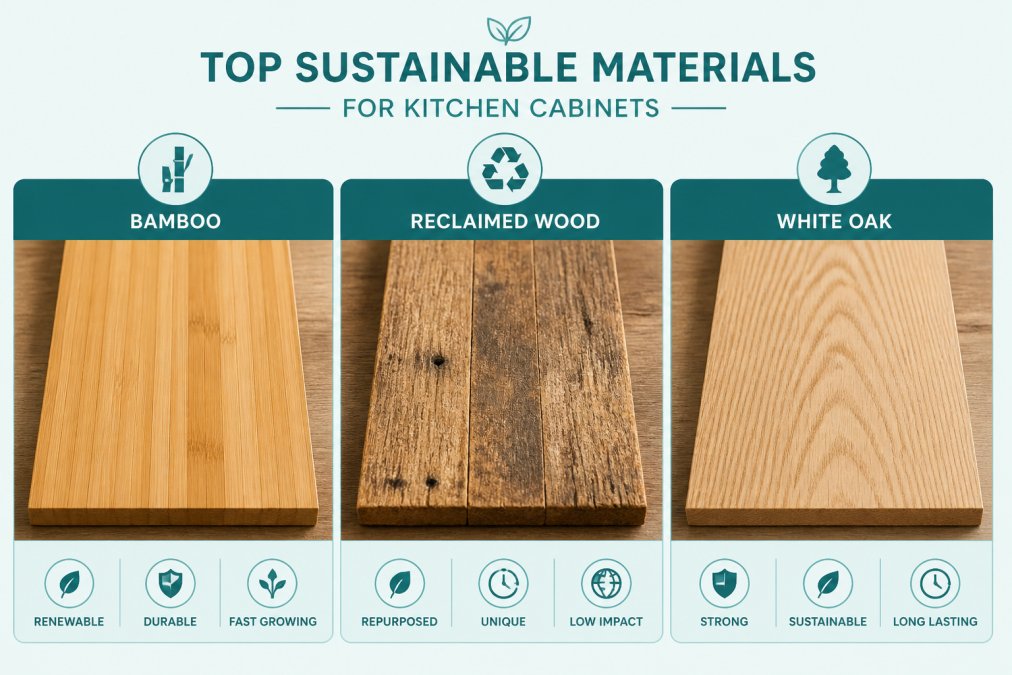
For kitchen cabinets, FSC-certified wood means your cabinetry supports responsible forestry practices. A white oak cabinet made from FSC-certified wood is just as durable and beautiful as one made from conventional sources, but the environmental impact is substantially lower.
Checking for FSC certification is simple: look for the FSC label on product documentation or ask your supplier directly. RTA Wholesalers sources materials that meet sustainability standards, ensuring your custom color inset cabinets support responsible forestry.
Top Sustainable Materials for Kitchen Cabinets
Bamboo: Fast-Growing and Durable
Bamboo reaches maturity in 3-5 years compared to 20-30 years for hardwoods, making it an exceptionally renewable resource. It's also harder than many traditional hardwoods, meaning bamboo cabinets resist dents and scratches well over decades of use. Bamboo grows without requiring pesticides, fertilizers, or replanting and regenerates from its root system naturally.
Performance-wise, bamboo holds up to kitchen conditions exceptionally well. It resists moisture better than many softwoods, making it suitable for kitchens with high humidity. The grain is distinctive and attractive, offering a modern aesthetic that appeals to many homeowners. Bamboo accepts stain and paint equally well, giving you design flexibility.
The one limitation: bamboo requires precise joinery and careful handling during installation. Contractors familiar with bamboo cabinetry know how to work with it effectively.
Reclaimed Wood: Character With Purpose
Reclaimed wood comes from existing structures, old barns, warehouses, or demolished buildings. Using reclaimed wood in new cabinetry gives that material a second life instead of sending it to a landfill. Each piece carries visible history: nail holes, weathering, color variation, and patina that new wood cannot replicate.
Reclaimed wood requires no new tree harvesting. Old-growth timber, which makes up much of the reclaimed supply, is denser and more stable than modern lumber. Reclaimed wood cabinets often outlast newly built alternatives.
The trade-off is consistency and cost. Reclaimed wood varies in color, grain, and character. Sourcing sufficient reclaimed wood for an entire kitchen can be time-consuming and expensive, depending on what's being demolished in your region. zero waste kitchen tips.
Formaldehyde-Free Engineered Wood
Engineered wood uses adhesives to bond wood fibers or veneers together. Conventional engineered wood uses urea-formaldehyde adhesives that off-gas for months after manufacturing. Formaldehyde-free engineered wood substitutes these adhesives with safer alternatives like soy-based or polyurethane binders.
The advantage is cost and consistency. Engineered wood is more affordable than solid hardwood or bamboo and more uniform in appearance and performance. Formaldehyde-free versions deliver those benefits without the health concerns of conventional particle board.
Engineered wood resists warping better than solid wood in humid environments, making it practical for kitchens. It accepts finishes evenly and maintains color consistency across large cabinet runs. In properly installed kitchens with good ventilation, engineered wood performs reliably.
Durability and Long-Term Value of Sustainable Cabinetry
Eco-friendly cabinets often exceed the durability of cheaper conventional alternatives. Sustainable materials aren't a trade-off between environmental responsibility and performance; in many cases, they're superior in both.
Bamboo and FSC-certified hardwoods are denser than softwoods used in budget cabinetry. Density translates directly to durability. A denser material resists dents, moisture infiltration, and the small stresses of daily kitchen use. Over 20 years, a durable cabinet system requires fewer repairs and no premature replacement.
Low-VOC finishes cure harder than conventional finishes and resist staining better. This matters in kitchens, where cabinets take constant abuse. A cabinet that resists stains maintains its appearance longer, reducing the perceived need for refinishing or replacement.
If a sustainable cabinet system lasts 30 years instead of 15, the per-year cost is lower despite higher upfront cost. Add in the avoided replacement labor, disposal costs, and the environmental cost of manufacturing new cabinets, and the financial case becomes even stronger.
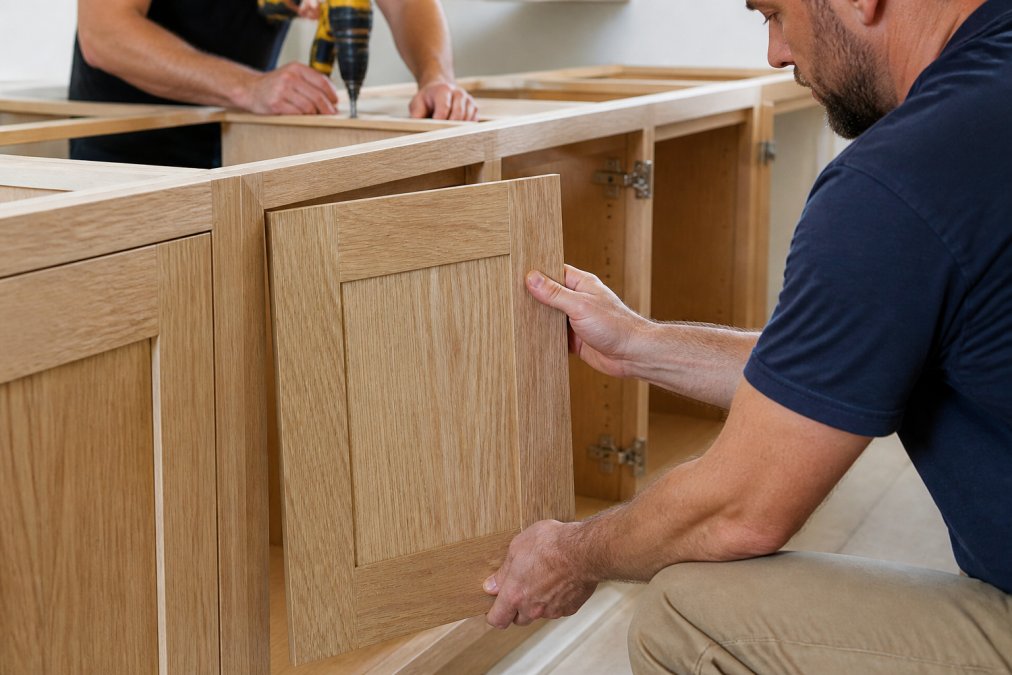
RTA Wholesalers' custom color inset cabinetry, available in custom sizes at wholesale pricing, is built for durability. The inset construction, where the door sits flush with the cabinet frame, is a premium approach that reduces stress on hinges and hardware. This design choice, combined with sustainable materials, creates cabinets that perform reliably for decades.
End-of-Life Disposal and Recyclability
What happens to your cabinets after 30 years is part of the sustainability equation. Conventional cabinets often end up in landfills. Sustainable cabinetry is designed with end-of-life disposal in mind.
Solid wood cabinets are biodegradable and decompose naturally. Reclaimed wood can be reclaimed again, repurposed into new cabinets, furniture, or flooring. Bamboo is fully compostable. These materials don't create permanent waste.
Formaldehyde-free plywood can be recycled into mulch or composite materials. Standard particle board is difficult to recycle and often ends up in landfills. Low-VOC water-based finishes don't contain toxic chemicals that complicate recycling or composting.
Consider locally sourced materials to reduce shipping distance and associated emissions. Reclaimed wood sourced regionally has a lower carbon footprint than FSC-certified hardwood shipped from overseas.
Choosing the Right Eco-Friendly Cabinets for Your Project
Selecting sustainable cabinetry requires matching material properties to your specific kitchen conditions. There's no single "best" eco-friendly material; the right choice depends on your budget, design preferences, kitchen environment, and priorities.
Start by assessing your kitchen's conditions. Is it high-humidity (near a dishwasher or sink)? Does it get direct sunlight? Bamboo and FSC-certified hardwood handle humidity better than engineered wood. Reclaimed wood requires careful sealing in wet areas. Low-VOC finishes work everywhere, but they're especially important in kitchens with poor ventilation.
Bamboo and engineered wood are readily available with reasonable lead times. Reclaimed wood requires sourcing and may take longer. Custom color inset cabinetry from RTA Wholesalers is available in custom sizes at wholesale pricing, with options for wood species and paint color options.
Evaluate certifications carefully. FSC certification for wood, FloorScore or GreenGuard Gold for finishes, and formaldehyde-free documentation for engineered wood are meaningful. Ask suppliers for specific certifications rather than general environmental claims.
Design continuity matters. If you're renovating a kitchen in a home with existing wood elements, matching wood species creates visual cohesion. Inset cabinet construction, available in custom sizes and custom colors, offers a premium aesthetic that complements any design approach.
| Material | Sustainability | Durability | Best For |
|---|---|---|---|
| Bamboo | Excellent, fast-growing | Very high | Modern aesthetics, humidity-prone kitchens |
| Reclaimed Wood | Excellent, zero new harvesting | Very high | Character-focused designs, regional sourcing |
| FSC Hardwood | Very good, certified sourcing | Very high | Traditional designs, long-term value |
| Formaldehyde-Free Engineered | Good, safer adhesives | High | Uniform appearance, consistent performance |
The free kitchen design service from RTA Wholesalers helps ensure your material selection matches your project requirements. Professional guidance catches potential issues before you order, saving time and money on revisions.
Choosing eco-friendly kitchen cabinet materials is an investment in your home's health, durability, and environmental impact. The sustainable options available today perform as well as or better than conventional alternatives, with the added benefit of supporting responsible forestry and healthier indoor air quality. RTA Wholesalers offers custom color inset cabinetry in custom sizes at wholesale pricing, with multiple wood species and paint color options designed for both performance and sustainability. Get started with a free design consultation to find the right eco-friendly solution for your kitchen renovation.
Forest Stewardship Council certification standards for responsible wood sourcing
EPA guidelines on indoor air quality and volatile organic compounds
GreenGuard Gold certification standards for low-VOC building materials
=== FAQ ANSWERS (audit these too, same rules) ===
[1] Q: What are the most eco-friendly kitchen cabinet materials? A: The most eco-friendly kitchen cabinet materials include FSC-certified solid wood, bamboo, reclaimed wood, and formaldehyde-free engineered wood. FSC-certified wood ensures responsible forest management. Bamboo grows rapidly and is highly renewable. Reclaimed wood diverts waste from landfills while adding character. Formaldehyde-free engineered wood reduces off-gassing and indoor air quality concerns. When paired with low-VOC finishes, these materials create a healthier kitchen environment with minimal environmental impact.
[2] Q: Why is low-VOC finish important for kitchen cabinetry? A: Low-VOC (volatile organic compound) finishes minimize off-gassing, which improves indoor air quality in your home. Traditional finishes release harmful chemicals for months or years after installation. Low-VOC finishes dry quickly and emit fewer toxins, making them safer for your family and reducing respiratory irritation. They're especially important in kitchens where you spend significant time. Pairing low-VOC finishes with formaldehyde-free adhesives and plywood creates a truly non-toxic cabinet system.
[3] Q: What is the difference between FSC-certified wood and reclaimed wood for cabinets? A: FSC-certified wood comes from responsibly managed forests where trees are replanted and ecosystems are protected. It's new material harvested sustainably. Reclaimed wood is salvaged from old buildings, barns, or other structures, eliminating the need for new tree harvesting. Both are sustainable, but reclaimed wood has zero carbon footprint from new growth and adds unique character. FSC-certified wood ensures you're supporting active forest conservation. Your choice depends on whether you prioritize maximum environmental benefit or aesthetic uniqueness.
[4] Q: Are ready-to-assemble cabinets a sustainable choice? A: Ready-to-assemble cabinets can be sustainable when made from eco-friendly materials like FSC-certified wood or bamboo with low-VOC finishes. The main advantage is reduced transportation emissions compared to pre-assembled cabinets shipped long distances. They also reduce manufacturing waste. However, sustainability depends on material sourcing and finish quality. When selecting ready-to-assemble options, verify that the manufacturer uses formaldehyde-free plywood, sustainable adhesives, and low-VOC finishes to ensure your cabinets deliver both environmental and health benefits.
Frequently Asked Questions
Q: What are the most eco-friendly kitchen cabinet materials?
A: The most eco-friendly kitchen cabinet materials include FSC-certified solid wood, bamboo, reclaimed wood, and formaldehyde-free engineered wood. FSC-certified wood ensures responsible forest management. Bamboo grows rapidly and is highly renewable. Reclaimed wood diverts waste from landfills while adding character. Formaldehyde-free engineered wood reduces off-gassing and indoor air quality concerns. When paired with low-VOC finishes, these materials create a healthier kitchen environment with minimal environmental impact.
Q: Why is low-VOC finish important for kitchen cabinetry?
A: Low-VOC (volatile organic compound) finishes minimize off-gassing, which improves indoor air quality in your home. Traditional finishes release harmful chemicals for months or years after installation. Low-VOC finishes dry quickly and emit fewer toxins, making them safer for your family and reducing respiratory irritation. They're especially important in kitchens where you spend significant time. Pairing low-VOC finishes with formaldehyde-free adhesives and plywood creates a truly non-toxic cabinet system.
Q: What is the difference between FSC-certified wood and reclaimed wood for cabinets?
A: FSC-certified wood comes from responsibly managed forests where trees are replanted and ecosystems are protected. It's new material harvested sustainably. Reclaimed wood is salvaged from old buildings, barns, or other structures, eliminating the need for new tree harvesting. Both are sustainable, but reclaimed wood has zero carbon footprint from new growth and adds unique character. FSC-certified wood ensures you're supporting active forest conservation. Your choice depends on whether you prioritize maximum environmental benefit or aesthetic uniqueness.
Q: Are ready-to-assemble cabinets a sustainable choice?
A: Ready-to-assemble cabinets can be sustainable when made from eco-friendly materials like FSC-certified wood or bamboo with low-VOC finishes. The main advantage is reduced transportation emissions compared to pre-assembled cabinets shipped long distances. They also reduce manufacturing waste. However, sustainability depends on material sourcing and finish quality. When selecting ready-to-assemble options, verify that the manufacturer uses formaldehyde-free plywood, sustainable adhesives, and low-VOC finishes to ensure your cabinets deliver both environmental and health benefits.


