 833-377-8663

Inset vs Overlay Cabinets: A Complete Guide

Table of Contents
- What Are Inset Cabinets?
- What Are Overlay Cabinets?
- Full Overlay vs Partial Overlay Cabinets
- Inset Cabinet Pros and Cons
- Cost Difference Between Inset and Overlay Cabinets
- Installation, Precision, and Labor Considerations
- Durability, Maintenance, and Long-Term Performance
- Which Cabinet Style Is Right for Your Project?
- Frequently Asked Questions
Last Updated: September 2, 2026
What Are Inset Cabinets?
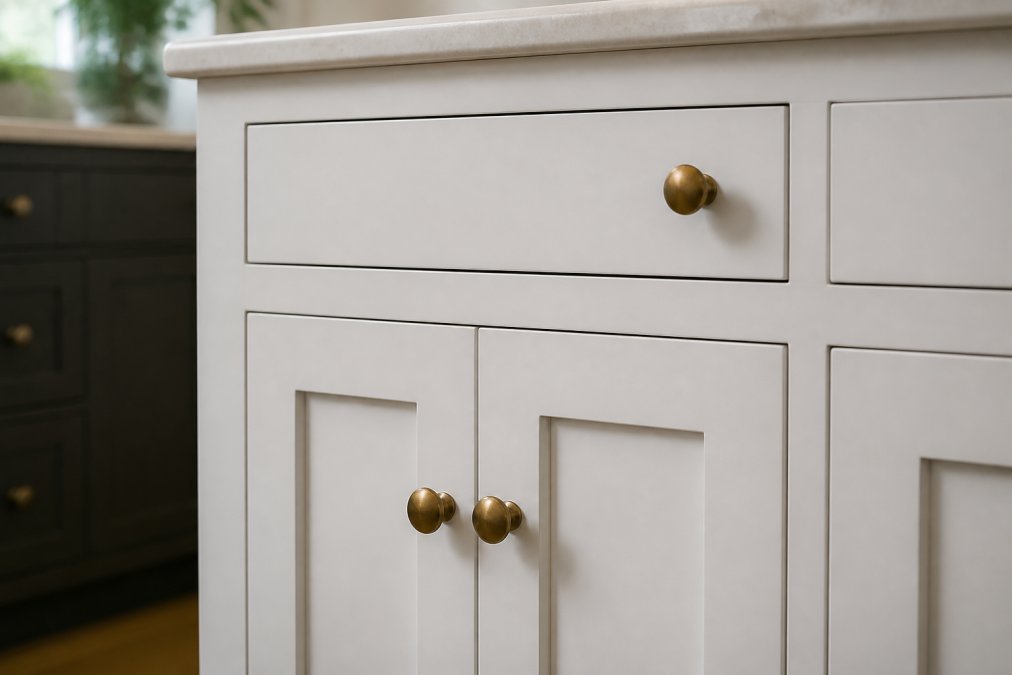
Inset cabinets are kitchen cabinets where the door and drawer fronts sit flush inside the face frame, creating a seamless, furniture-like appearance. Unlike overlay cabinets, inset doors align perfectly with the frame edges, producing crisp, even reveals on all sides. This construction style delivers the tailored, built-in look that defines true custom cabinetry.
The key difference lies in the solid hardwood face frame (typically 1 to 1.75 inches thick) that the door sits inside, flush with the frame's edges. The door doesn't cover any of the frame, it sits within it, creating a refined visual that feels more like furniture than assembled cabinetry.
Inset cabinets demand precision during installation. The cabinet box must be square, and the face frame must be perfectly aligned. If the frame is even slightly out of square, the doors won't close evenly. RTA Wholesalers offers Custom Order Inset cabinets available in custom sizes and custom colors at great wholesale pricing, with UV-cured factory finishes that ensure durability.
What Are Overlay Cabinets?
Overlay cabinets are designed with doors that sit on top of the face frame rather than inside it. The door covers most of the frame, leaving only a small sliver visible. This design is more forgiving during installation because it accommodates slight variations in wall plumb and frame squareness.
There are two common overlay styles: full overlay and partial overlay. Full overlay cabinets cover nearly all of the face frame, leaving just 1/4 inch visible on each side (nkba.org). Partial overlay cabinets expose more of the frame, typically 1 inch or more, creating a more traditional appearance. Both styles are generally faster to manufacture and install than inset cabinets because tolerances are wider.
Overlay cabinets represent a practical choice for many residential remodels. Installation can be less labor-intensive because the frame doesn't need to be perfectly square. If your walls are out of plumb or your cabinet run isn't perfectly level, overlay doors can still close evenly because the door can shift slightly on its hinges to compensate. RTA Wholesalers offers overlay options available in just 5 weeks in a multitude of wood species and stain colors or an unlimited choice of Sherwin Williams paint colors. Our ready-to-assemble overlay cabinets can deliver professional results.
Full Overlay vs Partial Overlay Cabinets
Full overlay doors cover nearly all of the frame, exposing only 1/4 inch on each side and about 1 inch above the top drawer on base cabinets. Partial overlay doors expose significantly more frame, typically 1 inch or more on each side, creating visible frame lines that break up the door run.
Full overlay cabinets can create a nearly seamless, modern appearance with minimal frame lines that feels clean and contemporary. This style works well in minimalist kitchens, modern farmhouse designs, and any space where visual continuity matters.
Partial overlay cabinets lean toward a more traditional aesthetic. The visible frame lines create a classic, segmented look that works well in transitional and farmhouse kitchens. Some homeowners prefer this style because it can feel less "built-in" and more like assembled furniture.
The practical difference is minimal. Both styles often use similar soft-close hinges, drawer glides, and assembly processes. The choice is almost entirely aesthetic. If you're renovating a kitchen with traditional architecture, partial overlay might feel more appropriate. If you're going for a sleek, modern look, full overlay may serve you better.
Inset Cabinet Pros and Cons
Pros of Inset Cabinets:
Inset cabinets can deliver a custom, furniture-grade aesthetic. The flush-mount design creates crisp, even reveals that feel refined and intentional. The solid hardwood face frame is designed for durability, distributing stress more evenly than an overlay door that sits on top.
The interior storage space in inset cabinets is identical to overlay cabinets of the same nominal size. An inset cabinet with a 36-inch opening holds the same amount as a 36-inch overlay cabinet.
Cons of Inset Cabinets:
Inset cabinets demand precision installation. The cabinet box must be square, and the face frame must be perfectly aligned. Any deviation shows immediately because the door sits flush with the frame.
Lead times for inset cabinets can be longer. Custom Order Inset cabinets are available in custom sizes and custom colors at great wholesale pricing, but the production window can be substantial.
Hardware compatibility can be more limited with inset cabinets. Because the door sits flush inside the frame, European-style hidden hinges are often standard, which limits options if you prefer exposed, decorative hardware. Drawer glides must be undermount to avoid protruding beyond the cabinet box.
Climate-related performance can be an issue with inset cabinets. Wood naturally expands and contracts with humidity changes. In climates with significant seasonal humidity swings, the tight tolerances of inset construction can cause doors to stick or bind. Overlay cabinets are more forgiving because the door can shift slightly on its hinges.
Cost Difference Between Inset and Overlay Cabinets
The price difference between inset and overlay cabinets can reflect the labor and precision required. Inset cabinets can cost more to manufacture because each cabinet is typically built to order, with the face frame and door crafted to exacting tolerances. Overlay cabinets are often mass-produced in standard sizes, which can reduce manufacturing cost.
RTA Wholesalers offers both options at great wholesale pricing. For many homeowners and contractors, the premium may justify the custom look and durability. For others, overlay cabinets can deliver professional results without a premium cost or extended lead time.
The choice often comes down to budget and timeline. If you have the budget and the time, inset cabinets can offer a custom aesthetic and durability. If your project is time-sensitive or budget-constrained, overlay cabinets can deliver professional results without a premium cost or extended lead time.
Installation, Precision, and Labor Considerations
Installation is where the real difference between inset and overlay cabinets becomes apparent. Overlay cabinets can be forgiving. The cabinet box can be slightly out of square, the wall can be slightly out of plumb, and the doors can still close evenly because the hinge adjustment range is wide. A competent DIYer can often install overlay cabinets successfully.
Inset cabinets demand precision. The cabinet box must be square within 1/8 inch across the entire run (nkba.org). The face frame must be perfectly aligned, and the doors must be adjusted to sit flush within the frame. Any deviation is immediately visible. This requirement may mean hiring a skilled cabinet installer who understands inset construction.
The cabinet hardware also affects installation complexity. Inset cabinets often use concealed European hinges and undermount drawer glides that can require precise drilling and adjustment. Overlay cabinets often use standard cup hinges and full-extension glides that are more straightforward to install. For a DIY project, overlay cabinets can be significantly easier.
Retrofitting existing cabinetry is often easier with overlay doors. If you're replacing doors on existing cabinets, overlay doors can often be installed on an inset frame because the door size is larger and covers the frame. Inset doors cannot be retrofitted onto an overlay cabinet box without significant modification.
Durability, Maintenance, and Long-Term Performance
Both inset and overlay cabinets are durable when constructed from quality materials. Inset cabinets tend to require fewer adjustments over the years. The solid hardwood face frame provides structural rigidity that resists warping. The door sits within the frame, distributing stress evenly.
Overlay cabinets can develop visible gaps between the door and frame over time, especially in kitchens with significant temperature or humidity fluctuations. This is cosmetic, not a durability issue. Soft-close hinges on modern overlay cabinets are adjustable, so gaps can be corrected.
Finish durability is often identical between styles when both use factory-applied finishes. RTA Wholesalers applies UV-cured lacquer to all cabinets, which resists moisture, steam, and abrasion (peer-reviewed research). The cabinet box construction is also consistent, so long-term performance is comparable.
Maintenance is straightforward for both styles. Wipe down doors and frames with a damp cloth, avoid harsh solvents, and address spills promptly. Soft-close hinges and drawer glides require no maintenance beyond occasional cleaning.
The real long-term difference is aesthetic. Inset cabinets maintain their refined appearance because the door-to-frame junction remains crisp and even. Overlay cabinets may develop slight gaps, but this doesn't affect function. If you value the look of your cabinets as much as their performance, inset cabinets can be a better long-term choice.
Which Cabinet Style Is Right for Your Project?
The choice between inset and overlay cabinets depends on four factors: budget, timeline, installation skill, and design priority.
Choose inset cabinets if you're investing in a kitchen you plan to enjoy for many years, your project timeline allows for production, you have a skilled installer or you're comfortable with professional installation costs, and you prioritize the refined, custom look that inset construction can deliver.
Choose overlay cabinets if your budget is constrained, your project timeline is tight, you're installing the cabinets yourself or with a general contractor, or you want professional results without a premium cost. Our assembled cabinets are available in just 5 weeks in a multitude of wood species and stain colors or an unlimited choice of Sherwin Williams paint colors.
For many residential projects, overlay cabinets are a practical choice. They're often faster to manufacture, easier to install, and less expensive. For design-forward projects or kitchens where visual quality is paramount, inset cabinets can be a worthwhile investment.
RTA Wholesalers offers both options to match your project's needs. Our inset cabinets are available in custom sizes and custom colors at great wholesale pricing. Our overlay cabinets are available in multiple wood species and paint finishes. Our free kitchen design service can help you evaluate which style makes sense for your space, your timeline, and your budget.
| Cabinet Style | Best For | Lead Time | Installation Difficulty | Visual Impact |
|---|---|---|---|---|
| Inset | Long-term investment, design-forward projects, high-end finishes | Can be longer | High (requires precision) | Premium, custom furniture look |
| Full Overlay | Modern aesthetics, new construction, tight timelines | 5 weeks or stock | Lower (forgiving tolerances) | Clean, seamless appearance |
| Partial Overlay | Traditional design, farmhouse style, budget-conscious | 5 weeks or stock | Lower (forgiving tolerances) | Classic, segmented frame lines |
Choosing between inset and overlay cabinets is ultimately about balancing aesthetics, budget, and timeline. Inset cabinets can deliver the refined, furniture-grade look that makes a kitchen feel custom-built, but they can require precision installation and longer lead times. Overlay cabinets offer professional results with greater installation flexibility and faster delivery. RTA Wholesalers offers inset and overlay options at great wholesale pricing, with custom sizes and custom colors available. Our free kitchen design service can help you determine which style aligns with your vision and your project constraints. Reach out to explore how we can bring your kitchen renovation to life.
Frequently Asked Questions
Q: Which is better, inset or overlay cabinets?
A: Neither is universally better, it depends on your priorities. Inset cabinets deliver a custom, furniture-quality appearance with flush door alignment and are ideal for high-end renovations where aesthetics matter most. Overlay cabinets offer wider installation tolerances, lower cost, and faster lead times, making them practical for many residential remodels. If your walls are plumb and you prioritize appearance, inset can be a strong choice. If you need speed, budget flexibility, and easier installation, overlay can be a smarter choice.
Q: What is the difference between partial and full overlay cabinets?
A: Full overlay doors cover nearly all of the face frame, leaving only about 1/4" of frame visible on each side. Partial overlay doors cover less of the frame, exposing more frame lines between cabinet sections. Full overlay creates a more seamless, modern look with minimal interruption, while partial overlay shows more traditional framing and is less common in new installations. Full overlay is often seen in contemporary kitchens.
Q: Are inset cabinets outdated?
A: No. Inset cabinets remain a hallmark of high-end, custom cabinetry and are preferred by designers for their timeless, furniture-built aesthetic. They're not trendy, they're classic. Overlay cabinets are more common in mass-market remodels due to cost and speed, but inset cabinets are never out of style for those who want a refined, tailored look and are willing to invest in precision construction.
Q: How does cabinet construction affect the final cost of a kitchen remodel?
A: Cabinet construction directly impacts labor, materials, and timeline. Inset cabinets can require precision installation and tighter tolerances, potentially increasing labor costs and lead times. Overlay cabinets often assemble faster and tolerate out-of-plumb walls better, potentially reducing labor. Material quality also matters: solid hardwood face frames and plywood boxes can cost more than particleboard. Higher-end finishes like UV-cured lacquer add cost but can deliver superior durability and appearance compared to field-applied paint.
Q: What are the disadvantages of full overlay cabinets?
A: Full overlay cabinets have fewer drawbacks than inset, but some exist. The larger door size can make them slightly heavier and potentially harder to adjust if hinges need tweaking. They show less face frame, which some view as less elegant than inset's crisp reveals. Hardware compatibility can be more limited, concealed hinges designed for inset construction may not fit overlay frames the same way. Additionally, the larger door exposes more wood movement in response to humidity changes, which can affect door alignment over time in climates with extreme seasonal swings.
Q: Can I retrofit inset hardware into overlay cabinets?
A: Not directly. Inset and overlay cabinets use different hinge systems and face frame dimensions. Inset cabinets often require concealed hinges mounted inside a 1-inch face frame, while overlay cabinets use hinges that mount to a wider frame. Retrofitting would require rebuilding the face frame, which defeats the cost and time savings of choosing overlay. If you're considering upgrading hardware later, plan for the cabinet style you're ordering, don't expect to swap systems after installation.
Q: How does climate affect inset vs overlay cabinet durability?
A: Both styles are affected by humidity and temperature swings, but inset cabinets can be more sensitive. The tight reveals in inset construction mean even small wood movement from humidity changes can cause doors to bind or reveal gaps. Overlay cabinets tolerate wood expansion better because the larger door overlap accommodates minor shifts. In humid or dry climates with seasonal extremes, overlay cabinets can be more forgiving. UV-cured finishes on both styles resist moisture and warping better than site-applied paint, so finish quality matters as much as cabinet type.


