 833-377-8663

Custom Color Inset Cabinetry Pricing: A 2026 Guide

Table of Contents
- What Are Inset Cabinets and Why They Command Premium Pricing
- Inset vs Overlay Cabinet Cost Comparison
- Understanding the Cost Breakdown for Custom Color Inset Cabinetry
- Custom Kitchen Cabinet Paint Color Options and Their Impact
- Kitchen Cabinet Lead Times for Custom Finishes
- Is the Price Premium for Inset Cabinetry Worth It?
- Custom Sizing and Semi-Custom vs Full-Access Cabinetry Options
- Conclusion
Last Updated: August 18, 2026
What Are Inset Cabinets and Why They Command Premium Pricing
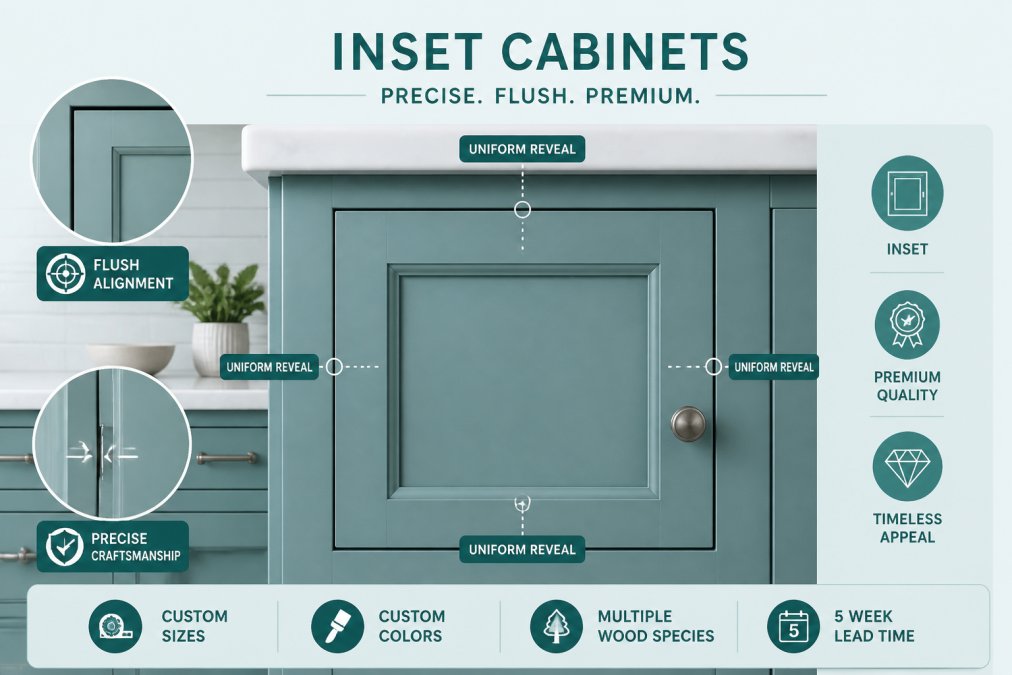
Inset cabinets represent the highest standard in cabinetry construction, where cabinet doors and drawer fronts sit flush within the face frame rather than overlaying it. This design creates a seamless, built-in appearance that has defined quality cabinetry for centuries. The precision required to manufacture and install inset cabinets, combined with superior materials and craftsmanship, is why custom color inset cabinetry commands premium pricing compared to standard overlay options.
The defining characteristic of inset construction is the door reveal: a small gap between the door edge and the face frame that must be perfectly uniform on all sides. Achieving this uniformity requires precision manufacturing and careful assembly. Any deviation in measurement becomes immediately visible, which is why inset cabinetry demands higher-grade materials and tighter tolerances throughout the cabinet box construction.
The premium pricing reflects several factors. First, the cabinet box must be constructed from higher-grade plywood to maintain dimensional stability as doors open and close thousands of times. Second, hinge hardware must be more precisely calibrated. Third, custom color finishes applied at the factory must cure properly to ensure durability in kitchen and bathroom environments where moisture and temperature fluctuate constantly.
Understanding what you're paying for is the first step in evaluating whether inset cabinetry makes sense for your project.
Inset vs Overlay Cabinet Cost Comparison
The difference between inset and overlay cabinet construction is one of the most significant cost drivers in kitchen and bathroom remodeling. Overlay cabinets, where doors sit on top of the face frame, are manufactured with looser tolerances and simpler hinge systems. Inset cabinets require precision engineering at every stage.
Overlay cabinets use standard cup hinges and can accommodate minor variations in door size and frame dimensions. A 1/16-inch variation in door width is invisible on an overlay door but creates a visible gap on an inset door. This precision requirement cascades through manufacturing: the cabinet box must be more square, the face frame must be perfectly flat, and hinge adjustment must be tighter to maintain flush appearance over years of use.
Material grade differences are equally significant. Overlay cabinets often use particleboard or lower-grade plywood. Inset cabinetry typically requires cabinet-grade plywood throughout, which resists warping and maintains dimensional stability through seasonal humidity changes. In climates with significant temperature and humidity swings, this difference becomes critical.
When comparing custom color inset cabinetry to overlay options, expect the inset option to cost more per linear foot due to labor-intensive manufacturing, higher material grades, precision hardware, and factory finishing. However, the longevity and appearance often justify the investment for homeowners planning to stay in their homes for 15+ years or for contractors building in the higher-end market segment.
Understanding the Cost Breakdown for Custom Color Inset Cabinetry
Several distinct cost components stack together to create the final price for custom color inset cabinetry. Understanding each component helps you see where your investment is going.
Cabinet Box Construction and Material Grade
The cabinet box represents a substantial portion of custom color inset cabinetry pricing. For inset doors to function properly, the box must be built from cabinet-grade plywood rather than particleboard or MDF. This material choice alone increases cost significantly compared to overlay alternatives.
Cabinet-grade plywood resists warping, maintains dimensional stability across seasonal humidity changes, and provides better screw-holding power for hinges and hardware. The face frame must be constructed from solid wood or high-quality plywood, often hardwood like oak, maple, cherry, or birch, which adds material cost but provides superior durability and appearance.
Quality inset cabinetry uses dado joinery or pocket hole construction at cabinet corners rather than simple butt joints. These joinery methods create stronger cabinets that resist racking when doors are opened, preventing doors from binding or gaps from developing over time.
Hardware, Hinges, and Soft-Close Mechanisms
The hinge system supporting inset doors is more sophisticated and costly than overlay hardware. Inset hinges must be precisely calibrated because any hinge adjustment directly affects the door reveal. An inset hinge must hold tighter tolerances to maintain that flush appearance.
Soft-close hinges, which slowly close the door rather than allowing it to slam, add cost but significantly improve user experience and cabinet longevity. For custom color inset cabinetry, soft-close hinges are often included as standard, reflecting the quality expectations of this product category.
Quality inset cabinetry typically includes full-extension drawer slides with soft-close mechanisms, which provide better functionality and durability than basic slides.
Finish Quality and Factory Application
Custom color finishes applied at the factory represent a major cost component in custom color inset cabinetry pricing. Factory finishing provides superior durability compared to site-applied finishes because the paint or stain is applied in a controlled environment with proper ventilation, humidity control, and curing time.
For custom paint colors using Sherwin Williams or equivalent quality paint, the process involves multiple steps: surface preparation, primer application, base coat, and final coat, followed by proper curing. Custom color matching adds complexity and cost compared to standard stain colors.
The finish must withstand kitchen and bathroom environments. A quality factory finish cured properly will resist chipping, peeling, and discoloration far better than a quick site-applied finish.
Custom Kitchen Cabinet Paint Color Options and Their Impact
The choice between standard wood stain colors and custom paint colors significantly affects custom color inset cabinetry pricing.
Standard wood stain colors, natural oak, cherry, maple, walnut finishes, are produced in high volume and cost less because the manufacturing process is simplified. These stains highlight the wood grain and are applied using consistent processes across hundreds of cabinet sets.
Custom paint colors, particularly those matched to Sherwin Williams palettes, require custom color mixing and application. The factory must match your chosen color precisely, apply it consistently across all components, and allow proper curing time. This customization adds labor and materials cost but gives you unlimited design flexibility.
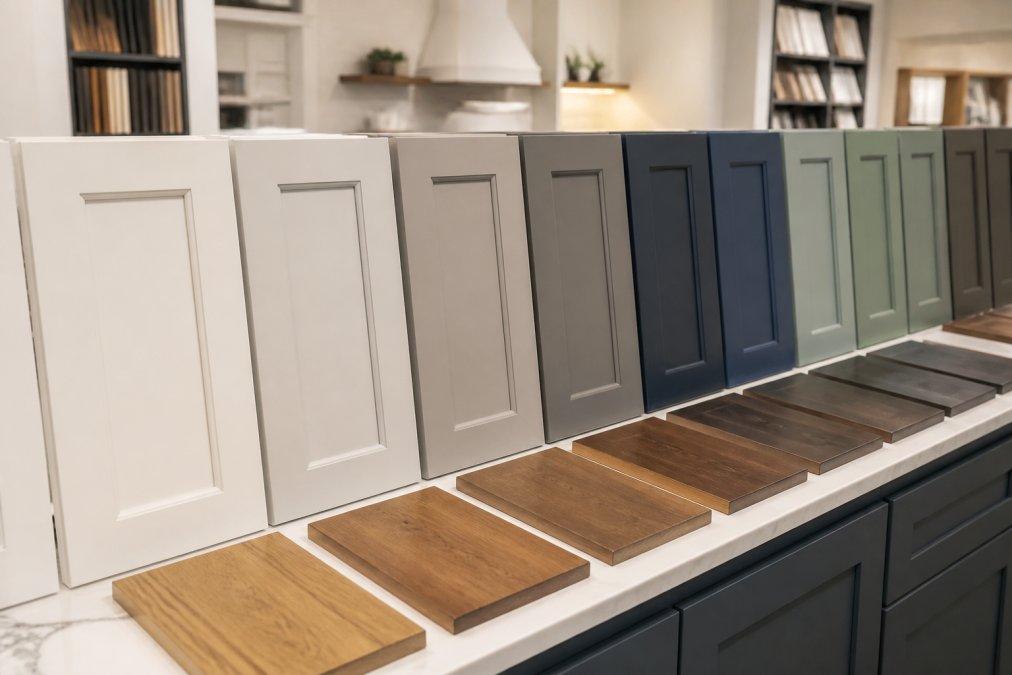
Light colors like whites and soft grays tend to feel more modern and are popular in contemporary kitchens. Deeper colors add richness but may feel dated in 10-15 years. Neutral colors maintain broader appeal if you're renovating to sell.
When budgeting for custom color inset cabinetry, remember that the paint color choice affects all visible components: drawer fronts, face frames, and any exposed end panels.
Kitchen Cabinet Lead Times for Custom Finishes
Lead time is a critical factor in custom color inset cabinetry pricing and project planning. Standard production cabinets with common stain colors typically have shorter lead times because the factory produces them in batches. Custom finishes require additional time for color matching, application, and curing.
Lead times vary based on production volume and factory capacity. During peak seasons, custom orders may have longer lead times. Off-season ordering can sometimes result in faster delivery.
Faster lead times allow you to sequence trades more efficiently and complete projects on schedule, reducing cascade delays through your renovation.
Is the Price Premium for Inset Cabinetry Worth It?
The answer depends on your specific situation, timeline, and quality expectations.
For homeowners planning to live in their homes for 15+ years, inset cabinetry typically delivers long-term value. The superior construction and quality finishes resist wear and maintain appearance through years of daily use.
For contractors building in the higher-end residential market, inset cabinetry is often essential. Buyers of premium homes expect inset cabinetry as standard. The precision appearance and quality finishes align with overall home quality and justify premium pricing.
For property flippers and budget-conscious renovators, the value calculation differs. If your goal is maximum profit on a quick turnaround, overlay cabinets might deliver better ROI. However, if you're flipping in a market where kitchen quality significantly impacts buyer perception, inset cabinetry can justify itself through faster sales and higher offers.
The real consideration is longevity versus immediate cost. Inset cabinetry holds up better over time, maintains appearance through years of use, and supports higher resale value for homes where kitchen quality matters.
Custom Sizing and Semi-Custom vs Full-Access Cabinetry Options
Customization options in cabinetry fall into several categories, each with different pricing implications for custom color inset cabinetry.
Semi-custom cabinetry offers limited customization within a defined system. You choose from standard sizes, standard colors, and standard hardware options. This approach keeps costs lower because the factory produces components in batches.
Full-access or fully-custom cabinetry allows complete customization: any size, any color, any configuration. This flexibility comes at a premium price because each cabinet set is essentially custom-built.
RTA Wholesalers offers custom color inset cabinetry available in most any size and custom colors at wholesale pricing. This approach gives you the flexibility to fit your specific kitchen dimensions while maintaining efficient manufacturing.
When evaluating custom sizing options, consider whether you truly need custom dimensions or whether semi-custom sizes would work for your space. The cost difference between semi-custom and fully custom sizing can be substantial.
Conclusion
Custom color inset cabinetry pricing reflects the precision manufacturing, superior materials, and quality finishes that distinguish inset cabinets from standard overlay options. Understanding the cost breakdown helps you make informed decisions about your kitchen or bathroom renovation.
The price premium for inset cabinetry is justified by durability, appearance, and long-term value. For homeowners and contractors prioritizing quality, inset cabinetry delivers measurable returns through superior performance and appearance.
RTA Wholesalers provides inset cabinets that are top quality and available in Custom sizes and Custom colors at great Wholesale pricing. Get started with RTA Wholesalers and transform your kitchen with inset cabinetry that will look beautiful and perform flawlessly for decades.
Frequently Asked Questions
How much more does custom color inset cabinetry cost compared to overlay cabinets?
Custom color inset cabinetry pricing depends on several factors including cabinet grade plywood, hardware quality, finish durability, and custom sizing specifications. Inset construction requires precision cabinet box manufacturing and door alignment, which increases labor costs. For a detailed quote reflecting your project's specifications, contact RTA Wholesalers to discuss your custom color inset cabinetry needs and receive pricing tailored to your exact requirements.
What factors contribute most to the price variance in inset kitchen cabinets?
The primary cost drivers include cabinet box construction quality (plywood grade affects durability), soft-close hinges and cabinetry hardware specifications, factory-finished paint application versus unfinished options, custom sizing beyond standard dimensions, and the complexity of your door design. Wood species selection also impacts pricing. Wholesale direct pricing from manufacturers like RTA Wholesalers reflects bulk purchasing power, reducing per-unit costs significantly compared to retail markup models.
How do kitchen cabinet lead times for custom finishes affect my project budget?
Custom finish lead times directly impact project scheduling and labor costs. Longer cabinetry lead times mean extended project timelines, which increases on-site labor expenses and delays kitchen functionality. RTA Wholesalers offers assembled inset cabinets available in just 5 weeks with unlimited Sherwin Williams paint color choices and multiple wood species options, allowing you to maintain project momentum while achieving custom aesthetic specifications without extended delays.
Are inset cabinets worth the extra investment for a kitchen remodel?
Inset cabinetry delivers superior finish durability, precise door alignment, and a high-end aesthetic that justifies the premium for homeowners and contractors prioritizing quality. The flush mount design eliminates gaps, reducing dust accumulation and maintenance issues. For projects where resale value, professional appearance, and long-term durability matter, the investment in inset construction pays dividends. Your choice depends on project goals: budget-conscious renovations may favor overlay options, while premium finishes and full-access cabinetry designs benefit from inset quality.


