 833-377-8663

5 Ways to Get Bulk Pricing on Kitchen Cabinets

Table of Contents
- Why Bulk Pricing on Kitchen Cabinets Matters for Your Project
- 1. Buy Ready-to-Assemble Cabinets Directly from the Manufacturer
- 2. Establish a Contractor Account for Wholesale Shaker Cabinets
- 3. Order Stock Cabinets Instead of Custom Sizes
- Understanding Contractor Kitchen Cabinet Pricing Models
- 4. Time Your Purchase Around Seasonal Sales and Clearance Inventory
- 5. Negotiate Volume Discounts and Kitchen Cabinet Lead Times
- Conclusion
- Frequently Asked Questions
Last Updated: August 31, 2026
Why Bulk Pricing on Kitchen Cabinets Matters for Your Project
Getting the right price on kitchen cabinets can mean the difference between a project that breaks even and one that delivers real profit. Whether you're a contractor managing multiple renovations, a property flipper, or a homeowner tackling a kitchen remodel, bulk pricing on kitchen cabinets unlocks savings that compound across the entire job. Real bulk pricing comes from understanding how manufacturers, distributors, and direct-to-consumer sellers structure their offers, not just comparing sticker prices.
Below, we'll walk you through five concrete strategies that contractors and designers use to access genuine wholesale pricing on kitchen cabinets.
1. Buy Ready-to-Assemble Cabinets Directly from the Manufacturer
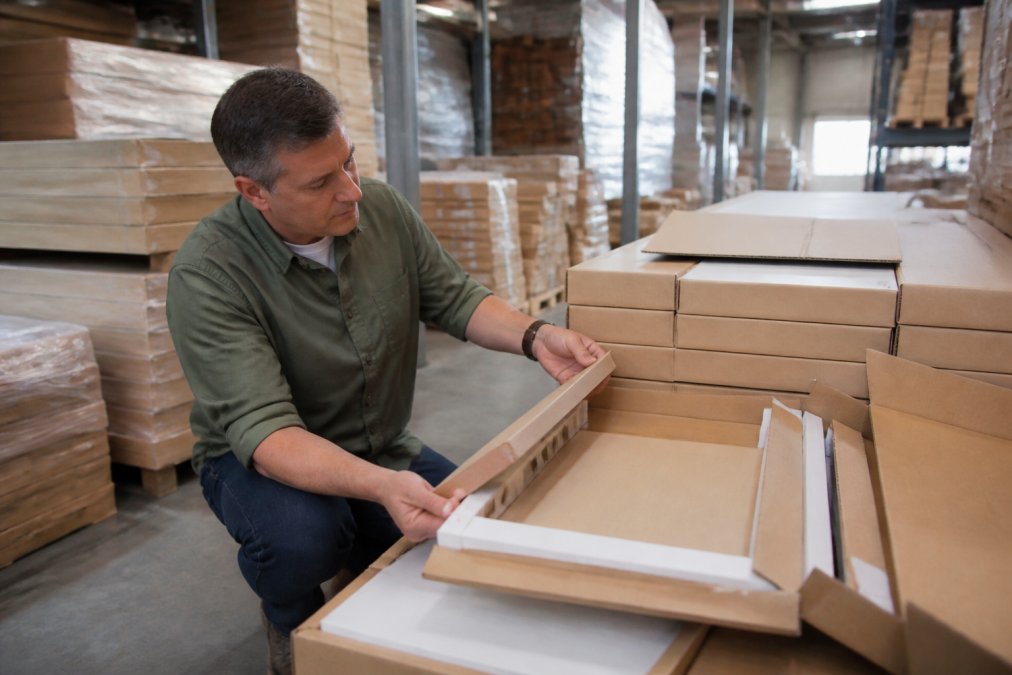
Ready-to-assemble (RTA) cabinets are the fastest path to bulk pricing because you eliminate the middleman entirely. When you buy flat-pack directly from a manufacturer instead of through a distributor or big-box retailer, you're purchasing at the source where pricing scales with volume.
Manufacturers price RTA cabinets lower than pre-assembled options because assembly happens on-site, not in their facility.
Assembly isn't difficult if you have basic tools and space. Most RTA cabinets use pocket-hole joinery and cam-lock hardware. The real advantage: you control quality at every step and catch damage before it's hidden inside a cabinet box.
Options like Custom Order Inset and Custom Color Inset cabinets allow you to build to order in solid wood with any of Sherwin-Williams' 1,500+ paint colors, all at wholesale pricing. Custom sizing without custom pricing is rare in this market, and it's what separates bulk buying from bulk overstocking.
2. Establish a Contractor Account for Wholesale Shaker Cabinets
If you run a contracting business or design firm, a contractor account unlocks wholesale pricing. Manufacturers reserve their lowest pricing for trade accounts because contractors represent predictable, repeat volume.
Setting up a contractor account requires business registration and a resale certificate (also called a resale license or sales tax exemption certificate). Your state's Department of Revenue or Secretary of State office handles the application online. Once you have the certificate, present it to the cabinet supplier and they verify it.
Wholesale shaker cabinets are the most common style in contractor work because they suit every aesthetic from farmhouse to contemporary, and they're less expensive to manufacture than ornate door styles.
3. Order Stock Cabinets Instead of Custom Sizes
Custom sizing is convenient, but it costs money. A stock cabinet that's already in the manufacturer's production queue costs less than a custom cabinet that requires a new setup, new measurements, and new quality checks.
Stock sizes are pre-engineered, pre-tested, and pre-approved for production (ansi.org). A manufacturer builds the same 36″ base cabinet thousands of times per year, so the cost per unit is low and the quality is predictable. A custom 36.5″ cabinet requires a new cutting list, a new assembly sequence, and a new QC checkpoint. That overhead gets passed to you.
If your kitchen layout allows for standard widths (9″, 12″, 15″, 18″, 21″, 24″, 27″, 30″, 33″, 36″, 42″), order stock. Use filler strips and trim to close gaps.
Understanding Contractor Kitchen Cabinet Pricing Models
Contractor kitchen cabinet pricing works three ways: per-unit pricing, per-linear-foot pricing, and volume-tiered pricing. The real financial advantage of bulk buying isn't just the discount structure, it's the tax exemption that comes with business registration.
Per-unit pricing is straightforward. This model works for small orders or mixed-size projects and is transparent and fair.
Per-linear-foot pricing bundles all base and wall cabinets into one price per running foot. This model hides the actual cost structure but makes budgeting simple. The risk: you don't know if you're overpaying for certain cabinet types.
Volume-tiered pricing rewards bulk orders with escalating discounts. This model incentivizes contractors to consolidate orders and plan ahead.
The Tax Exemption Advantage
Most bulk buyers miss the largest savings opportunity: sales tax exemption through a resale certificate. If you're a contractor, designer, or property flipper operating as a business entity, you can apply for a resale certificate from your state's Department of Revenue or Secretary of State office. The application requires only your business registration number.
Once you have the certificate, present it to the cabinet supplier. They verify it and remove sales tax from all future orders. This savings stacks on top of volume discounts and is available to any business entity, not just licensed contractors.
You must actually be operating as a business. A homeowner doing a single kitchen remodel cannot obtain a resale certificate. But a contractor managing multiple projects, a property flipper, a design firm, or a handyman operating under a business license qualifies.
Combining Pricing Models for Maximum Savings
Most bulk pricing for contractors combines per-unit pricing with volume discounts plus the tax exemption. You know exactly what each cabinet costs, the more you order the lower the unit price becomes, and you avoid sales tax entirely. This three-layer structure is why contractors often pay less than retail homeowners buying the same cabinets. organizing kitchen cabinets.
When you're negotiating with a supplier, always lead with your resale certificate. It signals that you're a legitimate business buyer and often triggers automatic volume pricing consideration.
4. Time Your Purchase Around Seasonal Sales and Clearance Inventory
Seasonal demand creates pricing windows. Timing isn't just about when you order, it's about how you structure delivery to minimize freight costs, which can erase bulk savings if you're not strategic.
Seasonal Clearance Windows
Cabinet manufacturers and distributors clear inventory in January and July, the slowest selling months, to make room for new stock (bls.gov). If you can time your orders to hit these windows, you'll find genuine price reductions.
January is the strongest clearance month because the holiday buying season ends and contractors are between projects. July is weaker but still viable because summer is slower for kitchen remodels in many regions.
The catch: clearance inventory is what's left over, not what you'd choose in a normal buying cycle. You might find discontinued door styles, limited color options, or odd-sized cabinets. For a contractor, this is fine if you can use the inventory across multiple projects.
Another timing strategy: order before price increases. Most cabinet suppliers announce price increases in Q4 for implementation in January. If you know an increase is coming, order in December at the current price.
The Hidden Cost: Freight and Logistics
Shipping costs can negate your bulk savings if you're not strategic about delivery.
Cabinets ship via two methods: LTL (Less-Than-Truckload) shipping and residential parcel delivery. Residential parcel delivery (FedEx, UPS, or regional carriers) charges per box and per weight. If you order multiple kitchens at once and consolidate into one shipment, you might qualify for LTL freight, which charges per pallet and per mile, not per box.
Consolidation Strategy for Maximum Savings
Instead of ordering one kitchen every 8 weeks, order 4-5 kitchens at once and stagger delivery dates with the supplier. Most manufacturers can hold finished cabinets in their warehouse for 30-60 days at no charge, then ship them on your schedule. This approach locks in volume pricing, qualifies for LTL freight, avoids sales tax (if you have a resale certificate), and reduces per-unit cost across the entire batch.
If you don't have space to store multiple kitchens' worth of cabinets, consider renting climate-controlled storage. The math: store multiple kitchens for a period and save on LTL freight versus residential delivery.
Timing Delivery to Project Phases
Order cabinets early in the project timeline but negotiate a delivery date that aligns with installation. Cabinets ordered in January for a March delivery can be held at the supplier's warehouse until late February, then shipped to your job site just before the install crew arrives. When negotiating with a supplier, always ask: "Can you hold finished cabinets for 30-45 days at no charge?" Most will, because it costs them nothing and keeps you locked in as a customer.
5. Negotiate Volume Discounts and Kitchen Cabinet Lead Times
Volume discounts aren't automatic, they're negotiated. If you're ordering 10 or more kitchens per year, you have leverage. Call the supplier's sales team (not the customer service line), explain your annual volume, and ask what pricing they can offer.
Most suppliers have pricing authority at the sales level. A customer service rep will quote you list price. A sales rep can offer discounts if your volume justifies it. The conversation sounds like this: "We're planning 15 kitchen orders this year. What volume pricing can you offer for a 12-month commitment?"
Lead times are part of the negotiation. Stock cabinets typically ship in 4-6 weeks. Custom cabinets require 8-11 weeks. If you're managing a flip timeline, lead time directly impacts your profit. Negotiating a shorter lead time on custom cabinets accelerates your project.

| Strategy | Savings Potential | Best For | Key Consideration |
|---|---|---|---|
| Buy RTA directly from manufacturer | 20-30% vs. retail | Contractors, flippers, DIY | Requires assembly labor |
| Establish contractor account | Base discount | Licensed contractors, designers | Requires resale certificate |
| Order stock sizes | Savings vs. custom | Any volume | Requires layout flexibility |
| Time clearance inventory | Off clearance price | Flexible timeline | Limited color/style options |
| Negotiate volume pricing | Discounts | 10+ kitchens annually | Requires direct sales contact |
Conclusion
Getting bulk pricing on kitchen cabinets isn't about shopping harder, it's about changing how you source. The five strategies above work because they shift your cost structure, not just your discount percentage. Buying RTA directly from the manufacturer, establishing a contractor account, standardizing on stock sizes, timing your purchases, and negotiating volume pricing are structural advantages that compound across multiple projects.
RTA Wholesalers specializes in inset cabinetry available in custom sizes and custom colors at wholesale pricing. Our assembled cabinets are available in just 5 weeks in a multitude of wood species and stain colors or an unlimited choice of Sherwin Williams paint colors. Our free kitchen design service helps you avoid costly measurement errors before you order. Whether you're ordering one kitchen or ten, get started with RTA Wholesalers and lock in pricing that lets you compete and profit.
Frequently Asked Questions
Q: How much can I save by buying bulk pricing on kitchen cabinets?
A: Savings vary by volume and sourcing method, but contractors and bulk buyers typically save compared to retail pricing by working directly with manufacturers, establishing trade accounts, and ordering ready-to-assemble stock cabinets. The exact discount depends on order size, cabinet type, and whether you choose standard sizes over custom options. Timing your purchase during seasonal clearance events can yield additional savings.
Q: What's the difference between wholesale shaker cabinets and retail options?
A: Wholesale shaker cabinets are sold at manufacturer or distributor pricing, cutting out retail markup. They're typically ready-to-assemble (RTA) units with quality construction, solid birch face frames and plywood boxes, but sold at lower per-unit costs when ordered in volume. Retail cabinets include higher markup to cover showroom, design services, and installation support. Wholesale shaker options offer the same durability and finish quality without the retail premium.
Q: Do I need a contractor license to get wholesale pricing?
A: Most wholesale suppliers require a resale certificate or business registration to establish a trade account, but not always a contractor license. Property flippers, interior designers, and DIY remodelers can often qualify by registering as a business and obtaining a resale certificate from your state's tax authority. Contact your wholesale supplier directly about account requirements, many accept general contractors, remodelers, designers, and serious DIY buyers without licensing restrictions.
Q: What kitchen cabinet lead times should I expect when ordering in bulk?
A: Ready-to-assemble stock cabinets typically ship within 1-3 weeks, while custom-order inset cabinets require 8-11 weeks for production. Bulk orders don't usually extend lead times if you're ordering from existing inventory, but custom sizes or paint colors will add production time. Plan your project timeline accordingly and confirm lead times with your supplier before committing, especially if you're managing multiple properties or tight renovation schedules.
Ready to source cabinets at wholesale pricing? Contact RTA Wholesalers today for a volume quote and free kitchen design consultation. Our team will walk you through custom sizing, color matching, and lead time planning so your project ships on time and on budget.


